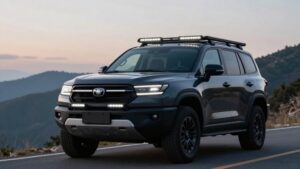
Nilight vs Rigid Light Bar: Is the Budget Pick Good Enough?
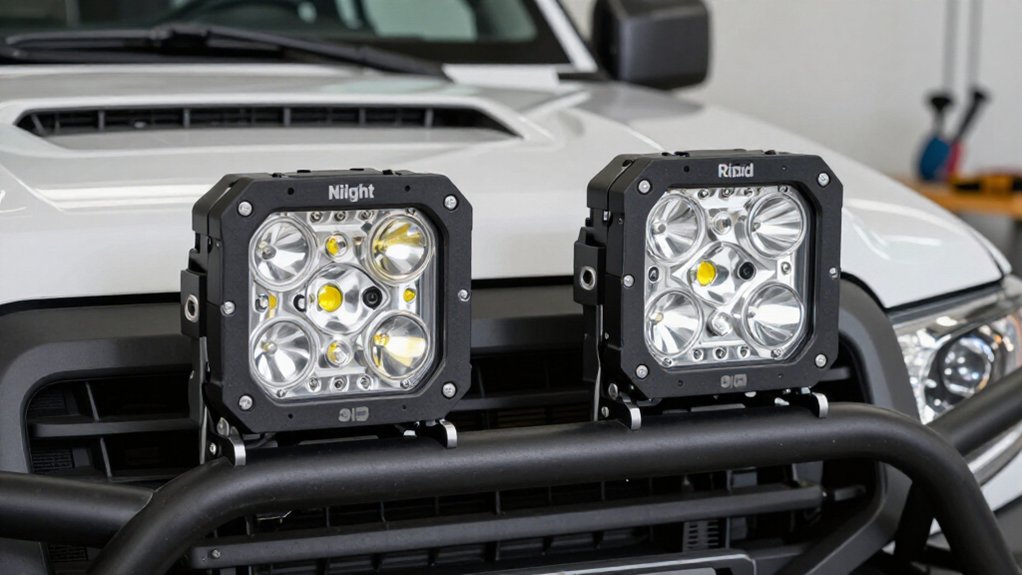
Nilight gives you usable light for less, especially for occasional off-road use.
Rigid costs more, but tighter optics send more light downrange with less foreground glare.
Its heavier housing, heat sinking, and sturdier mounts better handle sustained output and rough roads.
If you prioritize upfront cost, Nilight may be good enough; if you need stable beam control and long-term durability, Rigid is stronger.
Compare beam patterns, warranties, and fit.
More details can guide your choice.
Beam Pattern and Optics
What matters most isn’t the lumen count but where the light goes. When you compare Nilight and Rigid, examine beam control: Rigid’s engineered optics create a cleaner cutoff and put more usable light downrange. Many budget Nilight bars scatter light into foreground hotspots, so a combo beam can feel harsh nearby yet offer less long-distance throw. Aim matters, too; a correctly tilted bar can turn its pattern into useful distance, not merely apparent brightness.
| Comparison | What you notice |
|---|---|
| Rigid optics | Cleaner cutoff; controlled throw |
| Budget optics | More scatter; foreground glare |
Tint affects perceived quality: blue LEDs or tint shifts can make a bright spec sheet less convincing.
Don’t judge by lumens; inspect the spot pattern and cutoff for glare artifacts before choosing carefully first.
Warranty Coverage and Support
Compare more than the warranty headline: Rigid generally follows a buy-it-once approach, pairing heavier cast-aluminum construction and robust sealing with long-term reliability claims, while Nilight is more of a value-and-replace option. That difference can shape support after vibration, pressure washing, or extreme cold.
Nilight may include warranty coverage, but lower-end materials can raise the risk of moisture ingress, hardware wear, or output degradation. Before you buy, check warranty length and whether it covers water or dust ingress and LED failure. Confirm whether labor and replacement shipping are included, and compare the support contact process and response timelines. Keep your proof of purchase; replacement conditions may vary by seller. Rigid’s stronger build may reduce claims, but verify terms rather than assuming premium coverage.
Heat Management and Cooling
Warranty terms matter, but heat management often determines how long a light bar maintains its output. Rigid bars pair heavier aluminum housings with thicker heat sinks, expanding surface area and helping LEDs and drivers run cooler during sustained high-output use. Nilight-style budget bars often use lighter materials, less effective heat sinking, and smaller contact areas between the LED board and heatsink. That weaker thermal path can raise operating temperatures over time.
Heat accelerates LED lumen depreciation and can shorten driver life, so initial lumen claims don’t guarantee lasting performance. Rigid’s cooling can stabilize output across the beam; undercooled budget bars may sag after drives or repeated heat cycles. Mounting either bar in a tight, unventilated spot worsens cooling, but budget units suffer more.
Switch and Wiring Setup
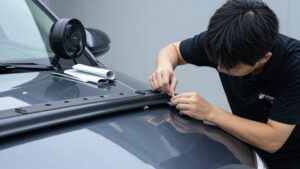
Beyond cooling, proper wiring helps either bar deliver consistent output. For Nilight or Rigid, choose a switch rated for the bar’s amperage: a standard on/off rocker suits basic control, while a momentary switch fits auxiliary functions.
Use a relay harness, keeping high current on the relay and sending only a low-current trigger from your dash switch. That protects switch contacts and thin OEM wiring from excess load. Match harness voltage, typically 12V or 24V, and check its plug against the bar’s pigtail or kit.
Feed power from your battery or auxiliary fuse block, with an inline fuse matched to rated draw. Ground to clean, bare metal to limit voltage drop and flicker. With the engine running, verify your bar’s consistent full-brightness startup and operation.
Mounting Space and Fit
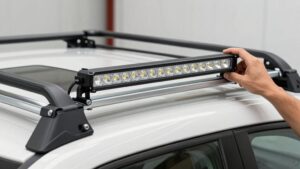
After confirming the wiring, measure the mounting area before choosing a bar. Measure available length, height, and width, then reserve space behind the lens for cable routing and included brackets or hardware. Nilight’s thinner, lighter profile often suits tight installs with less adjustment room required.
Rigid’s heavier housing and larger heat-sink mass may need deeper brackets, while its wider bezel can contact roof-rack tabs, bumper edges, or grille sooner.
Check that the supplied mounts let you set your target beam angle; a bulkier Rigid body may restrict tilt more than compact Nilight models. Finally, compare bar weight with your mounting points. Rigid’s extra mass can increase vibration loads, so reinforce weak brackets or sheet metal rather than assuming either setup fits securely without modification.
Lens Cleaning and Restoration
Clean optics matter as much as LED output: road grime and oxidation can sharply reduce either Nilight’s or Rigid’s beam throw. Start with a clean microfiber cloth and isopropyl alcohol, or a lens-safe cleaner, to lift film without scratching the polycarbonate.
If either bar’s lens looks hazy or yellowed, use a plastic headlight-restoration kit: work through progressively finer abrasives, typically 400–3000 grit, then polish. This removes oxidized material and can recover useful transmission, improving usable throw rather than changing LED output. Seal the polished surface with UV-protective clear coat, such as automotive 2K clear or UV acrylic, to slow renewed yellowing from sunlight and heat cycling.
Avoid acetone, strong solvents, and abrasive pads; they can pit the lens and permanently scatter light. Don’t open the housing for routine cleaning; internal fogging requires a different repair, not more polishing. Polishing won’t clear moisture trapped inside.
Waterproofing Under High-Pressure Wash
Although a Nilight bar’s IP67 or IP68 rating indicates resistance to dust and water under specified test conditions, repeated high-pressure washing can still push water past weaker gaskets or lens edges. A Rigid bar typically uses more robust sealing, so it’s less likely to develop moisture after washdowns. Budget Nilight units may rely on thinner seals or consistent potting and venting; repeated spray can produce lens fogging or expose failures around the bezel and mounting points.
IP ratings don’t guarantee resistance to a pressure washer. Keep the nozzle back from the housing and lens seams, and don’t aim at mounting gaskets or electrical entries. If you wash frequently, choose a bar designed for harsh cleaning, with industrial-grade seals. Check for condensation after washing; it signals compromised sealing.
Color Temperature Consistency
A printed 6000K rating won’t guarantee accurate color: budget emitters can show blue tint shifts or vary between pods, while tighter LED binning helps premium bars look more uniform. You’ll also see beam consistency affect perceived color, as glare and mixed spill can look bluer than the hotspot.
Compare tint-bin claims and real-world photos rather than relying on Kelvin ratings alone.
Color Accuracy
Don’t judge color accuracy by the advertised Kelvin rating alone: a budget Nilight bar may look far bluer than its stated temperature, while a Rigid bar’s better-matched emitters and optics are more likely to keep the beam’s color consistent across the bar. That difference matters when you pair the bar with factory headlights or auxiliary lights.
If Nilight shifts blue or purple despite its 6000K label, the mismatch can create banding and an uneven glow; Kelvin alone can’t describe perceived tint. Rigid’s better-matched emitters and optics offer a more reliable color match when you combine lights. Check real-world photos or beam videos shot under comparable conditions, and look for neutral white rather than a blue or purple cast. Judge the emitted color, not the marketing number.
Beam Consistency
When you compare beam consistency, Nilight bars are more likely to show left-to-right tint shifts or differently colored hotspots, while Rigid’s tighter LED binning and optical alignment usually produce a more uniform white beam.
On the road, you may notice Nilight’s budget emitters skew blue, sometimes above 8000K, and produce patches whose hues vary across the beam. This inconsistency usually appears as tint shift or colored hotspots rather than a direct brightness difference. Rigid’s more consistent emitters and alignment help preserve color from side to side and as the bar warms up.
Cheaper drivers can also make Nilight’s color and intensity seem less stable despite matching Kelvin claims. If beam uniformity matters for night driving, compare real-world photos or video at the same distance and aim angle; lumen and Kelvin ratings alone can’t verify consistency. That check reveals whether uneven color will distract you, obscure scene detail, or complicate judging road edges under conditions, where advertised specifications often fall short.
Road Vibration Performance
On rough roads, vibration can stress solder joints and LED-to-heatsink contact, making budget Nilight bars more prone to flicker or early failure than Rigid bars.
Rigid’s heavier housing and more substantial heat sinking help stabilize the assembly over repeated impacts, though secure mounting matters for either brand. For long-term road use, compare vibration resistance and mounting stability, not advertised lumens alone.
Vibration Resistance
Although both can handle normal road use, Rigid-style bars’ heavier cast-aluminum housings and sturdier mounts help keep their optics and LED boards stable over repeated bumps. Against Nilight-style bars, lighter shells and thinner components can let LED-board-to-heat-sink contact degrade under constant shake. Thermal contact loss raises heat and the risk of early emitter or driver failure.
You may find Rigid-style bars preserve their spot/flood pattern longer; micro-movement can shift optics or create hot spots. After rough use and washing, check for internal moisture and compare the beam after weeks of highway and off-road corrugations. Consistency suggests resistance, not guaranteed reliability.
A budget Nilight-style bar may work on roads, but repeated chassis shake tests whether its thermal path and optics hold calibration over time.
Mounting Stability
For mounting stability, a rigid metal housing and solid bracket pattern give Rigid-style bars an edge over lighter Nilight-style bars on rough roads. The thicker aluminum body, sturdier bezels, and mass can resist vibration-induced movement, while lighter budget construction may transmit more shock to its mounts.
Compare the included bolts and brackets, too: weaker or less corrosion-resistant hardware can loosen or rust sooner under road spray and repeated jolts. A well-retained lens and effective gasket help limit shifting and moisture entry when the assembly vibrates.
Whether you install the bar on a bumper, roof, or rack, use spacers and torque fasteners to spec. After a test drive, check for wobble; any movement signals that your bar or mounting hardware needs attention before rough-road use.
Long-Term Performance
When road vibration accumulates over thousands of miles, Rigid’s heavier cast-aluminum housing and thicker heat sink tend to preserve alignment and mounting integrity better than lighter Nilight bars, which may loosen or develop micro-cracks.
That advantage matters when you drive highways daily because repeated heat cycling can degrade LEDs and drivers sooner in bars with weaker thermal paths and materials. Rigid’s more robust heat management helps limit that risk.
Repeated shaking and temperature swings can also expose weaker seals; moisture or condensation may then disrupt beam consistency after months. Similar advertised lumen figures don’t guarantee similar durability: if components shift, scatter artifacts can blur the intended spot pattern. Rigid-style beam control aims to retain a cleaner cutoff.
If you use your truck occasionally or for light work, Nilight may be adequate. But for frequent pavement miles and daily vibration, Rigid’s buy-it-once positioning targets fewer failures and replacements over time, and steadier illumination across years of service use.
Beam Reach and Visibility
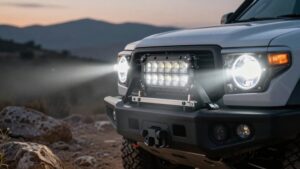
On a dark trail, usable reach depends more on beam control than advertised lumens: a Nilight bar can flood the foreground with scattered light yet project less useful illumination downrange than Rigid’s tighter spot or combo optics. That difference matters when you need to spot obstacles early, not just brighten the ground near your vehicle. Rigid’s engineered optics typically provide cleaner, longer throw; combo patterns add peripheral coverage.
Yet a strong foreground wash can dull your night vision, making distant details harder to see despite apparent brightness. Aim the bar for distance, not height alone, and assess its pattern on your terrain. Nilight can suit slower trails and tighter budgets, but its less controlled beam may fall short on highways or open tracks, too.
Conclusion
If your driving demands consistent beam optics, long reach, controlled color temperature, and strong vibration resistance, Rigid is the safer choice. Nilight can be good enough for occasional use if its fit, wiring, cooling, and waterproofing meet your needs, but you should verify those details before installation.
Compare warranty coverage and support, too. Choose Nilight to save money on lower-risk builds; choose Rigid when dependable performance matters more than upfront cost, especially in harsh conditions.