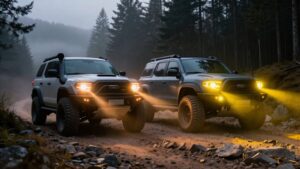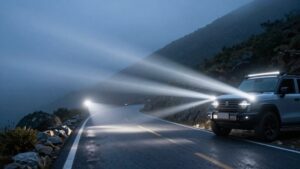
Do Off-Road Lights Need to Be Covered on the Road? State Rules
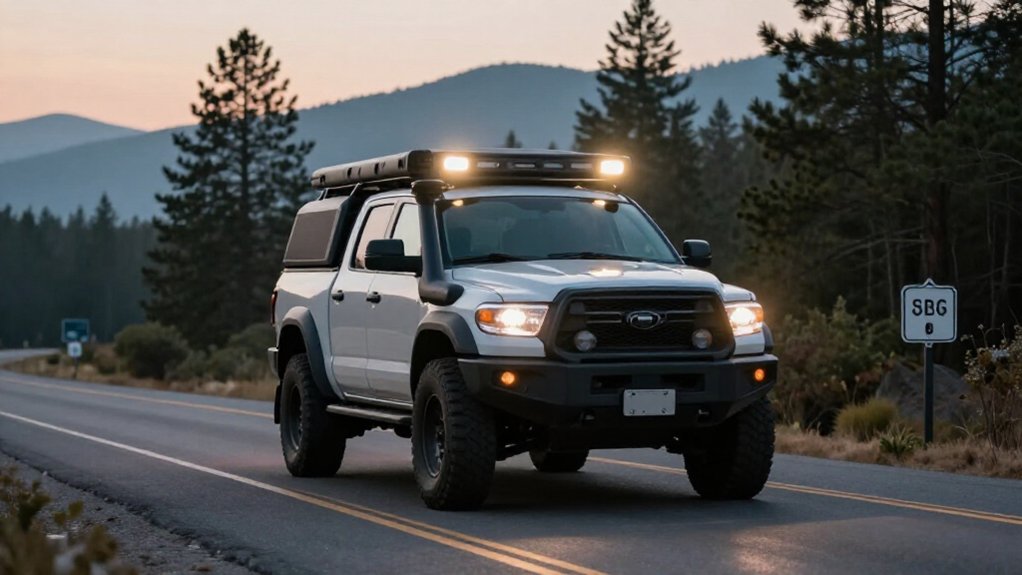
You may need opaque covers on off-road lights when you drive on public roads; requirements vary by state. Check your state’s vehicle code for rules on DOT or SAE approval, lamp placement, beam pattern, aim, and intensity. If a statute requires lamps to be covered, switching them off may not be enough—use covers that fully block visible light.
Roof-mounted bars must also meet height and mounting rules. Check local requirements before removing covers; the details below explain key exceptions and precautions.
State-by-State Cover Requirements
Because off-road light rules vary by state, check the vehicle-lights or equipment statutes where you drive rather than relying on general U.S. guidance.
Your state’s code may require non-DOT auxiliary lamps, especially forward-facing white LED bars, to be DOT-approved or kept from operating on public roads. Some states also require covers to prevent visible beam output. If the statute says lamps must be “properly covered,” use an opaque cover that fully blocks the lens; a partial shield may not satisfy that standard.
You can keep lights mounted, but switch them off on public roads. If your code uses covers as proof of compliance, fit opaque covers that fully block the lens. Check auxiliary-light provisions in California, Florida, or Georgia, and confirm the statute.
Covered-Lamp Legal Definitions
When a state requires an auxiliary lamp to be covered, use an opaque cap or sleeve that fully blocks its lens and prevents any beam from escaping.
A covered lamp is legally treated as not visibly illuminated from outside your vehicle. That distinction matters when an officer checks non-DOT equipment: the lamp’s road-use status depends on whether it can emit visible light, not simply whether you’ve switched it off. Some states expressly require non-approved auxiliary lights to be properly covered.
| Road-use condition | Legal significance |
|---|---|
| Covered, no visible output | Treated as non-illuminated |
| Uncovered or emitting light | May trigger equipment restrictions |
Treat the cover as part of your lamp’s state on roads. Check state wording, and keep it covered while driving to clarify compliance and reduce glare.
Beam-Blocking Cover Standards
To keep auxiliary or non-DOT lights from projecting on public roads, use an opaque cover that completely blocks the lens, not a translucent or partial cap.
Many states require you to make these lamps effectively nonprojecting on public roads. Choose a hard plastic, rubber, or neoprene cover sized for your light; it must conceal the lens so no illumination is visible outside your vehicle. Some jurisdictions require covers on roadways whenever you carry or install non-DOT lights for off-road use, even if switched off.
Don’t rely on an uncovered lamp being off; enforcement can treat that as uncertain. A strap or clip system helps keep covers in place during roadway travel and lets you remove them off-road. Ensure the cover blocks all output before driving at all times.
Roof-Mounted Light Bar Placement
Before mounting a light bar, check your state’s roof-height limits and make sure the installation doesn’t obstruct your windshield or driver’s view. Position it to face forward without creating unsafe glare or an unlawful beam aim.
Because roof-mounted bars may count as forward-facing auxiliary lights, confirm your state’s lighting rules before using one on public roads.
Roof Height Restrictions
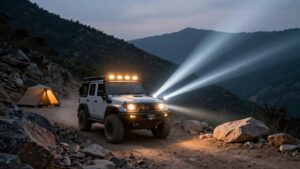
Roof-mounted light bars can violate state rules based on their height, mounting position, and beam direction, even when switched off. Your state may limit how high an auxiliary lamp sits above the road or where you may attach it to the roof to reduce road glare safely.
A bar that’s legal on private trails may still fail public-road requirements, even if you leave it switched off; inspectors may assess its mounting geometry as well as its operation.
Check your state’s auxiliary, spot, or driving-lamp statute before road use. Confirm permitted roof height and aiming requirements, and don’t assume a cover alone makes an otherwise noncompliant installation legal. Adjust or remove the bar if you can’t meet applicable limits, protecting other drivers from glare.
Forward-Facing Placement
Beyond roof-height limits, forward-facing placement can bring a light bar under the same rules as auxiliary driving or spot lamps. Your roof-mounted bar faces traffic, so states may regulate it like other roadway-aimed lights; approval alone doesn’t settle placement or beam aim. Because it’s near headlamp height, adding it above headlights or fog lamps may exceed limits on simultaneously illuminated forward lights.
| Check | Road-use concern | Safer action |
|---|---|---|
| Aim | Roadway-directed beam | Verify state rules |
| Cover | Uncovered output | Fit opaque cover |
Even switched off, an uncovered forward-facing bar may remain a gray area. For trail use, fit an opaque purpose-fit cover on public roads. Treat installation as high risk: check your state’s auxiliary lighting limits, control illumination, and aim the bar to avoid dazzling other drivers.
Windshield Clearance
Because a roof-mounted bar sits above the windshield line, its beam can enter your normal field of view or glare oncoming drivers if it’s aimed too high.
Many states classify these bars as auxiliary forward lamps, so road-use rules may require an approved beam and aim even when you’re covering the unit. Check your state’s lighting statutes for mounting height and aiming limits before driving on public roads.
Position and adjust the bar so its beam stays outside your normal windshield sightline and doesn’t dazzle oncoming traffic at highway distances.
If the bar isn’t DOT/SAE compliant, don’t use it driving. Fit an opaque cover that blocks light from reaching the road from its elevated position; a cover doesn’t make a noncompliant lamp legal.
Driving With Covers Removed
Before removing covers, check your state’s rules; many require non-DOT auxiliary lights to remain off or fully obscured on public roads.
Don’t use uncovered lights on open roads unless they’re approved, properly aimed, and compliant with limits on number and placement. Store covers securely so you can reinstall them when required.
State Cover Requirements
State rules differ, but some require opaque covers over non-DOT-approved auxiliary lights on public roads, even when the lights are switched off.
Requirements vary by state and may cover some auxiliary lights, so don’t assume that switching a lamp off satisfies the law. In many jurisdictions, you’re expected to prevent non-approved lights from emitting toward the roadway while driving.
An uncovered lamp can create uncertainty during inspection because an officer may not be able to verify its status from outside your vehicle. A fully opaque cover blocks output and removes that ambiguity. Before using streets, check your state vehicle code for the cover requirement and which lamps it covers. If the rule applies, install covers and keep them in place whenever required.
Open-Road Restrictions
When you drive on public roads with covers removed, non-DOT-approved auxiliary lights can violate state rules even if they’re switched off. Forward-facing light bars and pods attract scrutiny because they project beams toward the roadway ahead. Many states restrict how many forward-facing lights you may have operating at once, and they may require DOT approval plus a compliant beam pattern and aim.
Removing a cover doesn’t make a noncompliant lamp legal; switching it off may not settle the issue. Some jurisdictions require an opaque cover, rather than merely an off switch, to prevent the lamp from appearing illuminated. If it’s uncovered, an officer may not be able to confirm its status or lawful appearance from outside your vehicle. Check your state’s equipment rules before entering public roads.
Safe Cover Storage
Keep opaque, lens-fitting covers in a dedicated spot on the trail side of the cabin so you can replace them quickly before a road segment. Choose hard plastic, rubber, or neoprene covers that block the entire lens; pinholes or translucent sections may leave lights appearing illuminated to enforcement. If you use a street-mode switch or relay, remove covers only after the auxiliary lights are off and you’re preparing for road use.
Don’t treat a switch as a substitute for required covers. Check strap- or clip-style quick releases for damage, and carry backup covers. A missing or loose cover can expose forward-facing lights during a short road hop between trails. If you store covers elsewhere, confirm they fit your exact light dimensions before departure; a mismatched cover may not fully block the beam.
Preventing Lens Damage
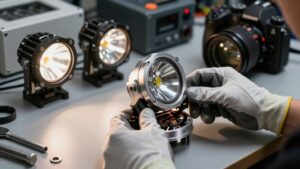
A durable, fully opaque cover protects off-road light lenses from scratches and cracks caused by trail transport and vibration while preventing the auxiliary beam from projecting when the lights aren’t in use. Choose a hard-plastic, rubber, or neoprene cover sized to fit each lamp; a loose cap may shift during travel and expose the lens to impact. Use a fully opaque design, not a tinted shield, so no auxiliary beam can pass through when you’re driving near public roads.
That physical barrier also makes the lamp’s off state clear from outside the vehicle, reducing uncertainty during a roadside check and supporting covered-or-DOT-aimed expectations. Select strap- or clip-release covers you can remove quickly at the trail, then secure them before road travel to protect lenses.
Emergency-Vehicle Exemptions
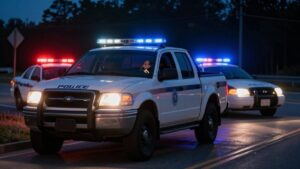
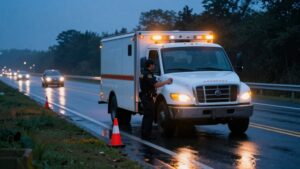
Although many states exempt designated police, fire, and EMS vehicles from some auxiliary-light restrictions, those exemptions generally apply only to officially authorized emergency vehicles and equipment permitted by state law. That status may allow approved warning colors, such as red, blue, or amber, and operating modes that ordinary drivers can’t use. It doesn’t automatically authorize every off-road bar or pod.
Your state’s rules may still govern mounting, beam aim, pattern, and when you may switch the lights on while traveling on public roads. Those conditions can determine whether you must cover a lamp, keep it off, or use approved equipment instead. If you aren’t driving an officially designated emergency vehicle, don’t assume an exemption applies; use auxiliary lights on-road only when they meet applicable DOT/SAE highway requirements, or keep them covered or off. Check the statute before relying on exemptions.
Forgetting to Check Local Codes
Because state rules vary, check your exact vehicle code before using an off-road light bar or pod on public roads.
State requirements differ, so don’t assume a switched-off lamp is exempt. Some jurisdictions require opaque covers even when you turn auxiliary lights off.
Forward-facing bars and pods need scrutiny, especially when aimed toward traffic. Check DOT/SAE approval, beam pattern, intensity, mounting, and aim; non-DOT equipment may be prohibited regardless of use.
- Confirm whether your state requires covers on installed lights.
- Verify permitted number, position, color, and operating conditions.
- Match each lamp’s approval and beam specifications to code.
Before driving, read the relevant vehicle-code section and cited requirements. If unclear, don’t guess: keep lights covered or remove them until you confirm compliance.
Check Your State DMV Website
Start with your state DMV or highway patrol website, then follow its links to the exact vehicle-code sections on auxiliary lighting. Check for “auxiliary driving, spot, or fog lamps,” “auxiliary lamps,” and “vehicle lighting equipment.” Record whether your state requires opaque covers or merely prohibits you from illuminating non-DOT lights on public roads.
If rules rely on DOT/SAE beam and aim standards, verify whether they restrict switching on non-DOT auxiliary lights while driving; that restriction can make covers a practical safeguard.
Use statute links to check for “opaque covers,” “protective caps,” and limits on when auxiliary lights may operate on streets. Don’t assume a switched-off light bar meets the rule.
If the DMV page leaves room for doubt, contact your state DMV or inspection line and ask whether a switched-off, forward-facing light bar must be covered during road driving.
Conclusion
Before driving on public roads, check whether your state requires covers on off-road lights and whether beam-blocking covers meet its rules. Confirm limits on light-bar placement, permitted colors, and use with your state DMV and local codes; requirements can vary by location.
Keep lights covered or switched off when required, and remove covers only where lawful. These checks help you avoid citations, prevent glare for other drivers, and protect your lenses between off-road trips.
For practical guidance on this related topic, see our guide to are reverse lights required law rules.