Amber vs Yellow Off-Road Lights: Is There a Real Difference?
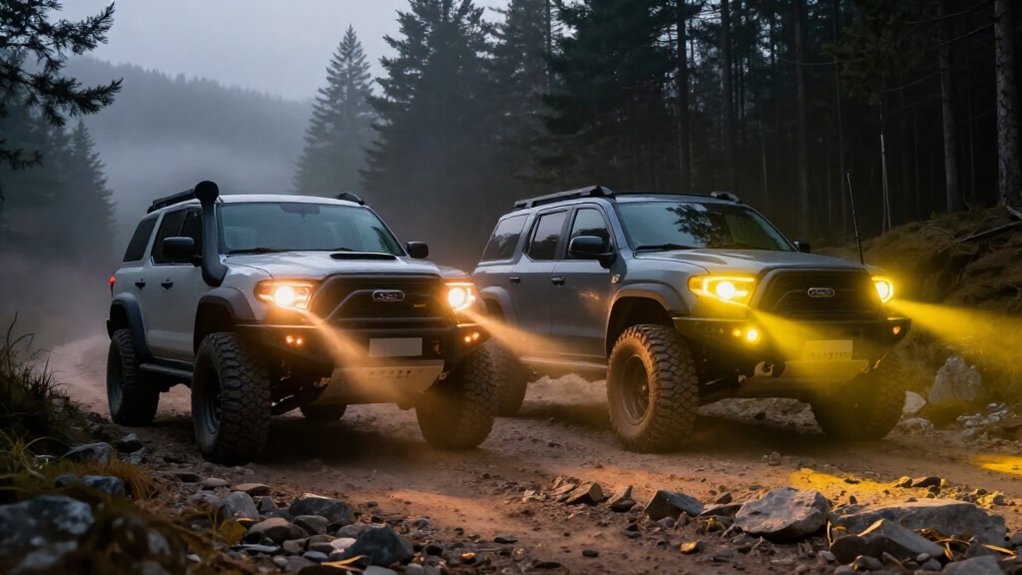
Yes, amber looks more orange than yellow, but color alone doesn’t determine performance.
Yellow, around 3000–3500K, can reduce harsh glare in light fog or snowfall; amber may suppress backscatter better in dense dust, drifting snow, or spray.
Lens optics and beam pattern matter: a low, tight fog beam helps near the ground, while spot beams extend distance.
Pair low amber with white lights when conditions allow, check local laws, and consider how your setup affects visibility.
Yellow vs. Amber Wavelengths
Across the warm spectrum, both yellow and amber LEDs use longer wavelengths than white light, which can reduce glare from snow, fog, and other airborne particles. You may notice the difference when conditions worsen: yellow typically falls around 3000K–3500K, while amber appears more orange and reaches farther into the warm spectrum. In denser dust, heavy snow, or opaque haze, amber can suppress the glare effect somewhat more. Both still reduce reflection compared with white light, helping you judge hazards without treating color as a substitute for cautious speed.
| Color | Typical character | Practical use |
|---|---|---|
| Yellow | 3000K–3500K | Winter contrast |
| Amber | Warmer orange | Dense particulates |
| White | Cooler spectrum | More reflection |
Choose yellow for winter driving; reserve amber for heavier airborne loads, and maintain a clear stopping distance.
Lens Filters and Beam Patterns
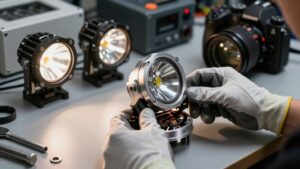
Color affects how much backscatter you see, but the lens optics and beam pattern determine where the light goes. Amber and yellow filters use longer wavelengths than white, generally reducing harsh backscatter in mist, fog, snow, and rain. Yet manufacturers pair them with different TIR or reflector designs, so intensity distribution can change.
In off-road use, these optics can preserve useful throw while softening glare near the ground, helping the beam look less washed out around airborne particles.
Choose the pattern for your terrain, too. A spot emphasizes distance; a flood or true hybrid fills the near trail so you can pick out rocks, ruts, and edges without lighting up the fog layer. Yellow, often around 3000–3500K, may appear brighter in the same optic; amber can suit denser particles. Match lens and pattern to mounting height and conditions for safer, more consistent visibility.
Road Sign Recognition Distance
How far ahead can you read a road sign in poor weather? Your recognition distance depends on contrast, airborne particles, and beam placement, not color alone. Amber and yellow both improve low-visibility contrast, but amber’s longer wavelength can reduce backscatter in dense dust, fog, or snow. That may lessen the glare wall and help you identify signs at greater range than with whiter light.
In heavy fog or snowfall, yellow around 3000–3500K often makes signs easier to read sooner than white.
When conditions worsen, amber generally holds contrast better; yellow remains a practical middle choice in moderate conditions. Mount either light low and aim it. Lower placement can limit reflected light reaching your eyes or camera, preserving sign legibility farther ahead. Slow down regardless: added recognition distance doesn’t guarantee enough stopping distance.
Night Vision Adaptation Effects
Beyond reading signs sooner, light color can affect how well your vision holds up as you drive through poor conditions.
Amber and yellow use longer wavelengths than white. That difference can reduce glare and improve contrast when fog, sleet, or snow scatters light. With less reflected brightness, you’re more likely to keep seeing edges and judging distance instead of facing a washed-out “wall of light.”
Amber’s longer wavelength may cut reflection more in dense particles, helping you retain usable vision. Yellow remains a middle ground for fog: it limits glare and can feel less fatiguing while preserving long-range definition. Neither color guarantees safe visibility, so reduce speed, increase following distance, and avoid relying on lamps to replace careful driving.
Snow Depth and Terrain Fit
When snow gets deeper or starts blowing across the trail, amber usually gives you the clearer view. Its longer wavelength penetrates drifting snow and airborne ice crystals better than yellow, reducing the bright “wall of light” that can hide hazards. On ruts, powder, and forest tracks, amber contrast helps you read the ground sooner, even when snowbanks or moving slush reflect light toward you.
- Choose yellow, often 3000K–3500K, for light-to-moderate snowfall or fog at lower speeds; it cuts moisture with less glare than white.
- Choose amber when wind drives drifts, plow spray, or gritty snow-mud mixes across your line.
- Match beam reach and speed to visibility; slow down when depth, terrain, or blowing particles conceal obstacles.
Use that distinction to choose lights for conditions.
Connector Corrosion in Salt Spray
In salt spray, chloride-laden moisture can breach a light connector’s seal, attack its metal pins, and raise electrical resistance.
Unsealed or poorly sealed plugs let saltwater enter the housing and wick along wire strands, forming a conductive electrolyte. This can cause intermittent power or dim or failed LEDs. Low-mounted amber or yellow lights face greater splash exposure, so sealing matters. Choose waterproof, salt-spray-resistant connectors; marine-grade parts offer protection. Confirm IP-rated housings and snug grommets and cable glands before driving.
After winter road exposure, inspect the plugs for looseness and green or white residue, signs of copper oxidation or corrosion on aluminum or tin pins. Don’t assume tightening will fix a damaged contact. Disconnect power first, then clean pins and re-crimp terminals when needed.
Glare for Oncoming Drivers
If your off-road lights dazzle oncoming drivers in fog, rain, or snow, switching from white to amber or yellow can reduce the illuminated haze and backscatter that create a “wall of light.” Amber’s longer wavelength may help most in dense conditions such as heavy flurries; yellow also reduces glare compared with white.
Aim your lamps downward and mount them low when your setup allows; beam placement can matter as much as color.
- Amber limits intense reflections from airborne moisture and particles.
- Yellow, often 3000K–3500K, is also less glaring than white.
- In dense snowfall, choose amber and verify your beam stays below approaching drivers’ eye lines.
Test the pattern on a route, and dim or switch off lamps when traffic approaches; color never replaces safe lighting.
Yellow’s Lower Glare Advantage
Yellow light can reduce backscatter from snow and mist, helping limit glare and preserve contrast. You’ll find it easier to spot obstacles and terrain without the view washing out.
Its clearer beam can also help oncoming drivers see your vehicle more easily.
Reduced Snow Glare
When blowing or falling snow turns your headlights into a wall of glare, yellow LEDs around 3000K, 3500K can make the scene easier to read than cooler 6000K, 6500K white light. Because snow crystals and suspended ice scatter light back toward you, warmer yellow can minimize reflection-related haze and preserve useful contrast against a bright snowpack.
- You may distinguish road edges more clearly when white light washes out the surface.
- In heavy snowfall, yellow can give distant objects cleaner outlines through reflective haze.
- If snow glare is your main concern, yellow offers a practical middle ground; amber remains warmer.
Choose a properly aimed auxiliary beam, keep your speed within stopping distance, and don’t treat reduced glare as proof that the road ahead is clear at night.
Easier Oncoming Visibility
Reducing glare helps oncoming drivers read your vehicle without facing a harsh wash of light. Yellow light, typically around 3,000–3,500K, gives approaching traffic a softer reflection in airborne moisture and snow crystals than amber. In mist or light fog, that lower glare can keep your lamps from appearing as a white wall, so drivers can recognize your vehicle and judge its position without being dazzled.
Yellow cuts through light precipitation cleanly compared with cool white, improving contrast so people facing you can distinguish the lamp pattern and vehicle outline. In high humidity, you may find the warmer output comfortable, with less eye strain. Amber can perform better in denser particulates, but choose yellow when you prioritize visibility that’s easier on oncoming eyes.
Motorcycle and 4×4 Setup Choices
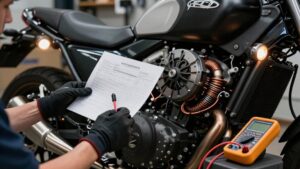
On a motorcycle, you can pair selective yellow or amber pods near the front axle with a clear or white beam for distance. On a 4×4, mount amber lights low on the bumper or in factory fog pockets to limit glare from airborne particles.
Choose amber for dense dust or snow, and yellow for fog or lighter snow when glare reduction matters most.
Motorcycle Light Configurations
For motorcycle use, a practical setup pairs a small, low-mounted amber light near the front with higher-mounted clear or white lights for range in clear conditions.
- Put amber close to the axle or front end; its low, tight beam can reduce glare from fog, rain, snow, or dust.
- Choose yellow when you want conspicuity and less glare in light fog or snow; amber generally performs better in denser particles.
- Use separate circuits so you can switch between a fog-ready beam and a long-range auxiliary without creating a bright wall of reflected light.
Aim each lamp carefully, keep output within legal limits, and test the pattern when stationary before riding.
Select the beam for actual conditions, not maximum brightness alone, for your route and conditions.
4×4 Light Setups
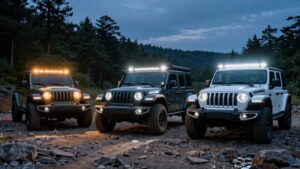
Because amber generally cuts through dense dust, fog, and snow better than yellow, a 4×4 can benefit from low-mounted amber fog-style lights paired with higher-mounted white or clear pods for distance on clear nights. Keep amber lamps low and aim them toward the road; this placement limits backscatter and the bright fog wall that can obscure hazards.
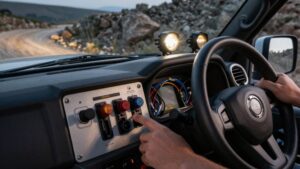
Mount white or clear pods higher, secure their brackets against vibration, and aim beams to extend your view without dazzling oncoming drivers. Use separate switches so you can shut off distant beams in poor visibility and retain the low fog pattern.
Check local rules, wiring protection, and beam alignment after installation; recheck fasteners after rough trails. Test the pattern at low speed, then adjust for vehicle load before using it on public roads or shared trails in changing conditions.
Choosing Amber or Yellow
Choosing amber or yellow depends on what you ride through: yellow light, typically around 3000K–3500K, can reduce glare and improve contrast in fog, rain, and snow, while longer-wavelength amber tends to penetrate heavier dust, sand, and muddy spray more effectively.
For motorcycles, mount selective yellow or amber near the front axle; this improves conspicuity and keeps the beam low, where airborne glare is less harsh. For a 4×4, mount weather lights as low as practical to limit light bouncing back from precipitation. Choose yellow for fog, rain, or snow; choose amber when you expect dense dust, drifting snow, or off-road spray. Add reach only when conditions require it.
- Yellow: fog, rain, snow.
- Amber: dust, sand, spray.
- Mount low; aim carefully.
Check Local Auxiliary-Light Laws
Before buying amber or yellow off-road lights, check your local rules for permitted colors, wiring, mounting height, and aim; a separate switch may be required, and legal color alone won’t prevent glare violations. Some jurisdictions limit auxiliary lamps to white, amber, or yellow, or require them to operate independently of your headlamps. Confirm mounting locations and beam aim requirements so your lights don’t dazzle oncoming drivers.
Check whether switchback daytime-running-light modes or color-changing functions face separate restrictions. If you’ll use public roads to reach trails, find out whether authorities classify your lamps as fog lights or driving lights; each category may have different intensity, beam-pattern, and visibility rules. Consult your state or province’s official lighting guide, or contact its transport authority. Laws usually depend more on lamp category and wiring than on amber versus yellow.
Conclusion
Amber and yellow off-road lights aren’t interchangeable: wavelength, lens filter, beam pattern, terrain, and glare all affect what you can see and how visible you are to others. Choose a beam that suits your motorcycle or 4×4, and don’t assume a warmer color always improves visibility.
Aim lights carefully, use them responsibly around oncoming drivers, and check local auxiliary-light laws before installation. Test your setup in safe conditions so you know how it performs before you rely on it.