Are Light Bars Street Legal? What Gets You Pulled Over
Light bars may be street legal only when they meet your state’s rules for color, height, aiming, and use.
You can get pulled over for red or blue forward-facing lights, uncovered bars where covers are required, excessive glare, flashing effects, or operating a bar on public roads where prohibited.
Check DOT markings and inspection rules; certification alone doesn’t guarantee compliance.
Wire a reliable shutoff and aim carefully.
These additional checks can help you avoid trouble.
Auxiliary Lamp Color Limits
Although rules vary by state, forward-facing auxiliary lamps generally need to emit white or clear light; red and blue are typically restricted to emergency or official vehicles, while amber is usually reserved for signaling functions. Before you drive, check state rules and DOT requirements. White or clear light is usually appropriate forward illumination; amber may be limited to signaling.
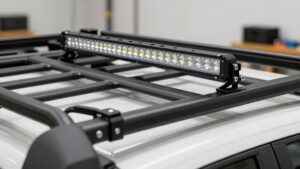
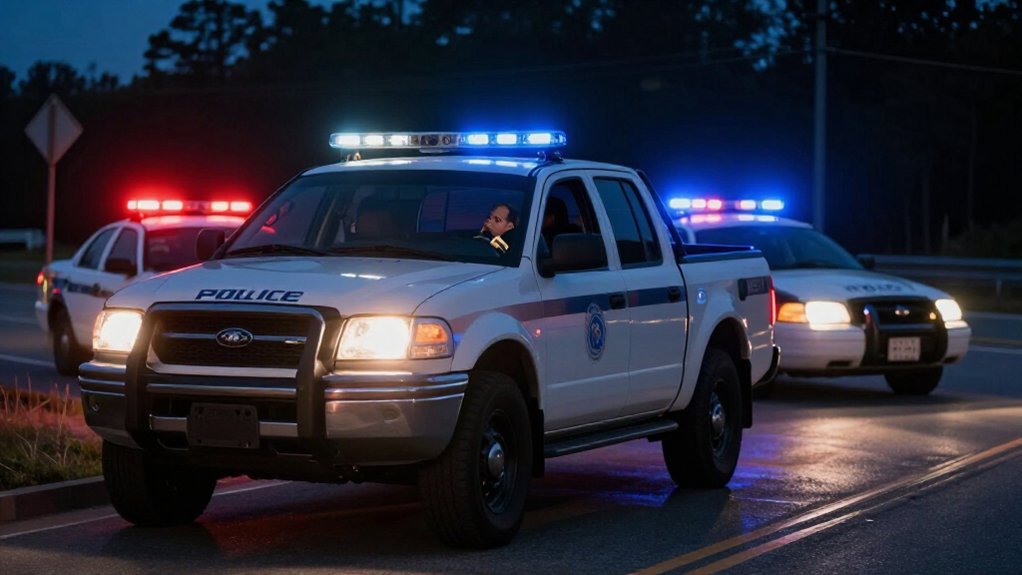
Don’t use red or blue on a forward-facing bar: an officer may treat them as unauthorized emergency signals and pull you over. Many states prohibit flickering or rotating lamps because they can distract drivers. An uncovered LED bar may invite enforcement even when it’s off, if your state requires a cover.
Verify rules before taking the bar onto public roads; aftermarket equipment isn’t automatically legal.
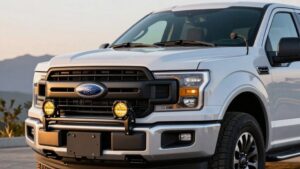
Light Bar Mounting Height
Mount your light bar within your state’s permitted height zone, measured from the road—not the vehicle body.
Height rules often distinguish fog lights from driving lights. The zone may stay near the grille, and a suspension lift can raise your bar beyond the limit even if its position on the truck hasn’t changed. Check classification rules first.
For example, Texas allows two auxiliary driving lamps 16 to 42 inches above a defined surface; Georgia allows one auxiliary driving light within the same ground-measured range. Some states limit where the beam may strike the road. A bar mounted too high, or aimed so its intense beam reaches a prohibited point, can attract a traffic stop. Verify both height and aim under your state’s law.
High-Beam Interlock Rules
If your state allows an LED light bar on public roads, wire it to operate only with your vehicle’s high beams, not as an independent substitute. This interlock limits glare, but it doesn’t guarantee legality. Police may treat your bar as auxiliary driving lights and check whether its beam strikes the road within the required distance: often 75 feet, even when your high beams are off. A separate switch, prohibited forward colors, or flashing or rotating output can invite a stop.
| Check | What you should know |
|---|---|
| Interlock | Tie bar operation to high beams. |
| Aim | Meet your local distance limit. |
| Bans | Some states prohibit public-road use outright. |
Mounting height and precise aim still matter where conditional use is allowed. Don’t assume an interlock makes a harsh, poorly aimed bar lawful; confirm your state’s rules before driving with it illuminated.
DOT Certification Markings
Check the light bar for a DOT certification marking, but don’t assume the mark guarantees approval or legality in your state. Where required, you’ll need the proper certification label and must aim the beam to meet local rules.
Without a marking, you may face a higher risk of a ticket for noncompliant lighting.
DOT Mark Versus Approval
A DOT marking can help show that a light meets federal lighting standards, which many states use when evaluating road legality. But the mark isn’t blanket approval for every light bar, vehicle, or use. An off-road LED bar may carry a DOT logo yet still violate your state’s rules for auxiliary lights.
Some states rely on federal DOT guidance, so an unevaluated bar may be treated as noncompliant, regardless of how bright it is. A marked bar can also get you ticketed if its beam is aimed poorly, throws stray light, or exceeds applicable brightness limits on your setup.
Before driving with a bar, check your state’s auxiliary-light limits, beam-aiming and stray-light distance rules, and requirements for covers or switching it off. Treat the DOT mark as one compliance indicator, not a guarantee of legality.
Required Certification Labels
For road use, choose a light bar with a DOT certification marking—typically a “DOT” logo on the housing.
Some states require DOT-approved lights, and federal lighting requirements can rule out off-road LED bars that haven’t been evaluated. A covered bar isn’t automatically compliant. Check the housing for the certification marking, then confirm the product is intended for road use before you install it or test it on public roads.
| Check | What to verify | Why it matters |
|---|---|---|
| Housing | DOT marking | Visible certification |
| Product | Road-use status | Avoid off-road-only bars |
| Before driving | Verify label | Confirm intended use |
Don’t rely on a retailer’s broad “DOT compliant” claim alone; inspect the light itself. If the marking isn’t present, choose another model before taking your vehicle onto public roads first.
Missing Marking Consequences
Missing the required DOT marking can make your light bar more likely to be treated as noncompliant and raise your risk of a ticket.
Check the lamp housing for a visible DOT logo or certification mark; officers often look for it during a traffic stop. Aimed beams and secure mounting won’t necessarily protect you if your state requires DOT-approved auxiliary lights. Vermont, for example, explicitly imposes that requirement.
Even where statutes don’t name light bars, an officer may cite you under general lighting or unsafe-equipment rules. Some states rely on DOT standards rather than setting separate limits, so high output or proper installation doesn’t establish legality. Before driving, verify that the lamp carries the required marking and check your state’s rules for auxiliary lighting.
State Inspection Requirements
Your state inspection may check whether your light bar meets equipment standards, carries required approval, and complies with local road-use rules.
Inspectors can assess beam aim, brightness, glare, and whether you must cover the bar on public roads. A noncompliant light bar can fail inspection or lead to a citation, so check your state’s requirements before driving.
Inspection Equipment Standards
Because inspection rules vary by state, a light bar that’s legal off-road may still fail a vehicle inspection if it lacks required DOT approval, exceeds limits on front-facing lights, or isn’t properly aimed or covered.
Inspectors classify a bar as an auxiliary driving light, so you’re subject to rules governing how many front lights your vehicle may carry. Some states restrict high-intensity beams from striking the roadway within a set distance, commonly 75 feet; improper aim can create glare and jeopardize approval.
Certification rules differ: Vermont, for example, requires aftermarket lights to carry DOT approval. Don’t assume an “off-road only” label exempts your setup from inspection or roadside enforcement. Confirm your state’s equipment standards and use a road-acceptable cover or aiming configuration when required.
Required Lighting Checks
Passing a road-use check takes more than proper aiming: inspectors may also verify that your light bar meets DOT or other state-approved lighting standards.
Check these items before inspection:
| Check | What inspectors verify |
|---|---|
| Approval | DOT or state approval |
| Aim | Keep high-intensity beam off roadway within required distance, often 75 feet |
| Output | Candlepower caps; some states use 300-candlepower thresholds |
| Color/use | Forward lights must be clear/white, not blue/red; no flicker or rotation |
Vermont requires DOT-approved aftermarket lights; an unapproved bar can fail a check. Confirm your state’s limits rather than relying on lumen ratings alone.
After approval, use matters: California requires off-road lights switched off and covered with an opaque cover on public roads. Keep the bar covered or disabled whenever road rules require it, even if it passed inspection.
Noncompliant Light Bar Penalties
If your light bar violates state lighting rules, you could face a roadside citation and fail inspection. Inspectors may treat an unapproved or poorly installed bar as noncompliant auxiliary lighting; Vermont may require DOT approval.
Even where use is allowed under conditions, aim the beam so no part strikes the roadway about 75 feet ahead. Aiming violations bring tickets and inspection failures. In California, keep the bar off and covered with an opaque cover on public roads; an uncovered or lit bar at inspection can prompt penalties.
Kentucky and Louisiana prohibit public-road operation, so turning it on while driving can trigger enforcement. Check limits on lamp count and mounting height: exceeding them can earn a citation and a failed inspection.
Emergency Roadside Repairs
When your vehicle breaks down at night, pull fully off the travel lane onto stable ground, set the parking brake, and use your hazard lights. If available, place a DOT-compliant warning triangle or flares properly. Don’t rely on unapproved high-intensity work lights or light bars; officers may treat them as unsafe distractions.
Keep auxiliary lights covered or aimed away from the roadway. If repairs put you near traffic, call roadside assistance or emergency services rather than adding questionable lighting.
| Check | Safer choice | Avoid |
|---|---|---|
| Position | Stable ground, fully off-lane | Shoulder edge |
| Lighting | Hazards; compliant warning device | Unapproved light bar |
Set headlights appropriately, and don’t start repairs until you can work safely. Stopped vehicles don’t make glare-producing emergency lighting lawful; use only necessary, controlled signals.
Avoiding Glare for Other Drivers
Avoiding glare means treating your light bar as a potential hazard even when it’s aimed downward. That angle alone doesn’t make it safe or legal on public roads. Many states require you to switch off off-road lights or cover them with an opaque cover whenever you drive on-road. California, for example, requires off-road lights to be off and covered because their intense output can distract or temporarily impair oncoming drivers.
Check your state’s rules before using the bar on-road. Some laws define acceptable aim by where the beam hits the pavement: Arizona, Kansas, and Ohio use a 75-foot limit, while Alaska and Utah prohibit directing any part of the beam onto the roadway.
Mount and aim the bar to keep its beam out of other drivers’ sightlines. Use the specified opaque cover. It reduces glare if switched on while driving.
Improper Light Bar Wiring
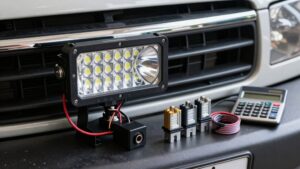
Improper light bar wiring can create both electrical hazards and a reason for a traffic stop. When you skip a fuse or connect power straight to the battery, you risk a fault and an unsafe vehicle citation. Use a relay and switch so the bar can’t turn on unexpectedly. Check your circuit and trigger wire; the bar shouldn’t stay lit with low or high beams unless rules permit it.
- Size wiring correctly, secure it with strain relief, protect connections, and maintain a ground to prevent flicker.
- Add control so you can switch the bar fully off on roads.
- Cover it when your state requires coverage.
A flickering or poorly controlled bar may violate lighting rules and draw enforcement. Verify requirements before driving.
Photograph Your Light-Bar Setup
Photograph your light-bar setup before driving so you can document its position, height, beam pattern, markings, and controls.
Take clear head-on and side photos, plus one from the driver’s seat, showing placement and height above the road. Aim at a dark wall or garage door, photograph spot and flood spread, and check whether high-intensity light reaches the roadway far ahead.
States may use 75-foot limits or bar any high-intensity beam from landing on the road. If you use an LED cover, photograph it on and off; California requires an opaque cover for on-road travel.
Capture labels, including DOT approval, and photograph wiring and switch location to show how you control the bar. Laws may restrict activation while driving, and unsafe-lighting rules can trigger a stop when aim seems reasonable.
Conclusion
Before you install a light bar, check your state’s rules for lamp color, mounting height, high-beam interlocks, DOT markings, and inspection requirements. Wire it correctly, aim it to limit glare, and switch it off on roads when required.
If a roadside repair leaves the setup altered, don’t drive until you’ve secured and tested it. Photograph your installation and keep the images with your vehicle records. A compliant setup helps you avoid citations and keeps drivers safer.
Whip Light Height & Clearance Calculator
Add up roof or rack height, mount height and whip length, then check the total against a clearance limit you enter. Free, no sign-up.