Are Reverse Lights Required by Law? Rules for Trucks and Add-Ons
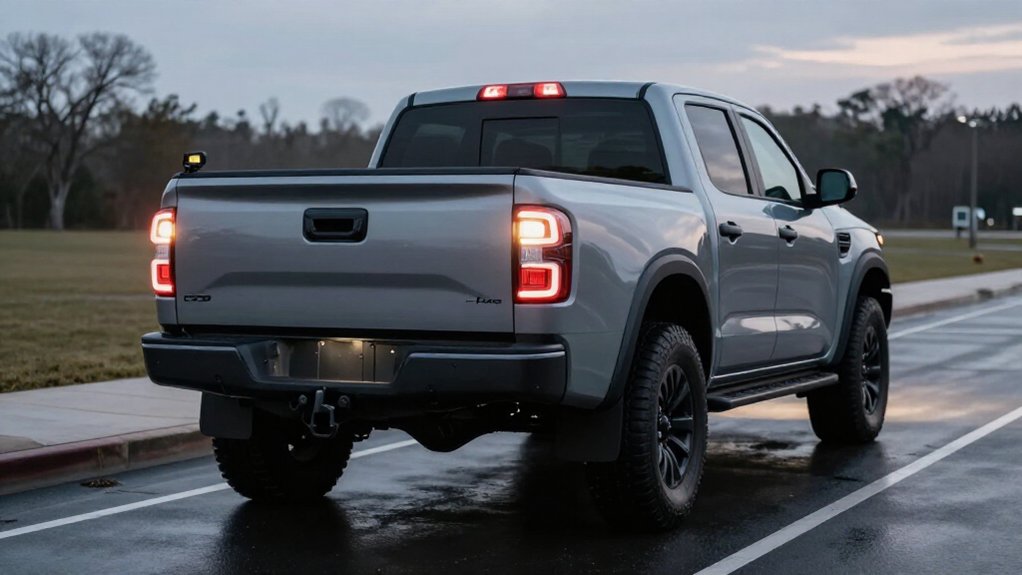
You can’t assume reverse lights are required on every truck.
Federal rules don’t generally require them on all commercial vehicles, but your vehicle’s standards and state or provincial laws may.
If your truck has backup lamps, keep them working, white, visible, and properly positioned; added lights mustn’t obscure or imitate required signals.
Check local inspection rules before removing or modifying lamps.
You’ll also want to verify how nighttime backing, work lights, hitch illumination, and wiring affect compliance.
Federal and State Rules
Federal rules generally don’t necessarily require every commercial truck or trailer to have reverse lights: FMCSA §393.11 lists required lighting but doesn’t include them, and FMVSS 108 sets standards for reverse lamps when required or installed rather than mandating them on every vehicle.
Your fleet must still check state and local rules, because requirements may depend on vehicle class, configuration, or jurisdiction. Confirm whether your specific truck or trailer must carry reverse lamps before treating federal silence as permission to skip them.
If you add lamps, install them securely and wire them to illuminate only when the vehicle is in reverse. Ensure they don’t interfere with, obscure, or create confusion alongside required lights. State enforcement may differ, so verify applicable rules for your exact configuration.
Backup Lamp Color and Placement
When required or installed, backup lamps must emit white light and remain clearly visible to approaching traffic while the vehicle is in reverse.
Your lamps need rear positions and heights that communicate status without obstruction or confusion under applicable FMVSS 108 or CMVSS visibility rules. Added pods or LED bars must stay white and mustn’t block tail, brake, or marker lamps.
On flatbeds, keep them clear of chains, cargo, and equipment, including as deck positions change. Verify state and provincial requirements; inspectors may flag poor visibility, aiming, or obstruction.
| Check | Requirement | Risk |
|---|---|---|
| Color | White | Noncompliance |
| Placement | Visible, unobstructed | Blocked signal |
Mount each unit securely, aim it to preserve clear rear identification, and reassess visibility after installing accessories or changing your load and deck configuration.
Backing Up at Night
Backing up at night carries added risk because other road users may not expect your truck to move. FMCSA §393.11 does not include reverse lamps in its list of mandatory lights, which covers headlights, turn signals, brake lights, tail lamps, and clearance or side-marker lamps. Still, working white reverse lamps can make your movement more visible.
Before night operations, check that they illuminate, especially when visibility’s poor or you regularly back into docks. Wiring damage, cracked lenses, or moisture can reduce effectiveness without obvious warning. If you add lamps, keep them white, prevent glare, and make sure they don’t obscure required lights.
Although only required factory lights must operate, conspicuous nonstandard or failed add-on lamps may attract enforcement attention during a routine roadside inspection.
LED vs. Incandescent Lamps
When you compare LED and incandescent reverse lamps, consider energy use, visibility, and service life. LEDs typically draw less current and illuminate faster, while incandescent lamps often use more power and respond more slowly.
Choose a compliant lamp that meets color, placement, and visibility rules; a poor-fit LED can fail inspection.
Energy Efficiency
LED reverse lamps typically produce the same or better brightness than incandescent bulbs with less power because they waste less energy as heat. That lower draw can help you manage truck battery and alternator loads, especially during frequent stops or extended auxiliary use. LEDs also last thousands of hours, unlike incandescent bulbs’ hundreds, reducing replacements and downtime.
| Factor | LED | Incandescent |
|---|---|---|
| Power draw | Lower | Higher |
| Service life | Longer | Shorter |
When you add or replace lamps, choose DOT/SAE-approved units, retain white reverse-light output, and install properly fused, grounded wiring. Confirm the lamp and installation meet applicable requirements; energy savings don’t excuse noncompliant equipment.
Check your truck’s electrical specifications before fitting add-ons, and secure connections against vibration and moisture where applicable.
Brightness and Visibility
Because reverse lamps must remain clearly visible when engaged, brightness and beam direction matter as much as bulb type. If you fit reverse lights, keep them bright enough for others to see when you select reverse. They’re generally white; don’t use cool-blue or other nonstandard colors, which can reduce conspicuity and confuse other lighting functions.
LEDs typically deliver greater luminous intensity per watt and switch on faster than incandescent bulbs. That response can improve visibility during the brief time another driver has to notice your vehicle while you back up. But an LED’s output alone doesn’t ensure compliance or effective visibility. Check the beam pattern and mounting alignment so light reaches other drivers’ sight lines rather than pointing skyward.
Incandescent lamps can lose practical brightness as they age, making them harder to detect. Inspect output and aim regularly, and replace any lamp that’s no longer clearly visible.
Lifespan and Durability
For truck reverse lights, quality LEDs typically last 20,000–50,000 hours, compared with about 1,000 hours for standard incandescent bulbs, reducing replacement-related failures.
On a truck, LEDs also withstand vibration better, so road and trailer shock is less likely to break a filament. Incandescent bulbs can dim as their filaments thin; LEDs may maintain output until failure occurs more suddenly. You should inspect every reverse lamp regularly and confirm it illuminates, rather than relying on its expected service life.
LEDs draw less current, which can help preserve stable vehicle-system voltage over time. However, longevity depends on heat control: inadequate heat sinking or poor mounting can shorten an LED’s life. Choose DOT/FMVS-compatible LED housings with effective heat dissipation, and install them as specified. You’re still responsible for maintaining compliant reverse-light operation; a long-rated lamp doesn’t excuse a failed or nonfunctional light during each required pre-trip vehicle inspection, too.
State Inspection Requirements
Check your state’s commercial inspection checklist for requirements that apply to your truck or trailer. Inspectors may test installed reverse lights and fail your vehicle if required lamps don’t work or violate color and placement rules.
Don’t assume reverse lights are universally required; confirm the rules for your vehicle type and jurisdiction.
State-Specific Inspection Rules
State inspection rules vary, so consult your jurisdiction’s commercial-vehicle checklist to confirm whether reverse lamps are mandatory. Roadside inspections often prioritize required lights, and inspectors commonly treat truck reverse lamps as non-required. However, your state may still cite a broken lamp as an equipment or lighting defect, even when FMCSA §393.11 doesn’t require it. Don’t assume federal classification controls every state inspection decision.
Where your jurisdiction checks reverse lamps, maintain the specified white or clear color, secure mounting, and operation when the transmission is in reverse. Review the current inspection manual and any commercial-vehicle checklist before you modify your truck. If you add lamps, connect them to the OEM reverse circuit, keep them from interfering with required lighting, and prevent glare or incorrect colors. Follow any additional state or provincial restrictions that apply to your vehicle and equipment.
Reverse Light Function Tests
Inspection requirements vary by jurisdiction, but inspectors commonly test reverse lamps only when they’re installed. During the check, you’ll need to place the transmission in reverse so the inspector can confirm the rear lamps illuminate. Reverse lamps should show a white or clear appearance, not red, and each lamp should work.
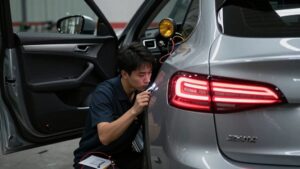
The inspector may also check that lenses aren’t cracked or obstructed, lamps aren’t missing, and housings and wiring remain secure. If you’ve added reverse lights, make sure they activate with the reverse function and are aimed and mounted so they don’t confuse other drivers or create unsafe glare. Keep in mind that inspections often prioritize other required lamps; reverse lights are commonly checked for function rather than treated as a core requirement.
Inspection Failure Consequences
Because state inspection rules vary, a reverse-light defect can fail your truck if it compromises safety or visibility.
FMCSA §393.11 lists required lamps, not reverse lights, but states may check equipped lamps during inspections. If your checklist says “verify required lamps,” a cracked lens, dead bulb, or missing harness or ground may trigger failure. A nonrequired lamp can also fail you when damaged wiring, dark or incorrect lenses, or poor operation confuses drivers or reduces conspicuity.
Add-on light bars face scrutiny too: secure wiring, aim them properly, and keep reverse illumination white where required. Before inspection, check your state checklist and rules for bulb type, color, and aim; don’t assume an accessory will pass.
| Condition | Inspector’s concern | Your action |
|---|---|---|
| Cracked lens | Visibility | Replace it |
| Dead bulb | Operation | Test it |
| Loose wiring | Safety | Secure it |
Illuminating Trailer Hitch Connections
When adding lights to illuminate a trailer hitch connection, make sure the required trailer lighting is compliant and confirm that the added lights don’t obstruct or mimic brake, tail, or turn signals.
Reverse lights may be required, but trailer reverse lamps serve as optional visibility aids; required tail, brake, marker, clearance, and turn lamps must remain compliant. Choose white or amber hitch lights, mount them, and aim the beam at the coupler. Don’t use red lamps or let illumination resemble, obscure, or alter required signals; avoid glare into traffic. Use DOT/FMVSS 108-compatible lamps and protected, weather-sealed wiring. Keep lenses intact and angles clear of the trailer frame. Inspections can flag unsecured fixtures or exposed wiring, which create hazards even when hitch lighting isn’t required.
Older Vehicle Exemptions
Hitch-light rules can also depend on a vehicle’s age: federal lighting requirements and older-vehicle exemptions vary by state, province, vehicle class, and manufacture date. In the U.S. and Canada, lighting standards generally require white reverse lamps on vehicles equipped with reverse gear, but an exemption may apply to older trucks or trailers.
Your manufacture date and original equipment may determine eligibility; age alone doesn’t. For mixed-year fleets, assess each unit against current inspection requirements for its configuration and use; inspectors check required equipment accordingly.
An exempt vehicle’s added reverse lamps must still be white and meet applicable color, visibility, and aiming rules. Verify your state or provincial checklist and FMVSS or CMVSS applicability for your exact year, make, model, and installed lamps for that unit.
Confusing Backup Lamps With Work Lights
Don’t confuse a work light with a backup lamp: both may shine rearward, but only a lamp that meets applicable backup-light specifications should serve that purpose. Your work lights are auxiliary lamps for off-road or nearby tasks; they may not meet the color, aim, or labeling rules for purpose-built backup lamps. Don’t assume a rear-facing LED bar becomes compliant because you call it a reversing light.
Check these points:
- Confirm the lamp’s intended use and applicable vehicle-lighting requirements.
- Ensure added lamps don’t confuse or obscure required lighting operations.
- Keep auxiliary lights distinct in purpose and use; backup lamps must provide expected warning and visibility.
FMVSS 108-style rules don’t make every added lamp lawful; avoid confusing or obscuring required lighting on your vehicle.
Aftermarket Backup Lamp Wiring Checks
Once you’ve confirmed an aftermarket lamp is suitable for backup use, check its wiring before relying on it.
Reverse lights on trucks and trailers generally must function when required. Shift into reverse and verify each lamp illuminates immediately.
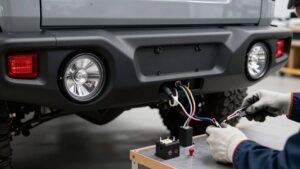
Before making connections, test end-to-end with a multimeter: confirm battery voltage at the feed, continuous ground at the housing, and correct polarity at every LED or halogen lamp.
Route wiring away from heat and moving parts, including the driveshaft and suspension travel. Secure it in clips or loom to prevent chafing and failures.
Afterward, check voltage drop under load; dimming can signal high resistance or undersized wire. Seal splices with heat-shrink or sealed connectors, and install an inline fuse sized to lamp current to protect the factory circuit from shorts and failures.
Conclusion
To stay compliant, make sure your vehicle’s backup lamps meet the rules that apply where you drive, including color, placement, and inspection requirements. Check that any LED replacements, trailer-hitch lights, or added work lamps are wired and used correctly; work lights do not replace required backup lamps.
If you drive an older vehicle, confirm whether an exemption applies rather than assuming one. Before you modify your lighting or tow, verify local requirements and repair any faulty lamps promptly.