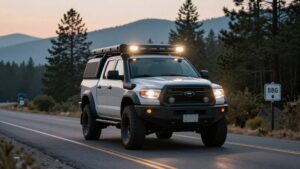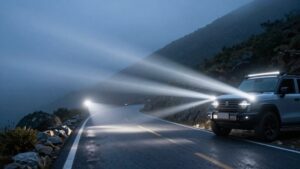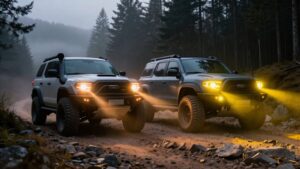
Can You Drive With Off-Road Lights On? On-Road vs Trail Rules
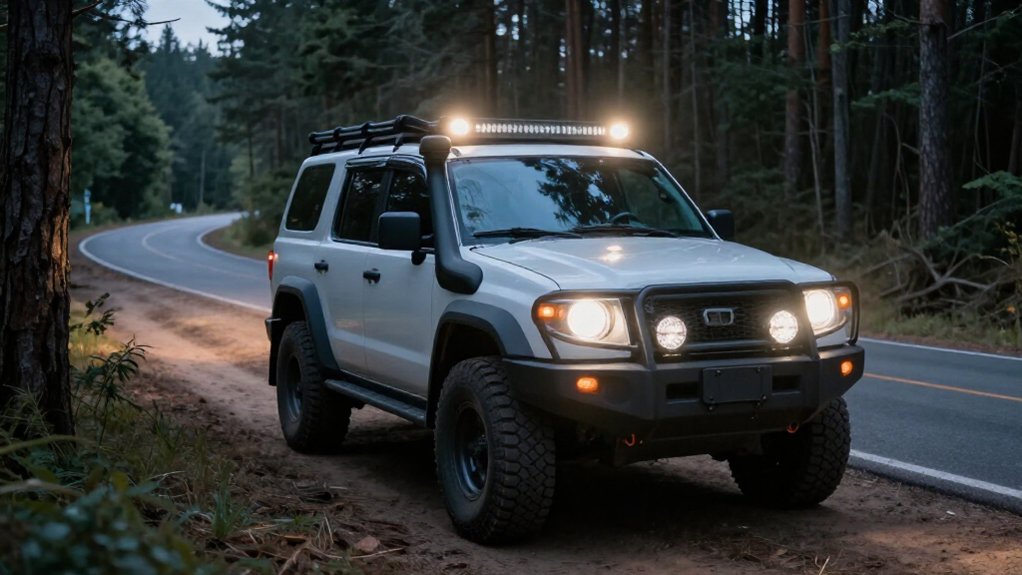
You can use off-road lights on trails, where rules generally allow auxiliary lighting.
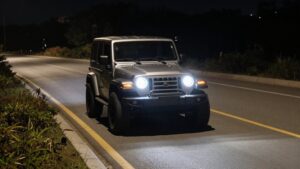
On public roads, you should switch them off or cover them unless each lamp meets your state’s requirements for approval, beam aim, color, and the number of illuminated forward-facing lamps.
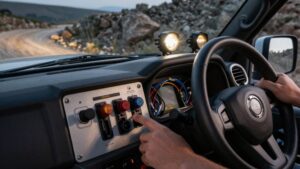
A labeled switch or relay helps create a true street-safe off mode; opaque covers add protection.
Keep beams aimed down to avoid glare.
Check state codes before you drive.
More details follow.
Road vs. Trail Light Rules
Because many off-road light bars and pods aren’t DOT-approved for street use, rules for public roads can differ sharply from trail use. On trails, you can use them for visibility without highway traffic around you, but a public-road setting may restrict their operation even when they function properly.
Road requirements commonly address beam aim, the number of illuminated forward-facing lamps, and whether you’re using a permitted street mode.
Many states require you to switch auxiliary lights off and cover them or make them invisible or aim them away on public streets. Opaque covers block lens output, clearly showing lights aren’t operating. Rear work and scene lights, plus lower-output accents, usually pose less risk when they don’t flash or act as driving lights on roads.
State Auxiliary Lamp Limits
Check your state’s limit on illuminated forward-facing auxiliary lamps before driving on public roads; multiple light bars or pods can exceed the permitted number even if each is otherwise legal. Your state may cap how many auxiliary lamps you can illuminate at once, including bars and pods. Check rules for mounting, beam pattern, and upward projection; a lamp aimed too high may violate glare limits.
Many off-road lights lack DOT approval for street use, so authorities may prohibit them if their intensity or beam pattern fails road standards. Some states restrict forward-facing color, especially white lamps. Amber may reduce glare, but it isn’t automatically legal. If you rely on covers, they may need to block the lamps effectively so they don’t count as illuminated.
Trail-to-Highway Light Switches
When you leave a trail for a public road, use a labeled street-mode switch or relay harness to shut off auxiliary lights quickly, rather than relying on memory. A labeled switch panel lets you confirm that each pod or bar is off before you enter traffic.
If your lights are hardwired directly to the battery without a control circuit, they may illuminate whenever the engine runs; install a switch or relay so you can create a true lights-off street state. On the highway, keep forward-facing driving lights and driving- or fog-style pods electrically off.
You can also fit fully opaque covers with quick-release straps or clips, allowing you to cover lenses in seconds. This adds a barrier if control is missed or fails.
Beam Aim and Glare
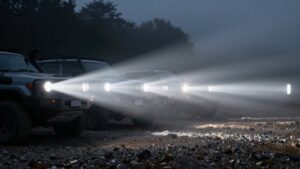
Aim auxiliary beams below other drivers’ sightlines and within an approved highway pattern to reduce glare. High-output bars and pods can blind oncoming drivers if their concentrated beams point too high.
After installation, recheck aim and mounting position, since both affect where the light strikes the road.
Aim Beams Below Sightlines
Set auxiliary off-road lights below your normal sightlines so their beams don’t shine into the eyes of oncoming or passing drivers, a common cause of glare complaints and enforcement stops. Mount forward-facing bars and pods with their long-range, focused beams angled down; at highway speeds, even a modest upward error can project light far ahead and dazzle others. Choose mounting height and beam-pattern alignment suited to the lamp, including DOT/SAE highway-approved designs, to limit upward spill that can scatter through fog, rain, dust, or snow.
For side or ground visibility, lower-profile ditch or fog-style mounts with wider, lower beams generally send less light upward than high-mounted, narrow driving lights. Check the installed aim on level ground and recheck it after changing brackets or load. An uncovered lamp may still look aimed forward to an officer even when switched off, so its visible orientation can affect how your setup is judged from outside the vehicle.
Prevent Oncoming Driver Glare
Even a properly functioning off-road light can glare into oncoming drivers’ eyes if its beam reaches highway eye level. Mount auxiliary lights downward, not toward approaching windshields; a light bar or pod can cause glare even when it appears “on-beam.” Choose compliant highway-pattern lamps, such as DOT/SAE-approved models, because they control intensity distribution better than many off-road LEDs, which cast harsh, wide, or high-intensity cones.
On level ground, use a reference wall or grid to keep the hotspot below glare height; don’t judge road aim by trail driving. If your system has covers or street-mode switching, cover or switch off forward-facing lights before public roads. In fog, rain, snow, or dust, amber scatters less than white, and tighter aim limits reflected brightness toward traffic.
Recheck Aim After Installation
After choosing a beam pattern and limiting glare, recheck the lights’ aim whenever you install or move a pod or light bar.
With the vehicle level, check alignment at a consistent distance, comparing the beam cutoff or centerline with your intended road target. Confirm the beam stays below the road line after tightening, which can shift a pod or bar upward. Use highway-appropriate mounting height and angle; trail settings often prioritize distance over public-road visibility.
Recheck after vibration-heavy trail use, tire changes, or suspension work, which can alter aim. If a light appears blinding from a normal driving position, adjust it downward or sideways until its hotspot covers the intended area without pointing toward other drivers’ eye level. Follow applicable mounting requirements for safe use.
Light Color Restrictions
On public roads, you’ll generally find white and amber auxiliary lights more acceptable, but forward-facing white beams can still draw enforcement if they’re too bright or improperly aimed.
Amber lights can reduce glare and improve contrast in fog, rain, snow, smoke, or dust, while other colors may be restricted. Check your state’s vehicle code before using any auxiliary light color on-road.
White Light Rules
White forward-facing auxiliary lights face the strictest scrutiny on public roads because intense beams can dazzle oncoming drivers. Your state may limit their mounting position, aim, and how many forward-facing lamps you can operate at once. Many off-road LED bars aren’t DOT-approved, so their beam pattern or intensity may not satisfy highway requirements, even if they’re properly installed for trail use.
If your lights lack highway approval, keep them covered or switched off on public roads; this reduces glare and keeps the lamps out of view during enforcement. Don’t assume that a factory switch or low-power setting makes an auxiliary light legal. Check your state vehicle code for specific rules governing white-light color, placement, approval, and permitted operation before driving with these lights illuminated.
Amber Light Exceptions
Amber auxiliary lights may face fewer restrictions than white forward-facing lights because their color is less likely to be treated as blinding driving light.
That distinction can make amber ditch or fog-style lamps a more practical road choice, especially when you mount them low and aim them to limit glare. However, amber doesn’t create a blanket exemption: your state may still regulate beam direction, intensity, and the number of forward-facing lamps you can illuminate at once.
A high-output amber bar aimed straight down the lane can still remain noncompliant, even where the color itself is permitted. Check your state vehicle code for definitions, operating limits, and any cover requirements. An amber lamp allowed on your vehicle may still need to stay covered or switched off on public roads. Treat color as one factor, then verify the lamp’s installation and use against local rules before driving for your route.
Restricted Colors
Because vehicle codes often regulate lamp color, amber auxiliary lights generally pose less road-use risk than bright white forward-facing bars or pods, which authorities may scrutinize for excessive intensity or improper aim.
White bars and pods draw the most scrutiny because they resemble street driving lamps. Even off-road-rated units may violate rules if output is excessive or beams are aimed improperly.
Amber can reduce glare and penetrate fog, rain, snow, smoke, and dust more effectively than white. For side or ditch visibility, choose amber when practical; color limits may be simpler to meet than intensity and aiming requirements on public roads. Check your state’s vehicle code: permitted auxiliary colors vary by jurisdiction.
| Use | Color | Road concern |
|---|---|---|
| Forward | White | Intensity and aim |
| Side/ditch | Amber | Often lower color risk |
Lighting Rules for Campgrounds
At campgrounds, keep off-road lights aimed down and use them only when needed; local rules and nuisance standards often limit bright illumination that spills into nearby campsites. Many campgrounds still restrict bright beams because they can distract drivers and pedestrians on campground paths.
If you’re setting up equipment or need added visibility, switch light bars or pods to a low mode, or fully cover them to block glare. Rear scene or chase lights usually create less disturbance than high-output forward-facing lights, but keep them off unless you’re actively maneuvering.
Check posted vehicle-lighting rules or ask campground staff when requirements aren’t clear. Avoid strobing or flashing modes, which often count as a nuisance regardless of DOT or SAE classifications.
Off-Road Lights During Emergencies
If a roadside emergency forces you to use off-road lights for visibility, switch them off or cover them as soon as you’re back on a public street. Many states limit auxiliary driving lights to off-road use, and high-intensity forward-facing bars or pods can dazzle drivers when aimed along the roadway. Their use may prompt a traffic stop or a fix-it ticket, even if you activated them for safety.
If you need illumination, fit opaque covers; covered fixtures are easier for an officer to verify than exposed lights. While moving on-road, rear work lamps and non-flashing scene lights draw less scrutiny than white forward-facing driving lamps. In an emergency, prioritize visibility, then check your state’s rules for light color, mounting, and permitted use while driving.
Driving With Uncovered Light Bars
On public roads, an uncovered light bar can create legal uncertainty even when it’s turned off. An officer viewing your vehicle from outside may not be able to confirm that the bar is truly not operating, particularly when its beam pattern or reflections remain visible. In some jurisdictions, an uncovered, non-DOT-approved auxiliary lamp occupies a gray zone because rules may expect a physical cover.
- Use an opaque cover that blocks all light output.
- Keep the bar switched off on public streets.
- A covered, off installation is less likely to prompt a traffic stop or fix-it ticket.
A cover also removes ambiguity about stray illumination; ensure it fits securely and fully shields the lens, since a partial cover may leave reflections visible to observers from nearby traffic.
Check Your State’s Vehicle Code
A cover can reduce uncertainty, but your state’s vehicle code determines whether it’s required and when auxiliary lights may be used.
State rules may draw on federal vehicle standards and SAE concepts, but limits vary. Lights may be legal to own yet restricted on public streets; you generally can’t aim them at the roadway unless they meet DOT/SAE and placement requirements.
Forward-facing white bars and pods can blind oncoming drivers, so check how many may operate at once. Verify permitted colors, mounting and aim, plus cover, number, and flashing limits; some states require covers on non-DOT lights even when off. Consult code before driving.
Conclusion
Before you drive, check your state’s vehicle code for auxiliary-lamp limits, permitted colors, and required covers or switches. On public roads, keep off-road lights off unless your vehicle’s standard lighting rules allow their use.
Aim every beam to avoid glare, and don’t assume campground or emergency exceptions apply on highways. When you leave the trail, switch off or cover lights as required. These steps help you stay legal and avoid blinding other drivers.
Off-Road Lighting Amp Draw & Wire Gauge Calculator
Find how many amps your LED light bar, pods and rock lights draw on 12 V or 24 V, then check wire gauge and voltage drop for your run.
Cordless LED Work Light Runtime Calculator
Estimate how long a cordless LED work light runs on a tool battery from volts, Ah and watts, with a 2, 4, 5 and 9 Ah pack comparison.