What Length Whip Light Do You Need? 3 Ft Vs 4 Ft Vs 5 Ft Vs 6 Ft
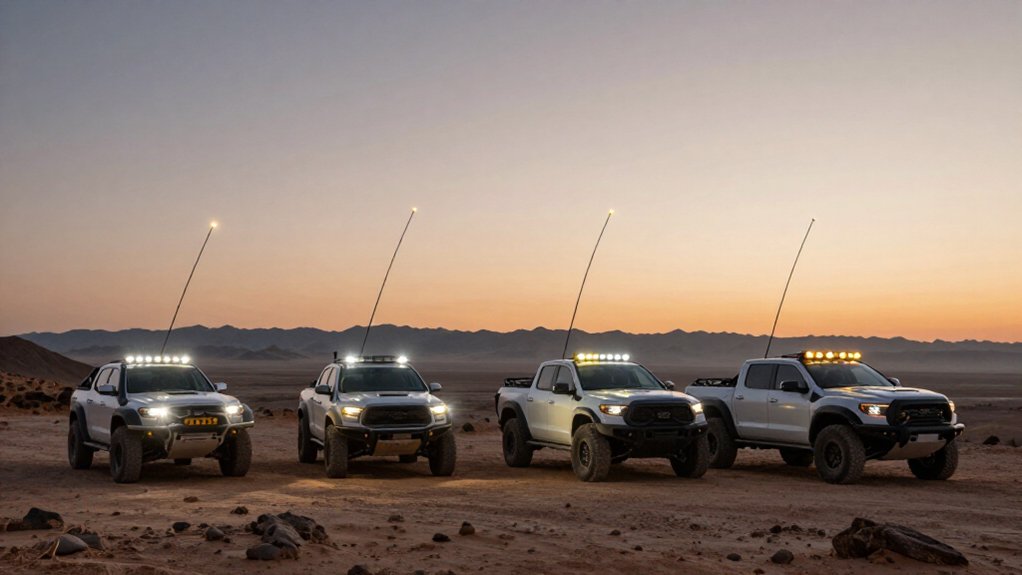
Choose the shortest whip that clears your roll cage and roof while fitting your garage and trailer.
A 3-foot whip adds modest height and suits tighter trails; a 4-foot model boosts visibility while staying easier to transport than taller options.
Choose 5 or 6 feet for open terrain, dusty group rides, or stronger nighttime visibility, but watch for low branches.
Check clearance at the mounting base, too.
Below, you’ll find practical checks for matching whip height to your terrain and setup.
Whip Height at a Glance
Choose whip height based on your machine’s clearance, riding conditions, and visibility needs: 18-inch whips stay compact, 2-foot whips suit most UTVs and riding styles, and 3-foot whips add height without overwhelming smaller machines.
Use the shortest whip that clears your roll cage, roof, garage opening, and trailer setup. Check the whip’s flex and mounting point too; extra length needs room to move without striking occupants or nearby equipment. A 2-foot option is a practical starting point when you want a fit across common UTV configurations. Choose 18-inch units where overhead space is tight.
A 3-foot whip adds height while remaining manageable on smaller machines. Four-foot whips and 5- to 6-foot models need more clearance and secure storage; verify both before installation and each ride.
Desired Visibility and Style
Your whip’s length affects how far away your UTV is visible at night: a 6-foot whip creates a taller silhouette than a 2-foot model. A 2-foot LED whip is a practical all-around choice: it provides strong visibility while keeping your side-by-side’s profile balanced and proportional.
Its compact size also makes storage in a garage or enclosed trailer easier.
3-foot whips add height above the roofline without an overly dominant look, making them popular on smaller machines. For greater visibility and visual impact, choose 4- to 6-foot whips for open terrain, group night rides, or show builds. A taller light makes you easier to spot from farther away, but match your setup to where you ride: shorter options may suit wooded routes, while open riding rewards height.
Tree Canopy Clearance
On wooded trails, tree canopy clearance should guide your whip length: a 5- or 6-foot whip is more likely to strike low branches, while a shorter 1- to 3-foot model reduces snag risk.
| Route condition | Lowest branch | Practical choice |
|---|---|---|
| Tight canopy | Low | 1–2 ft |
| Mixed trails | Variable | 2–3 ft |
| Open route | High | Choose for clearance |
Use the route’s typical lowest branch as a rule of thumb: keep the whip below it, accounting for movement.
A 3-foot whip may clear a garage or trail, but don’t assume it’ll pass every wooded section. When branches crowd the route and storage is limited, a 2-foot whip offers a balance. Slow down, check overhead hazards, and avoid proceeding if the whip catches or deflects toward you.
Comparing 3-, 4-, 5-, and 6-Foot Whips
A 3-foot whip adds height without usually complicating clearance or storage, while a 4-foot whip boosts visibility for night rides and open areas.
Select a 5-foot whip for extra reach if your mount provides enough clearance, or a 6-foot whip for maximum spotting; make sure to check garage and trailer heights first. Compare each length’s price and coverage to ensure your setup fits your riding conditions and storage limits.
3-Foot Whips
If you want a classic whip-light look without adding much height, a 3-foot whip is often the sweet spot: it boosts visibility while keeping a clean profile, especially on smaller UTVs. You’ll get a noticeable lighting marker without letting the whip dominate your build, and the shorter profile can simplify storage and low-clearance transport.
Before you mount it, check your machine’s roofline, carrier position, and garage or trailer height; account for whip flex and any accessories that raise the mounting point. Secure the base to a reinforced location, route wiring away from hot or moving parts, and verify the light remains visible from useful angles when seated and standing. Test visibility from your riding position and confirm the mount stays secure over rough terrain.
4-Foot Whips
A 4-foot whip adds noticeable height and stronger nighttime visibility than a 3-foot model, making it a practical choice for group rides without reaching the greater profile of 5- or 6-foot options. Choose it when you need riders behind you to identify your vehicle clearly, but don’t want a 3-foot whip to dominate your build. A 3-foot model remains a compact, noticeable in-between option; the 4-foot version gives you more height and visibility for spacing in a group.
Check the mount, vehicle height, and storage route before installation. Trees, garages, and trailers can limit safe clearance, so measure rather than assume. In one example, Infinite Offroad’s 4-foot Double Helix costs $160 and includes a chase feature.
Compare your terrain and clearance needs before selecting your whip.
5-Foot Whips
At 5 feet, a whip gives you more height than a 3- or 4-foot model for spotting at night and group rides, without the bulk and storage demands of a 6-foot whip.
That reach helps you spot riders at night and identify your vehicle during group rides. Compared with a compact 3-foot whip, it stands out more; against a 4-foot setup, it adds visibility while remaining easier to manage than the tallest option.
A 6-foot whip delivers greater visual impact, but a 5-foot length is typically easier to transport and store. Before choosing, assess branches and low clearances along your routes, and consider whether you ride open dunes or tight trails. Match whip height to those conditions and your storage needs, not vehicle size alone.
6-Foot Whips
For open dunes and group night rides, a 6-foot whip gives you the strongest visibility, helping others spot your vehicle from farther away than they can with 3-, 4-, or 5-foot models. A 3-foot whip stays moderate; 4- and 5-foot models add presence. The extra height helps you stand out, but it can complicate storage and transport.
Check garage-door clearance, trailer height, and low branches before choosing it. If those limits don’t affect your routes, a 6-foot model can improve group visibility at night. Longer whips may also carry more LEDs: one lineup lists about 235 at 3 feet, 280 at 4, and 520 at 6. Expect a higher price as length increases. Compare mounting hardware and vehicle clearance, too. Check obstacle clearance.
Flag Visibility in Dust
In dust, a taller whip can rise above your UTV’s roofline and drifting debris, making your flag easier for other riders to see. For open trails and group riding, a 4–6 ft whip often improves visibility, while a 4 ft option suits tighter routes with limited clearance.
More LEDs can strengthen visibility through haze, but height also matters because brightness can’t help if dust blocks the light.
Whip Height Above Dust
When dust rises, whip height determines whether riders can see your LEDs above the haze. Choose a whip based on the height of the dust line your terrain produces. In hilly routes or open areas where plumes climb high, a 5–6-foot whip keeps its upper section above the haze. That added height can make your vehicle easier to identify from behind.
In wooded areas with low branches and less dust, a 2–4-foot setup may work if its tip still clears the dust line. For night rides, check that the upper LEDs extend above the highest typical dust layer, not just the mounting point. If you’re unsure, start around 2 feet for easier storage and utility. Move toward 4–6 feet when dust often hides lower mounts.
Visibility In Dust Clouds
Because dust can hide the trail and lower parts of a vehicle, a 5-6-foot whip often keeps its lit tip visible above the haze. In heavy dust, place the lighted section high enough to rise above the densest layer and remain within your sightline. Dust cuts brightness and contrast, so a higher tip can help you spot your vehicle and help others spot you.
A 2-4-foot whip may still work, but low-hanging haze can swallow it more readily, especially on hills where dust stays near the ground. Multi-color lighting or a moving chase pattern can make the flag easier to distinguish than a single-color glow. Choose 5-6 feet for open dunes or dusty hills; tighter wooded trails may favor a shorter whip. Check visibility while seated.
Choosing For Group Riding
For dusty group rides, a 5–6-foot whip light can help others spot your UTV farther away by lifting its glow above haze and terrain dips.
A 4-foot whip often offers a practical compromise: it improves your flag-like presence in the pack while fitting more garages and enclosed trailers than taller setups. A 2-foot whip may suit your vehicle’s overall setup, but low-hanging dust can hide it, particularly when riders ahead or behind you carry taller whips.
If you ride after dark, longer options can also provide greater flag-like presence; select patterns your group can recognize without confusing them with other signals quickly.
Choose for group pace, spacing, and terrain, not appearance alone. Aim the whip above the dust line, accounting for suspension movement. Check clearance beneath trees, bridges, and trailer doors before departure. Maintain safe following distance, and agree on a consistent signal or lighting pattern with your group.
Brightness Versus Height
Group visibility depends on more than brightness: a taller whip can lift its illuminated tip above dust and terrain dips, where riders may lose sight of the vehicle’s body. Choose a height that matches where you ride.
On open dunes or in thick dust, a 5- or 6-foot whip places the light above airborne particles, helping you remain visible when the lower vehicle disappears in haze. In hilly terrain, extra vertical reach can clear dips and reveal your LED pattern sooner. Brightness still counts: more LEDs or a higher setting can help the signal stand out, but neither offsets a tip buried in dust. Gorilla Whips, for example, list about 235 LEDs at 3 feet, 280 at 4 feet, and 520 at 6 feet.
Mounting Base Clearance
Check the mounting base’s vertical clearance before selecting a whip length: 18-inch and 2-foot lights fit more easily under garage doors and in enclosed trailers, while 3- and 4-foot lights require more room above the roofline, rack, or fender.
For 5- and 6-foot options, measure clearance from the base, including mounting hardware and cable routing. Ensure the whip clears terrain and storage openings without contact. If low branches line your route, position the base so the tip stays above them; checking roofline height won’t prevent snags.
Don’t angle the mount to squeeze beneath an obstacle, because that can reduce visibility and leave the whip obstructed. Verify clearance at the mounting point and along the vehicle’s travel and storage path before selecting a length.
Whip Replacement After Breakage
After a whip breaks, measure the remaining pole and choose a replacement that restores your current height, visibility, and clearance.
Match the replacement to your original setup so its LEDs and mount sit at the same level. If you’re replacing a lighted whip, confirm that your product family offers the needed size. For example, Buggy Whips lists 2-, 4-, 6-, and 8-foot options.
For mud, water, or heavy spray, choose suitable sealing, such as an IP67-rated Boss Audio Systems WP6 or WP4. UV-protected, all-weather materials may extend service life; Buggy Whips claims 10+ years of UV protection. If breaks recur at one point, don’t just change length. Consider sturdier construction, such as Double Helix’s high-density resin inside a polycarbonate tube, and inspect the mount.
Forgetting Trailer Transport Height
A replacement whip can match your trail setup and still cause trouble if it exceeds your enclosed trailer or garage clearance. Measure the UTV’s maximum loaded height inside the trailer with the whip mounted at the same angle and position you’ll use on the trail. Include door headers and trailer walls; a tight fit can damage the light, roof, or equipment, and may leave you removing or tilting it before every trip.
- An 18-inch-to-2-foot whip usually stores more easily under common rooflines.
- Four-, five-, and six-foot options need careful clearance checks.
- If you trailer often, choose roughly 2 feet for simpler transport while retaining useful visibility in woods and open areas.
Confirm clearance before loading, and secure the machine to prevent movement during transport.
Verify Mount Compatibility
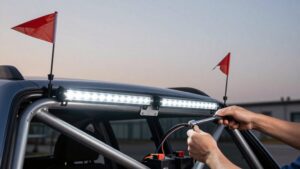
Before choosing a 4-, 5-, or 6-foot whip, confirm your mount has enough roofline clearance to keep the tip clear of branches and overhead obstacles. Next, assess whether your bar, roof rack, or dedicated mount can carry the whip’s length and weight through UTV vibration. A weak or flexing attachment can loosen, fatigue, or fail on rough terrain.
- Measure clearance above the roofline and at garages and enclosed trailers before selecting a tall whip, especially a 6-foot model.
- On wooded trails, position the whip low enough to reduce snagging but high enough to remain visible.
- Match the mount to your exact whip length and weight; product ranges vary, so verify fit before purchase.
Inspect hardware before rides; replace damaged pieces promptly.
Conclusion
Choose a Whip Light Height that gives you clear visibility without creating a snag or transport hazard. A 3- or 4-foot whip suits low canopies and compact setups; you’ll need 5- or 6-foot models when you need visibility above dust or vehicles.
Before buying, check tree clearance, mounting base height, and trailer transport height. Confirm compatibility, and keep a replacement ready if a whip breaks. Secure the flag and inspect your mount before each ride.