Underglow Laws by State: Legal Colors and When You Can Run Them
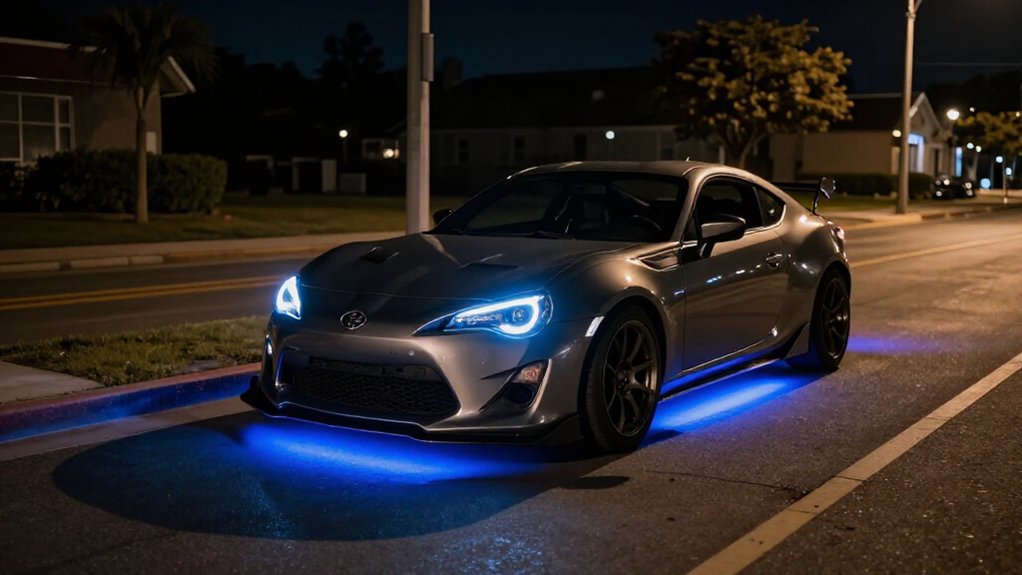
Underglow laws vary by state, so check your vehicle code before using it on public roads; daylight doesn’t exempt you.
Many states restrict red, blue, and flashing or strobing lights, while white or amber may be allowed subject to placement and brightness rules.
California, for example, bars red or blue, prohibits flashing, and limits brightness to 0.05 candela per square inch.
Confirm local rules for hours and stops; learn practical, safe wiring and mounting.
State-by-State Color Restrictions
Because underglow rules vary by state, check your state’s requirements before using it on public roads. Across many states, you generally can’t use red or blue underglow on public roads, because drivers may mistake it for emergency lighting. Flashing or strobing effects are also commonly prohibited.
Where your state permits underglow, neutral colors—typically white and sometimes amber—are the safer choices; other hues may confuse drivers or violate local rules.
California permits underglow only when it’s neither red nor blue, doesn’t flash, and stays within the brightness limit of 0.05 candela per square inch.
In North Carolina, North Dakota, Ohio, Oklahoma, and Oregon, summaries describe restrictions on red, blue, and flashing lights; front lighting must be white or amber. Check local rules before installation.
Permitted Operating Hours
Permitted hours depend on your state’s road-use lighting rules, not solely on whether it’s day or night. Most states regulate underglow whenever you drive on public roads, so daylight doesn’t automatically make it compliant.
Check your state and local rules; some jurisdictions define hours or apply stricter scrutiny after dark, when colored or bright lights can distract drivers.
| Situation | What to verify |
|---|---|
| Daytime | Public-road rules still apply |
| After dark | Confirm color, output, and glare limits |
| At any point | Don’t use flashing or strobing lights |
Before driving, confirm any stated time window and ensure your setup meets the permitted color, output, and applicable non-glare conditions throughout it. Don’t assume daytime tolerance as permission at night, or an hours restriction as an exception for prohibited colors or flashing effects, either.
Federal Equipment Standards
Federal lighting standards don’t ban underglow by name, but they regulate vehicle lamps and their colors: front lighting generally must be white or amber, rear lighting red, and non-emergency vehicles generally can’t use flashing or strobing lights.
These requirements apply to the lighting equipment itself, so LED strips or neon may raise compliance concerns if their color or operation resembles a regulated lamp. Underglow isn’t prohibited nationwide, but your state may impose limits on colors, placement, or use while driving. Confirm your state’s vehicle code before activating it; federal compliance doesn’t ensure state legality.
For a setup that’s less likely to create issues, choose steady white or amber illumination, avoid restricted colors and flashing modes, and ensure your display won’t confuse drivers or resemble emergency lighting. Follow visibility restrictions.
Fuse and Switch Placement
In Ohio and most states, you must keep underglow compliant with vehicle-lighting rules, so install an in-line fuse near the battery and use a dedicated, accessible switch or relay for a safe power disconnect. Keep the underglow on a separate circuit, and route its wiring through protected loom with sealed connections.
Ensure you can shut the lights off, or select a road-legal steady mode, while driving or during a traffic stop.
Fuse Near Battery
Because an unfused wire can overheat if it shorts, mount the underglow kit’s inline fuse as close to the battery’s positive terminal as practical, typically within a few inches, and before the wire branches to the modules or switch. That position protects the battery-to-kit run if insulation fails. Use the amperage specified by your kit instructions; replace a blown fuse with the same rating.
A larger fuse can overheat wiring; repeated failures require diagnosing a fault, not upsizing. Keep the holder protected, and shield wires with loom or grommets. If included, keep the fuse on the relay’s switched positive feed and attach ground to clean, bare chassis metal. State rules govern permitted colors and use, not fuse location; follow your kit instructions and state requirements.
Accessible Switch Placement
Mount the underglow switch where you can reach it quickly, such as the dash or center console, so you can turn the lights off if your state’s rules require it. Check your state’s requirements before driving; some rules restrict colors or use on public roads, and quick shutoff can help you comply.
If a controller manages color effects, choose a switch that controls underglow power, not just the color setting, so you can disable the lights completely. Keep the switch and wiring clear of pedals, steering components, and heat-producing parts.
Use an automotive fuse matched to your kit’s amperage draw. Don’t let switch operation distract you while driving; pull over safely if you need to make an adjustment. A reachable switch helps you respond promptly when conditions or legal requirements demand it.
Protected Wiring Routes
Route underglow wiring along protected paths, such as factory harnesses or frame rails, and secure it away from hot exhaust parts, sharp edges, and moving suspension components. Use zip ties and loom to prevent heat damage and abrasion. Place an inline fuse near the battery or power source as practical, and choose wire rated for your kit’s draw.
Install your switch in an accessible interior location; use a weather-sealed model where moisture may reach it. Protect switch leads with loom near road spray, and use grommets, strain relief, and sealed openings wherever wiring passes through sheet metal.
Follow your kit manufacturer’s diagram for fuse and switch placement and polarity; state requirements vary, and incorrect wiring can cause shorts, failures, and safety risks.
Separate Lighting Circuits
Use a separate, fused circuit for each underglow kit or lighting side so a short in one module won’t disable other vehicle lights. Mount an inline fuse near the power source, routing the underglow feed through it before the control switch. Place the switch on that fused branch so you can turn the system off when state law prohibits use.
For multiple channels, such as colors or front and rear strips, use individual switches or relays to prevent unintended blinking or strobing on a restricted circuit. Ground the kit at a dedicated, clean bare-metal point, not an unrelated accessory’s ground, to reduce flicker and electrical noise. Wiring practices don’t replace state-specific rules: check applicable limits on colors, flashing effects, and when you may operate underglow.
Safe Power Disconnect
For safe power disconnects, place a fuse matched to the kit’s total current draw, and its manufacturer’s recommendation, close to the battery, then wire an accessible switch, ideally under the dash, in line on the positive lead. That setup lets you cut power quickly if the lights malfunction, create glare, or must be disabled before driving or inspection.
Use automotive-grade sealed connectors and waterproof heat-shrink at every splice; water, road salt, and vibration can damage underbody wiring. Route the feed through a protected grommet or loom, and secure it away from exhaust parts and moving components, where abrasion could cause a short or blow the fuse.
Check your state’s equipment and lighting rules: a safe disconnect doesn’t make a prohibited color or display legal.
State Inspection Procedures
During a state inspection, the mechanic typically checks required lights—such as headlamps, turn signals, brake lights, and license-plate illumination—but may also flag underglow that creates glare or displays prohibited colors.
Your state’s inspection rules determine whether that finding means rejection, a repair-required notice, or no failure. Inspectors may cite red or blue light, flashing effects, or wiring that interferes with required lamps.
Before you arrive, set an RGB system to white mode if permitted, or switch it off. If your underglow was cited earlier, check the notice: your state may require a repair receipt, photo, or reinspection by its deadline.
Decorative lighting may not automatically fail, but inspectors can flag it because public-road lighting laws still apply. Ask the station which standard governs your vehicle.
Emergency Vehicle Color Impersonation
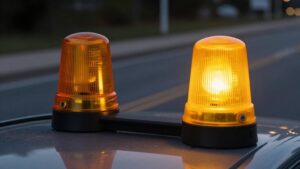
Because blue and red underglow can resemble emergency or traffic-control signals, many states restrict those colors on non-emergency vehicles.
Rules vary by state: your jurisdiction may prohibit particular colors, placement, or operation on public roads, even if decorative underglow is otherwise allowed. Authorities may cite your setup when it duplicates the appearance of authorized emergency or traffic-control lighting. Avoid flashing or strobing effects; those patterns can create confusion and are commonly prohibited.
Bright output or wide glare can also pose a safety hazard and make your lighting look signal-like, not decorative. RGB systems carry added risk: a color-changing mode could display a restricted hue while you drive. Check your state’s statutes and regulations before using any color, and choose a steady, subdued, permitted setting.
Underglow During Roadside Stops
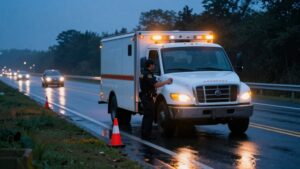
If an Ohio officer stops you, keep underglow steady and avoid red or blue, which may be confused with emergency or traffic signals.
You should also avoid flashing, rotating, or oscillating lights; Ohio Revised Code 4513.17 generally restricts them. If your RGB kit changes color, set it to pure white or another permitted basic lighting color whenever you’re on a public roadway, even while stopped.
Keep illumination dim and directed toward the ground, since bright or outward-facing light can impair other drivers’ visibility and attract enforcement.
If you’re stopped and can adjust the system, dim or switch it off before the officer approaches. A roadside stop doesn’t suspend Ohio’s lighting rules, so don’t assume stationary use makes a restricted color or effect permissible.
Mounting Adhesive Failure
Heat from the exhaust, road vibration, road salt, and freeze-thaw cycles can loosen underglow adhesive, so check the bond before each season. Once a strip sags or shifts, it may point outward, create glare, and distract other drivers. A legal color doesn’t excuse unsafe positioning; enforcement rules vary by state, and an officer may cite lighting that impairs or confuses traffic.
- Follow the kit’s surface-prep directions: clean and fully dry the mounting area; don’t mount on fresh paint or wax.
- Treat wet or dirt-contaminated adhesive as light-duty; power-washing and road salt can weaken its hold and let strips sag.
- Secure wiring and remove slack so movement won’t peel adhesive at corners or cable runs.
Recheck regularly before driving, especially after service or winter storage.
Weatherproofing Electrical Connections
A secure strip still needs weatherproof wiring: road spray, salt, and freeze-thaw cycles can corrode connections and cause flicker or shorts. Use automotive-grade waterproof connectors—heat-shrink butt splices or dielectric-grease-sealed plugs—to keep moisture out.
- Route the harness through existing body channels, protect it with loom, and secure it clear of exhaust heat, moving suspension parts, and sharp edges.
- Fuse the feed near the battery, use the kit’s specified wire gauge, and solder vehicle-power splices before applying heat-shrink; skip twist-on caps.
- Keep controller connections sealed in a dry, protected location, not beneath the vehicle, and verify ground continuity to prevent intermittent operation.
These precautions improve reliability, but they don’t authorize otherwise restricted colors or display; check your state’s rules on color, visibility, and operation.
Conclusion
Before you switch on underglow, check your state’s statutes and inspection rules; color and operating-hour limits can differ by location. Keep restricted colors off public roads, especially red, blue, or emergency-style combinations, and use compliant equipment with secure wiring, a properly placed fuse, and an accessible switch.
If an officer stops you, turn the lights off and follow directions. Don’t rely on an online chart alone—confirm requirements with your state agency before you drive.