What Is DRL on LED Pod Lights? Daytime Running Rings Explained
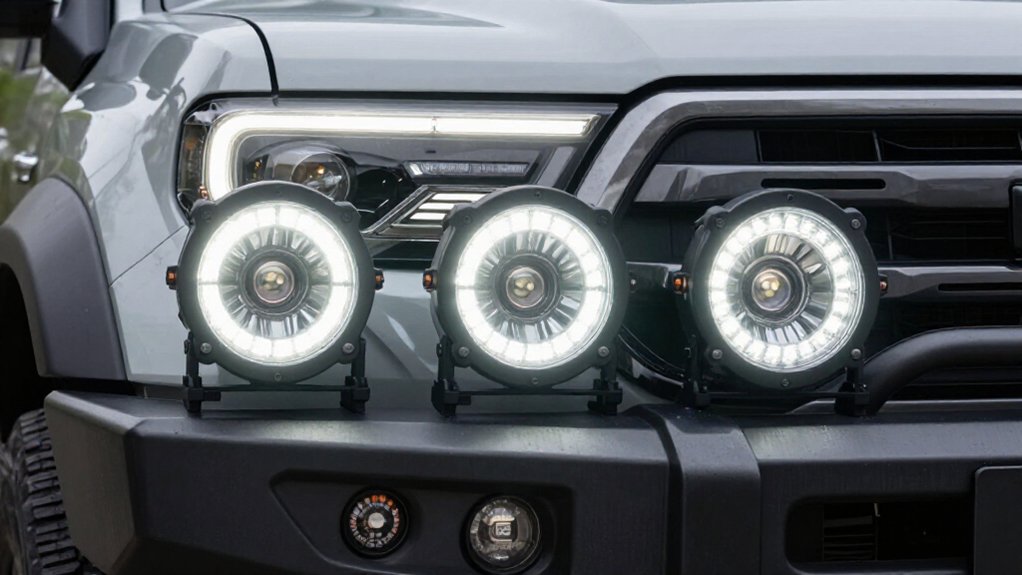
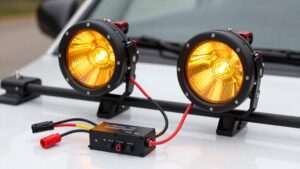
On an LED pod light, DRL means daytime running light: a low-intensity halo ring that helps road users notice your vehicle in daylight. It isn’t the pod’s main beam; the projector or reflector illuminates the road ahead.
Treat the ring as a conspicuity aid, not a guarantee against crashes. Its output and operation must meet applicable rules. Check wiring, activation, and lens condition to understand how your setup performs.
The next sections explain key details.
Ring-Versus-Beam Distinction
A DRL ring is a low-intensity presence light, not the pod’s main beam. The ring typically uses a halo-style design. It provides a broad, lower-intensity signal that helps other road users notice your vehicle in daylight.
The focused projector or reflector output, by contrast, forms the beam and illuminates the road ahead. Don’t treat the ring as a substitute for that forward lighting. On many vehicles, ignition or release of the parking brake activates the DRL automatically, while you may need to switch on the dedicated beam separately.
A reduced ring output can limit glare, but its safety value depends on ambient light. As daylight grows stronger, the ring becomes less effective; use the beam when conditions require road illumination for safe forward travel.
White-Light Compliance Requirements
For road use, a pod’s DRL ring must produce compliant white light with the required forward intensity and beam pattern; where applicable, ECE Regulation 87/108 sets DRL photometric limits. Your lamp should activate automatically during daylight after ignition is on, often when you release the parking brake.
Check your vehicle’s control logic and approval documentation: an auxiliary-light rating alone doesn’t establish DRL compliance. Choose a lamp specifically approved for daytime running-light use; standards differ by function.
Where required, ensure it dims or adjusts automatically when low beams activate; manual switching may not satisfy the rule. Verify official markings and approval codes against your country’s white-light DRL requirements before installation. If approval is unclear, don’t assume the ring is road-legal; select a verified unit instead.
DRL Impact on Visibility
DRL rings help other road users—drivers, pedestrians, cyclists, and motorcyclists—spot your vehicle in daylight, but their safety benefit varies with conditions. That visibility can make your vehicle easier to detect, but it doesn’t guarantee collision prevention. A 2008 U.S. NHTSA analysis found no statistically significant reduction in the frequency or severity of most crashes involving pedestrians, cyclists, or motorcyclists.
It did find a 5.7% reduction in light-truck and van involvement in two-vehicle crashes, a limited but measurable effect.
Ambient light matters: as daylight grows brighter, DRLs contribute less additional visibility, and greater intensity would be needed to maintain similar gains. In Nordic winter-dark conditions, estimated safety benefits reach roughly three times those observed in the United States. Drive carefully; they don’t replace attention.
Pod-Mounted Halo Wiring
Identify the halo leads separately from the pod’s main-light wiring before making connections. Use a fused, correctly gauged power feed and a secure ground; don’t route load current through a small trigger wire.
Choose an ignition, ACC, or parking-light trigger for DRL operation, and verify the control logic before reconnecting the battery.
Halo Wire Identification
On a pod-mounted LED light, the halo usually has a separate harness from the main pod LEDs, so trace its pigtail labels for “DRL,” “halo,” or “daytime” before connecting it.
Identify each lead by its label and connector position, not insulation color alone. A harness may include a DRL trigger, a ground lead, and a dimming control. Use the kit’s diagram to verify function; wire colors and pinouts vary by manufacturer.
| Marking | Likely function |
|---|---|
| DRL/halo | Ring trigger |
| DIM | Brightness mode |
If the pod also supports turn or parking modes, distinguish those leads from the halo trigger by matching labels and plugs to vehicle harness outputs. Halo LEDs are polarity-sensitive, so confirm the marked positive and negative leads using documentation before testing. Don’t assume another function’s wire powers the ring.
Power and Ground Connections
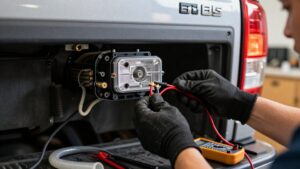
For reliable pod-mounted halo operation, connect the LED driver’s positive lead to a fused, switched 12V or 24V supply and its negative lead to a clean, secure chassis ground. Use the pod’s internal harness to route positive power to the driver and return negative to ground. Verify polarity at the connector before energizing the circuit; reversed leads can leave rings dark or cause abnormal brightness.
Scrape paint or corrosion from the grounding point, then tighten the connection. A poor ground can destabilize the driver’s reference and produce flicker. Select wire gauge for the circuit’s current and run length, and use tight crimps plus sealed connectors to limit voltage drop and moisture intrusion. Inspect routing for abrasion, heat, and pinch points before testing the halo.
DRL Trigger Options
An ignition-switched trigger can make pod-mounted halos act as daytime running lights, turning them on automatically when the vehicle is running. You can take a fused +12V feed from an ignition-switched circuit or accessory (ACC) tap for the DRL trigger input, instead of connecting the rings to the headlight switch. A dedicated DRL controller can manage ignition-on activation and, if supported, dim the halos when you switch on the low beams.
Pairing the trigger with a headlight-sense wire helps prevent full-output operation after dark. If you want DRL-only control, isolate the halos from the parking-lamp circuit, and verify the wiring diagram before tapping any conductor. Use a properly rated fuse, secure connections, and confirm the trigger behaves as intended with the vehicle safely parked.
Regional DRL Regulations
DRL requirements vary by region, so you must verify that your pod-mounted rings meet the rules where you drive. European requirements have included specific dim-dip or running-lamp provisions, while Canadian standards mandate DRLs on new vehicles.
U.S. and Australian rules differ in activation and equipment requirements, so don’t assume one setup is compliant everywhere.
European DRL Requirements
Across Europe, UNECE type-approval rules, including Regulation No. 87, set requirements for DRL intensity, aiming, and installation to keep lights visible without creating excessive glare.
For your vehicle to comply, you’ll need to run its DRLs automatically when you use it and keep them on during daytime driving.
A daytime running ring or LED pod qualifies only if its lamp carries approval for DRL use and you install it in the approved pattern and within visibility angles. An unapproved accessory may look bright but fail type-approval limits or compromise conspicuity and safety.
Check the lamp’s DRL approval marking before fitting it; then verify the vehicle installation meets requirements. EU member states may enforce rules or interpret details differently, so confirm compliance in the country where you drive.
Canadian Lighting Standards
Canadian rules take a different approach: under CMVSS 108, daytime running lights are required on new vehicles made or imported after January 1, 1990, to improve visibility in daylight—not nighttime illumination.
When you fit LED pods as DRLs, verify their type, aiming, and intensity meet CMVSS 108 expectations for daytime use. Automatic activation is commonly required or expected; don’t assume a ring qualifies merely because it switches on with the engine.
| Check | Compliance focus |
|---|---|
| Lamp | Type, aim, intensity |
| Operation | Automatic activation; daylight visibility |
Your setup can fail if its output is too weak, its beam pattern is unsuitable, or its activation logic conflicts with standard. Bright ambient conditions can reduce the safety benefit; maintain sufficient conspicuity without treating DRLs as nighttime lighting.
U.S. and Australian Rules
Because U.S. and Australian requirements differ, don’t assume a DRL ring is compliant simply because it switches on with the engine.
In the U.S., rules require DRLs on new vehicles made or imported after January 1, 20XX, under Canada Motor Vehicle Safety Standard 108. The system must activate automatically to improve daytime conspicuity; your aftermarket pod ring may not meet its performance or approval requirements.
Australian rules vary by jurisdiction, but commonly expect lights to activate automatically during vehicle operation, often once the engine runs or the parking brake is released.
Unlike full low beams, DRLs aim to increase daytime visibility while limiting glare. Don’t treat activation alone as proof of compliance; check your local road rules and the lamp specifications.
Halo Use on Off-Road Trails
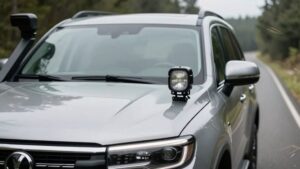
On off-road trails, halo rings on LED pod lights improve daytime visibility by making your vehicle’s front profile easier to spot. Mounting them near the front corners helps other drivers see your vehicle, even when daylight is strong. The rings can give pedestrians and cyclists a visual cue as you approach, but they don’t replace controlled speed, clear sightlines, or attentive driving.
Because conspicuity drops in bright conditions, set output for visibility. Too much intensity can create glare; too little can make your vehicle harder to identify. Aim and set the rings to provide a distinct outline without dazzling trail users. Treat added conspicuity as risk reduction, not a guarantee: halo DRLs don’t ensure fewer crashes across every collision type on trails.
Automatic Headlight Activation Conflicts
Halo rings improve conspicuity only when they activate as intended, but vehicle lighting logic can complicate that. Your LED pods may rely on ignition power, and some systems won’t illuminate until you release the parking brake. Others trigger DRLs only after you shift into gear. If you connect rings to shared signals without verifying circuit logic, they may fail to activate.
Headlamp integration needs care. When DRL circuits dim rings as low beams switch on, incorrect wiring can defeat the intended sequence: bright daytime output, followed by reduced or no ring output with headlights. Verify operation with ignition, brake, gear, and headlamp states before driving. As ambient light rises, DRLs provide less safety unless intensity remains adequate; conflicting activation can further reduce their effectiveness.
Motorcycle Daytime Visibility Risks
For motorcycle riders, a daytime running light doesn’t automatically improve conspicuity: white, headlamp-like DRLs can make a motorcycle less visually distinctive among cars. Your risk also depends on daylight intensity and lamp design; brighter surroundings can dilute a DRL’s visibility benefit.
Research hasn’t shown significant reductions across most crashes involving motorcyclists, pedestrians, or cyclists.
- White output may blend with car DRLs, weakening your visual separation in traffic.
- Bright sun reduces contrast; don’t assume a DRL guarantees detection at distance.
- Two 90 mm, 520-candela lamps performed worse than one 190 mm, 270-candela dipped headlight.
Where regulations allow, consider motorcycle-specific amber DRLs to distinguish your bike from white car-style lighting. Treat conspicuity as one safety layer: maintain speed, position, and following distance, and use a headlight as required.
DRL Halo Lens Maintenance
Dust, oxidation, and fine scratches can reduce a DRL halo’s output and weaken its daytime visibility, so clean the lens with a soft microfiber cloth and mild soap solution. Use light pressure; abrasive pads can permanently haze acrylic or polycarbonate optics. If your lens is plastic, choose only plastic-safe cleaners, and inspect it periodically for yellowing or cracks.
UV exposure can degrade transparency, reducing conspicuity even when the LEDs still operate. Don’t apply acetone, lacquer thinner, or other strong solvents; they can damage coatings. Keep high-pressure water away from seals to protect weatherproofing.
After cleaning, remove residue around each halo’s edges and confirm the lens sits correctly on the housing. A poor fit can let moisture collect inside the assembly, risking corrosion or failure.
Conclusion
Treat a pod light’s DRL halo as a daytime signal, not as its main beam. Choose a steady white ring that meets your local rules, wire it so automatic headlight controls work correctly, and verify visibility from the front.
Don’t assume a halo makes night driving safer; use your proper headlights after dark. On trails, switch auxiliary lights responsibly.
If you ride a motorcycle, assess conspicuity and keep the halo lens clean, sealed, and unobstructed.