What Size Headlight Bulb Do I Need? Look It Up in 2 Minutes
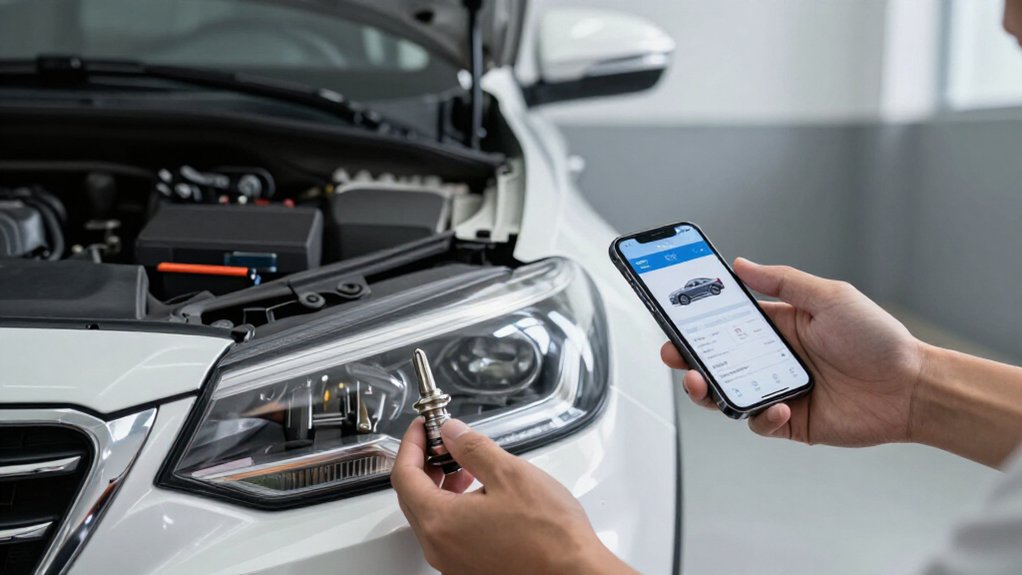
To find your headlight bulb size in two minutes, check your owner’s manual or an online bulb selector using your year, make, and model. Specify low beam, high beam, or dual beam, then confirm the fitting code stamped on the old bulb or housing.
Match the code and technology—halogen, LED, or HID/Xenon—to your exact assembly; don’t assume similar codes interchange. Check connector and ballast requirements too. The guide below covers key fitment checks.
Find Your Bulb in 2 Minutes
To find your headlight bulb size, check your owner’s manual first—it lists the correct fitment for your vehicle’s year, make, and model. If you can reach the bulb, read the code on its base or housing; codes such as H7, H11, and 9006 identify a fitting. Use an online bulb selector. Enter your year, make, and model, then specify whether you need a low-beam or high-beam bulb.
Before buying, confirm that the bulb type matches your headlight design: halogen, LED, or HID/Xenon. These technologies aren’t automatically interchangeable, even when a bulb appears to fit. For HID/Xenon D-series bulbs, don’t guess: 85V and 42V versions aren’t interchangeable, and the wrong voltage can damage the ballast and destroy the bulb. Verify the exact fitment before installation.
Common Bulb Size Cross-Reference
Common headlight bulb cross-references can help narrow your options, but fitment depends on your vehicle and lighting position. Read the exact fitting size on your existing bulb base or in your owner’s manual; bulbs aren’t universal across model years. Use a vehicle bulb finder with your year, make, model, and beam position to confirm compatible options.
| Position | Common match | Verify |
|---|---|---|
| Low/high | H11 / 9005 | Application-specific |
| Dual beam | H13 / 9003 / HB2 | One bulb unit |
| HID/Xenon | D-series | Voltage group |
These are cross-reference clues, not guaranteed replacements. Check the selector’s fitment list against your low- or high-beam position and the bulb base before you buy. D-series choices require the correct voltage group: D1/D2 types use 85V, while D3/D4 types use 42V; a mismatch can damage the ballast. Confirm both before placing your order.
Bulb Code Basics
A headlight bulb’s “size” is its fitting code, such as H7, H11, or 9006, printed on the bulb base or listed in your owner’s manual. That code must match your exact headlight assembly; bulb codes aren’t universal. The wrong fitting may not seat securely, can misdirect the beam, or may overheat and melt the housing.
To identify the code, remove the existing bulb and read its stamped marking. Then confirm it against your owner’s manual for your vehicle’s make, model, and year. Don’t rely on a code from a similar vehicle.
When choosing a replacement or upgrade, keep the fitting code the same, whether you select halogen, LED, or HID/Xenon technology. Also check whether your vehicle uses separate bulbs for low and high beams or one bulb for both before buying.
Single- and Dual-Beam Bulbs
A single-beam bulb handles either low or high beam, while a dual-beam bulb switches between both functions in one bulb. Common examples include an H11 low beam paired with a 9005 high beam, or dual-beam H13 and 9003 bulbs. Check the code on your existing bulb or housing, or consult your owner’s manual, to confirm the correct fit.
Single-Beam Basics
Although headlight bulb sizes vary by vehicle, identifying the beam setup narrows down the right replacement. With a single-beam system, your low and high beams use separate bulbs, rather than one bulb switching between settings. This layout is common on vehicles made after 2000.
First, check whether each headlight assembly has distinct low-beam and high-beam bulb positions; don’t assume the bulbs match. Then read the fitting code printed on the existing bulb base or housing. For example, one common HID pairing uses H11 for low beam and 9005 for high beam. These codes aren’t universal, so confirm the exact specification in your owner’s manual before ordering. Match the code to the correct beam position, and compare the replacement connector and fitment before installation.
Dual-Beam Basics
With a dual-beam setup, one bulb in each headlight switches between low and high beam; a single-beam setup uses separate bulbs for each. To choose a replacement, first check whether your vehicle uses one high/low bulb per side or separate low- and high-beam bulbs.
Modern single-beam systems often place both types near each other, and they can look alike, so don’t identify them by appearance alone. Check the bulb’s code or your owner’s manual for the fitment.
Common dual-beam codes include 9003, HB2, 64193, 12342, HS1, and H13. The 9003 family uses a P43t-38 base; H13 uses a P26.4t base. Both are rated 55 watts low and 60 watts high, but wattage alone won’t confirm compatibility. Match the code before you buy.
One Bulb, Two Functions
If your headlight uses a single-beam setup, it needs separate bulbs for low and high beams; a dual-beam bulb combines both functions in one bulb per headlight and switches modes when you change beams. Most vehicles built since 2000 use separate low- and high-beam bulbs, but you shouldn’t assume your vehicle follows that pattern. Check the fitting code printed on the base of the installed bulb, then match it with your vehicle’s parts information.
The code identifies the bulb type; the number and function of bulbs in each assembly confirm how the system is arranged. With a dual-beam setup, one bulb in each headlight handles both settings. With a single-beam setup, you’ll find separate bulbs for low and high beams, even if they sit close together.
Confirm the arrangement before buying: choosing a bulb with the wrong beam function won’t provide the lighting your headlight assembly requires. If you can’t inspect it, consult your owner’s manual or a fitment lookup.
Common Bulb Examples
Common bulb examples show how fitting codes relate to beam function: an H11 low-beam bulb is often paired with a 9005 high-beam bulb in a single-beam setup, while 9003/HB2 and H13 bulbs can provide both beams in one bulb.
A single-beam bulb serves one function, low or high. Many post-2000 vehicles use separate bulbs: H11 for low and 9005 for high. A dual-beam bulb switches between low and high modes within one headlight assembly.
You may see 9003, HB2, 64193, 12342, or HS1 used for this design; H13 is another common dual-beam code. Base descriptions such as P43t-38 and P26.4t identify the bulb’s mounting interface, not its beam pattern. Compare the code and beam description; similar-looking bulbs may serve different functions.
Check Your Vehicle Fit
Checking your vehicle’s beam setup is the first step to choosing the right headlight bulb. A single-beam system uses separate low- and high-beam bulbs; a dual-beam system switches both functions through one bulb in the headlight. Identify your setup before ordering.
For single-beam headlights, confirm bulb position and side: H11 may fit low beam and 9005 high beam, but applications vary. Dual-beam options include 9003/HB2/64193/12342/HS1 (55W low, 60W high; P43t-38 base) or H13 (55W low, 60W high; P26.4t base). Verify your vehicle listing rather than assuming these examples fit.
Check your owner’s manual or read the marking on the old bulb’s base after removal. A mismatched bulb may not seat properly, and incorrect fit can shift beam focus and reduce output.
Confirm Socket and Connector Fit
Before buying a headlight bulb, match the socket code on the old bulb or housing, such as H7, H11, H1, 9005/9006, or 9003/H13, to the replacement. Check that the bulb’s base and alignment pins match the socket so it’ll seat and lock correctly. Verify its function: low beam, high beam, or dual beam.
Single-beam and dual-beam designs use different sockets and wiring, so don’t assume one can replace the other. If you’re choosing an LED, compare its plug with your vehicle’s harness and confirm it suits that socket layout. A mismatched connector can cause poor contact or stop the lamp from working. Use your owner’s manual or a vehicle bulb selector to confirm socket fit and connector compatibility for your vehicle and headlight position before installation.
D-Series Voltage Compatibility
With D-series HID bulbs, match the voltage and igniter generation—not just the bulb shape—to your vehicle’s ballast.
The 85V group includes D1S, D1R, D2S, and D2R bulbs, which require 85V igniters. The 42V group includes D3S, D3R, D4S, and D4R bulbs; these use 42V igniters and are mercury-free. Don’t interchange the groups: the wrong voltage can immediately damage the bulb and ballast, or destroy the ballast. Check your vehicle’s bulb specification and ballast generation before you buy or install a replacement.
Some D-series bulbs use different setups. D5S runs on 12V DC and has an integrated igniter, so it doesn’t use an external igniter; it has a PK32d-7 base. D8S is a 25W bulb on the 42V platform with a PK32d-1 base. Verify compatibility against service information. When uncertain, ask a technician to verify your ballast compatibility before ordering.
H11 vs. H11B Fitment
Although H11 and H11B bulbs look similar, they use different fitments and may not seat or align correctly in the same socket. H11 is a single-beam low-beam halogen type, identified by an H11 marking on the bulb base or headlight housing. H11B isn’t a brightness upgrade; its base geometry or locking tab can differ.
If your vehicle calls for H11, an H11B may fit poorly, shift light focus, or increase the risk of heat or connection problems. The reverse mismatch can cause similar concerns. Check your owner’s manual or read the code on the existing bulb before you buy a replacement.
When you’re replacing both headlights for the same beam, choose the specified type as a pair to maintain matched output and reliable performance.
LED Housing Compatibility
LED bulbs must match your headlight housing’s base, beam type, and electrical system to produce the correct beam pattern. Your bulb’s fitting—such as H7, H11, or 9006—must seat securely in the assembly; a matching plug alone doesn’t guarantee compatibility. Check these points before installing an LED upgrade:
- Match the base and dimensions to your housing; an incorrect fit can prevent proper seating.
- Choose the correct low- or high-beam design: single-beam and dual-beam setups aren’t interchangeable.
- For D-series HID housings, use only LEDs designed for that system; incompatible voltage can damage the ballast.
- If your vehicle monitors bulbs, select CANbus-compatible LEDs to reduce flicker or dashboard warnings.
A bulb that fits can scatter light or trigger faults, so verify compatibility before driving safely.
Check Your Owner’s Manual
Even if an LED bulb appears compatible with your housing, check your owner’s manual to confirm the exact fitting for your vehicle’s make, model, and year.
Your manual identifies the bulb type, such as H7, H11, or 9006, and links it to your headlight assembly. In the headlight section, verify whether you’re replacing the low beam, high beam, or both.
- Match the listed fitting to your vehicle’s exact year and trim.
- Don’t assume bulbs are universal; wrong bases may not fit securely.
- A mismatched bulb can cause electrical or overheating problems.
- Incorrect fitment can shift beam focus and reduce safe visibility.
Without the manual, check the bulb base or housing marking, then buy a replacement matching the fitting and beam type for your vehicle.
Conclusion
Check your owner’s manual or use a vehicle-specific bulb finder to confirm the exact size before you buy. Match the bulb code, beam type, socket, and connector, not just the shape. For D-series bulbs, verify voltage compatibility; for LEDs, make sure your housing supports them.
H11 and H11B aren’t interchangeable just because they look similar. If you’re unsure, compare the old bulb’s markings and connector with the replacement. A quick fit check can save you a return and keep your headlights working properly.