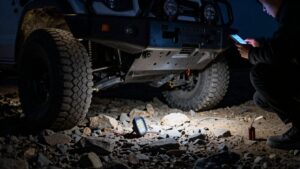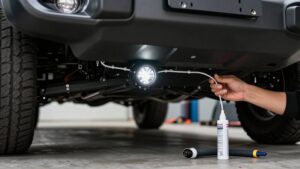
RGB vs White Rock Lights: Trail Visibility vs Show-Night Style
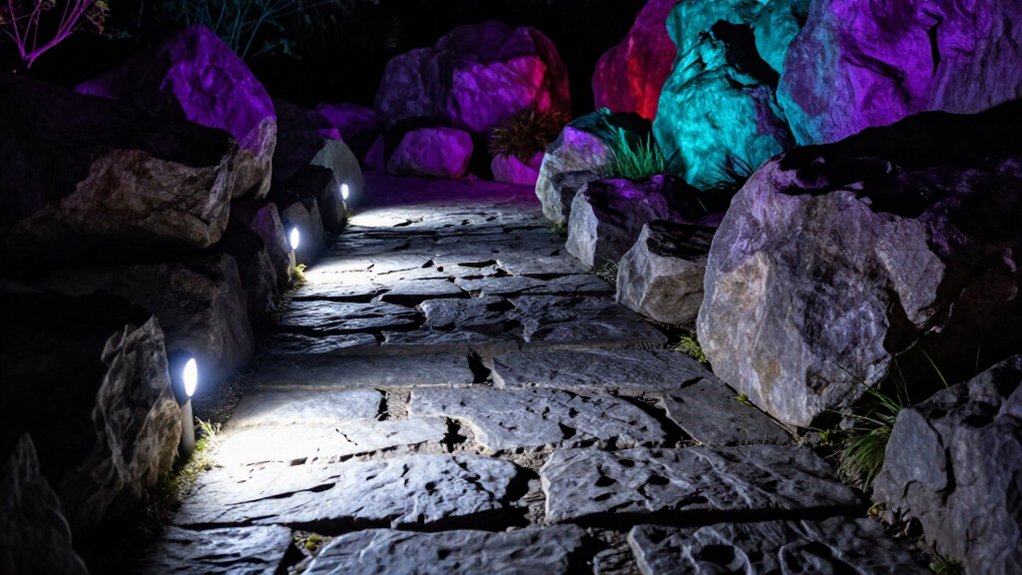
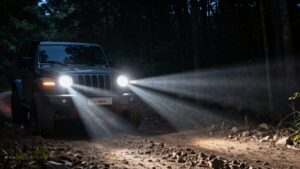
Choose dedicated white rock lights if you need to read ruts, ledges, and rocks before your tires reach them. Their output focuses on one color, so they provide brighter visibility in darkness than RGB lights.
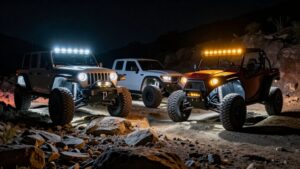
Choose RGB when show-night color matters; its white mode can be dimmer. Aim beams beneath your wheels, secure pods away from moving parts, and use steady output while driving.
Further setup guidance can help you balance trail safety and style.
Trail Visibility vs. Show Style
For technical wheeling in complete darkness, dedicated white rock lights usually provide the most useful ground visibility: concentrating output in one color helps reveal ledges, ruts, and tire-eating rocks before you reach them. That extra visibility matters when you’re picking a line, placing a tire, or backing away from an obstacle. RGB can still illuminate in white mode, but color-channel limits may leave dedicated white slightly brighter. Its simpler wiring and controls also reduce setup points when dependable underbody light is your priority.
| Choice | Best use |
|---|---|
| White | Trail hazards |
| RGB | Show-night effects |
Choose RGB for show nights; choose white when terrain reading comes first. Set lighting around hazards you must identify, not appearance alone, under your tires in darkness.
White and RGB LED Configurations
That visibility difference comes down to how each kit’s LEDs are configured: dedicated white lights focus output into one color, while RGB lights mix red, green, and blue channels through a controller.
Because white kits put power into one output, you’ll generally get the brightest illumination to spot ruts, ledges, and rocks before contact. RGB can approximate white with multiple channels, but may be slightly dimmer as output is divided among emitters.
The controller and added wiring complicate installation versus a two-wire kit, but let you change brightness, colors, and effects. For trail safety, use white; pair RGB accents for style, and save effects for parked use. You can reserve RGB’s color modes for stationary show settings rather than relying on them to identify obstacles.
Beam Spread and Ground Coverage
Beam spread depends on each pod’s lens and LED layout, so adding lights only helps if their beams overlap across the ground your tires will cross. White pods give you usable coverage because LED energy goes into one output, without color filtering. You can spot ruts, ledges, and rocks before contact.
Similar-size RGB pods often produce a dimmer true-white beam because they mix red, green, and blue channels. Blue or red modes can reduce rocky-ground contrast, even when your vehicle looks bright.
Place enough pods to overlap tire paths and avoid gaps beneath wheelbases or suspension. Trucks and full-size Jeeps need six to ten pods; UTVs need four to eight. Check coverage at ride height, then reposition pods if shadows hide obstacles.
Color Switching and Controls
RGB rock lights mix red, green, and blue channels to create colors, with a controller letting you change hues, effects, and brightness. Use a Bluetooth app to select colors and effects from your phone, or choose a wired switch box if you prefer tactile buttons. Choose a steady color before driving; animated patterns can distract you and nearby drivers.
RGB produces approximate white by combining its channels, so white mode may be slightly dimmer than dedicated white lights, though the difference is small on trails. If you need stronger, dependable white visibility and color options for parked show use, RGBW adds a separate white channel. Check that your controller supports the light system, and protect its power circuit with a fuse to reduce failure risk.
Mounting and Wiring Requirements
Before installing rock lights, plan pod placement and circuit protection together.
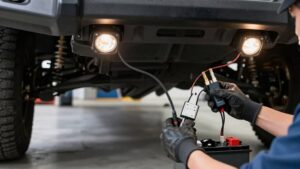
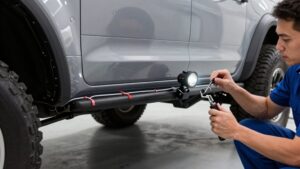
Mount pods around the undercarriage for even coverage and check each beam for tire or suspension blockage. Route wiring clear of moving parts, heat, and sharp edges. White pods need a two-wire connection, so a fused harness with an inline fuse and relay protects the circuit in wet, muddy conditions.
RGB kits add an app or Bluetooth controller, or wired switch box, plus extra wiring channels. Plan routing first. Fuse the supply line to reduce flicker, shorts, and overheating. For six to ten pods, use a relay so the dash switch doesn’t carry the full load. RGBW systems can offer true white mode, but still need fused, relay-protected wiring like dedicated white pods.
Spare Pod Replacement Costs
After planning the wiring, account for the cost of replacing a failed pod. Prices vary: matched kits bundle pods with a harness, while individual pods often cost more per LED. RGB and RGBW replacements cost more than single-color units because they contain multiple LED channels; RGBW adds a white channel.
Count your pods before budgeting. A truck or full-size Jeep may use six to ten, while a UTV or SXS may use four to eight, so failures can multiply expenses. Check warranty terms and verify the replacement matches your controller and harness. A mismatched pod can leave you replacing more than the failed unit, creating downtime and wiring work. Choosing a reputable matched kit can simplify service: its spare should fit the existing harness and help restore operation.
Color-Specific Trail Regulations
When you use rock lights on public roads, check your state’s rules before selecting a color: many states restrict or prohibit red and blue lighting on non-emergency vehicles, and app control doesn’t exempt those colors.
Verify local rules before activating colored modes outside private property. Your controller’s white-like setting doesn’t determine legality; enforcement often depends on the emitted color, where you use it, and how you mount it. Green may face fewer restrictions, but check limits on brightness, aiming, and classification as auxiliary lighting.
Review state definitions of “neon” and “aftermarket underbody lighting,” plus visibility and placement requirements. For compliant road use, choose functional white, then reserve red or blue RGB modes for off-road areas where local rules allow them.
Keep lights aimed downward and avoid configurations that could confuse other drivers or obscure required signals. When rules are unclear, leave restricted colors off on public roads and confirm requirements with your state’s transportation agency or law enforcement before driving.
Battery Drain Differences
You’ll usually get more ground brightness per watt from dedicated white rock lights because they don’t split output across color channels. RGB and RGBW can draw more current when multiple channels run at high brightness, while selecting white mode on RGB can reduce the load.
Your total battery demand also depends on pod count and runtime, so check current draw before extended trail use.
Power Draw by Color
Dedicated white rock lights typically deliver more usable brightness per watt because they don’t rely on mixing color channels.
RGBW systems can draw more current than white-only setups when you drive red, green, blue and/or white channels together, especially at high brightness across many pods. RGB in white mode mixes channels to approximate white, so it may use slightly more power than true white LEDs for similar ground illumination. Don’t assume strobe or fade effects reduce draw; they don’t inherently save power.
If an effect raises channel duty cycles or lights several LEDs at once, it increases demand.
For a safe comparison, check the kit’s LED count and actual wattage or amp rating, then identify whether its white mode runs one channel or multiple channels.
Runtime and Battery Load
Because RGB rock lights power multiple color channels and controller electronics, they typically draw more than dedicated white lights, reducing runtime on a battery-powered setup.
You should treat runtime as a load question, not just a color choice.
- A steady white mode on RGB/RGBW lights can approach dedicated-white brightness, but saturated colors such as red-only may draw differently.
- Strobe and fade effects can raise average current and alternator demand, especially at idle.
- Dedicated white concentrates energy in one output channel, making it more efficient for long night trails.
The longer you run bright accents or effects, the faster voltage may fall. If your rig lacks alternator capacity, you can see voltage-related flicker; fuse and relay the lights correctly, and monitor system voltage.
Best Setup for Mud and Rock Trails
For mud and rock trails, choose true-white lights to reveal ruts, slick edges, and ledges before your tires reach them. RGB adds accent lighting, but its mixed colors usually provide less usable trail brightness.
Choose RGBW if you want both: run white on technical sections and switch to color at camp.
White Trail Visibility
On dark mud and rocky trails, white rock lights give you the clearest view of ruts, ledges, and tire-eating rocks before you reach them.
White LEDs direct nearly all their power into one useful output, without color filtering. That usually gives you cleaner, brighter ground illumination than RGB, which divides energy among red, green, and blue channels.
In near-total darkness, that small brightness edge can help you spot hazards and avoid undercarriage impacts.
- Scan the ground ahead, not just your tire contact points.
- Use white as your primary mode when obstacle detail matters.
- If you choose RGB/RGBW, confirm it offers true white for critical trail sections.
Aim lights low and secure them against impacts; mounting and beam control matter as much as output.
RGB Accent Lighting
Use RGB rock lights as a secondary accent layer, not your main trail illumination: subtle colors add style, while dedicated white light reveals ruts, ledges, and rocks more clearly in the dark.
You can select switchable colors for low-intensity effects, but don’t assume RGB means brighter. Red, green, and blue channels mix to create color, so output depends on which channels operate together. Keep a dedicated white mode; use it to check under your rig and navigate sections where hazards hide.
Choose pods built for off-road mounting, with water and dust protection, and wire them through a fused circuit. Secure connections against vibration and water crossings to reduce flicker or failure. On trails, use color for style while moving, switching to white whenever you need detail.
Hybrid Light Setup
RGB adds style, but a hybrid setup gives you both color and dependable trail visibility. On mud and rock trails, make true white your primary mode: it reveals ledges, ruts, and tire-eating rocks before your tires reach them. Switch to RGB or RGBW for color when you’re parked or conditions allow.
- Choose RGBW if you want full-color effects and true white in one pod system for navigation and night loading.
- Plan coverage: use 6–10 pods on trucks or full-size Jeeps, and 4–8 on UTVs or SXSs, aimed at landing and slide zones.
- Wire the setup to a fused circuit; add a relay for larger kits to limit voltage drop, shorts, flicker, and partial failure when white illumination matters on difficult terrain, where visibility protects you.
RGB Music-Sync Modes
Many RGB rock-light controllers include music-sync modes that use a microphone or audio input to detect beats and frequency changes, then adjust red, green, and blue output in time with the sound. Your controller mixes red, green, and blue, dimming or brightening LEDs to match sound intensity. Strobe, fade, or flash effects respond to audio peaks, not a fixed timer.
A strong, clear signal: often higher volume and distinct bass, improves response. Wind noise or quiet music can confuse microphone-based control, so test sensitivity before riding. Treat sync as an accent: rapid color shifts reveal ruts and rocks less consistently than steady white light. Switch to white when you need dependable ground detail, and keep your attention on the trail while traversing uneven terrain.
Conclusion
Choose white rock lights if you prioritize clear trail visibility, consistent ground coverage, and simple controls. RGB units suit you if you also want show-night color options, but verify local lighting rules before each ride. Mount every pod securely, seal and route wiring away from heat and moving parts, and test beam aim before departure.
For mixed terrain, select white output with switchable RGB only when permitted; protect your battery by managing runtime wisely, too.