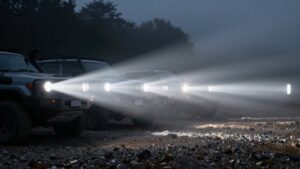
Are Cheap Amazon Light Bars Worth It? What You Give Up to Save
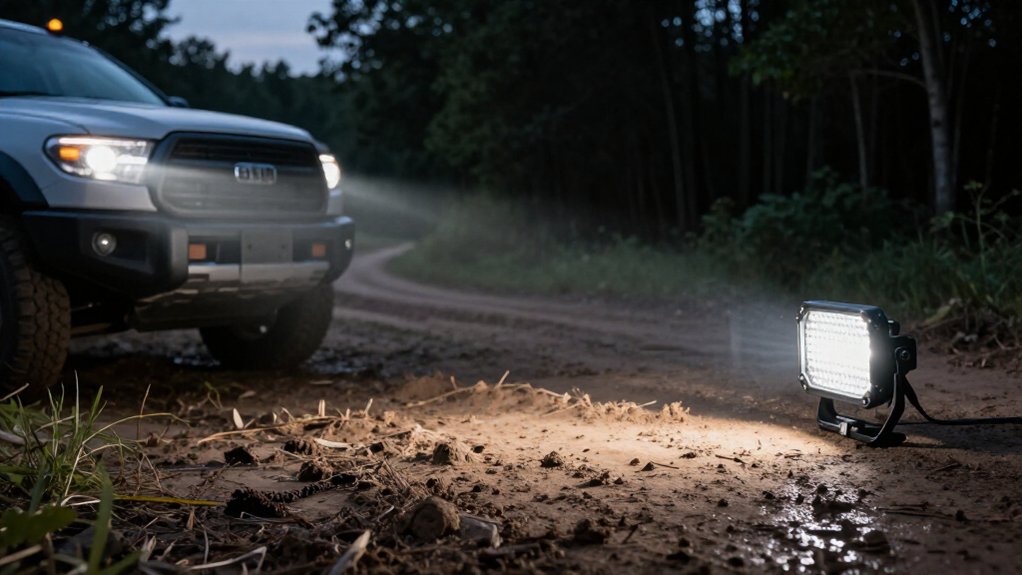
Cheap Amazon light bars can be worth it for occasional use, but you may trade lower upfront cost for weaker seals, uncertain LED chips, uneven beam patterns, and brackets that loosen or corrode. Check measured current draw, wire gauge, fuse and relay ratings, plus warranty coverage, not just advertised lumens or IP ratings.
For frequent off-road driving or wet, salty conditions, a better-built bar may deliver steadier output and longer service.
The details below can help you compare those tradeoffs before buying.
Cheap Bars’ Hidden Tradeoffs
A low price often shifts the cost from the checkout to the trail: budget light bars may have weak seals, inadequate electrical waterproofing, and lower-spec LED chips whose brand or origin sellers can’t verify. You may find flimsy one-size brackets and no proper wiring harness, so installation takes more care than with a matched kit. Poor connections or improvised mounting can create faults under vibration.
Compare chip specifications, housing material, and thermal design before buying; vague claims about Cree or Osram don’t confirm the installed chip. A well-built bar should manage heat and use sturdy construction. Aluminum alloy matters too: 6063 is described as more corrosion-resistant than 6061. If the seller won’t document components, brackets, and harness, you may save upfront but replace the bar sooner.
Rain, Dust, and Salt
Once rain, dust, and road grime reach a cheap light bar’s weak seals, moisture can corrode its electrical connections and debris can damage internal components.
A low price often means the manufacturer has cut back on gaskets, housing fit, or wiring-entry protection. Even when a listing claims an IP rating, water may still seep around cable openings during off-road splashes or repeated wet-dry cycles. Dust can work past loose joints and compound electrical wear.
Salt spray and road grime speed corrosion when the housing lacks corrosion-resistant aluminum and proper gasketing. You’ll see budget bars that work fine at first dim, flicker, or fail after repeated exposure. Better-built options generally target stronger dust and water protection, often with ratings above IP68, giving you more margin in rain and mud.
LED Chip Quality
LED chips act as the light bar’s core, shaping its brightness, heat behavior, and beam consistency. Higher-reliability brands often name Cree or Osram; budget listings may omit the maker or rely on unverified claims.
Without public proof, you can receive lower-performing chips than advertised; verifying internals may require disassembly that voids your warranty. Second-rate LEDs can run hotter and degrade faster, reducing useful output over time. Compare the seller’s documentation before you buy.
| Option | What you get |
|---|---|
| Named Cree/Osram | Verifiable manufacturer |
| Unspecified chips | Uncertain performance |
| Unverified origin | Claims lack proof |
Choose a bar that identifies its chip maker and supports the claim with credible product information; the modest price premium can buy more dependable output than a cheaper unit with unknown LEDs over time.
Beam Pattern Consistency
With a cheap light bar, lower-grade optics and uneven LED alignment can create patchy coverage, harsh hotspots, and shadows instead of a uniform beam. Compared with a premium bar’s controlled focus, its throw may vary between units, making beam distance harder to predict.
Check the beam cutoff and spread in a safe test area; poor focus can scatter light where you need it least.
Uneven Beam Coverage
Although a cheap Amazon light bar may advertise impressive beam distance, loose LED spacing and basic reflectors can leave bright central hot spots and dim edges.
An advertised range tells you how far some light may reach, not whether the full beam stays even. Compared with a well-engineered bar, budget optics can produce patchy illumination across the spread, making roadside details harder to assess consistently.
Lower-cost lenses and diffuser materials may also lose their intended geometry as heat and vibration build, so coverage can distort with use. Unidentified or lower-grade LED chips may vary in output, creating differences from one section of the bar to another.
Before buying, check beam shots from a reputable manufacturer, taken at standardized distances. Prefer examples that show measurable spread rather than polished marketing images; they give you a more useful basis for comparing real coverage. This helps you compare coverage before spending your money.
Hot Spots and Shadows
A light bar’s advertised spot or flood pattern matters less if its optics don’t produce a consistent beam. Cheap models often use loosely controlled lenses and diffusers; small manufacturing variations can change how each unit distributes light.
That can leave an over-bright center surrounded by darker fringes, reducing visibility at road edges even when the bar is labeled flood. Compared with a well-focused bar, its intensity isn’t balanced across the beam, so terrain features may disappear in dim zones.
Mounting height and bracket alignment can also cast more noticeable shadows when uneven output fails to fill gaps consistently. Test units if possible: bars sharing a model name may differ, and you may need to drive more cautiously on varied terrain when illumination shifts unexpectedly.
Inconsistent Beam Distance
Even when two cheap Amazon light bars share the same lumen rating, they may not throw light the same distance.
A range won’t tell you how consistently a bar delivers usable reach. Lower-cost models can vary from unit to unit because LED mounting tolerances and manufacturing checks aren’t always tight. Slight differences in LED alignment can shift the beam’s centerline or spread intensity unevenly, so one bar may illuminate farther down the road while another fades sooner.
You may also see variation across a single bar, making its throw less predictable.
Compare bars on the same vehicle, aimed alike, and test them on pavement or off-road terrain after dark. Don’t rely on lumen ratings or advertised distance alone. Higher-end bars control alignment and production carefully, giving you repeatable beam distance from one unit to the next. That consistency matters when you need dependable visibility.
Poor Optics and Focus
Reach isn’t the only thing that can vary between cheap Amazon light bars; their optics can also produce inconsistent beam patterns.
Cheap bars often use lower-grade or unevenly made reflectors and lenses, so one unit may hold a sharp hotspot while another flares or smears light across a broad, weaker spread. Unlike better-engineered bars, budget models may not focus consistently along their full length.
Misaligned optics can leave dark bands or create hotspots that shift as you change viewing angle, making hazards harder to judge at night.
Many listings provide little or no candela-distribution or beam-profile data, so you can’t verify whether the advertised flood-and-spot combination matches the beam on your vehicle. For off-road or emergency driving, patchy focus can cut effective reach and sidelight control. Comparable lumen claims don’t guarantee comparable visibility; inspect beam-test photos, and aim for an even pattern before you rely on it.
Mounting Hardware Durability
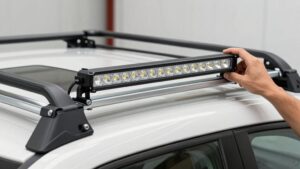
Check bracket metal quality before you mount a budget light bar; thinner plates can flex more than sturdier mounts under off-road vibration.
Compare corrosion protection, since salt and road grit can rust exposed hardware and weaken its attachment points. If fasteners loosen or brackets shift, you’ll need more frequent retightening and realignment, shortening hardware life and eroding your savings.
Bracket Metal Quality
While a budget light bar may deliver adequate brightness, its mounting brackets can be a weak point: thinner, softer metal may bend or crack under off-road vibration and impacts. Compared with thicker, stiffer brackets on better-built kits, budget hardware may flex more, especially when your vehicle hits rough terrain. Some kits use “one-size-fits-all” pieces that don’t align with your bar’s width or mounting points. That mismatch concentrates load at bolts, encouraging movement and loosening over time.
Check fit before installation, and compare bracket thickness and rigidity rather than judging the kit by brightness alone.
When a bracket bends, your beam can shift, reducing useful road coverage; movement can also strain wiring where it enters the housing. If the metal feels flimsy or the fit requires force, consider a sturdier replacement bracket before trail use. Otherwise, you may need to drive cautiously or replace hardware early. Good brackets keep alignment stable through repeated jolts.
Corrosion Resistance
Salt spray and wet road grime can expose a cheap light bar’s weakest point: its mounting hardware.
A cheaper bar may use low-cost plated steel brackets that start rusting despite a sealed aluminum housing. The body’s corrosion-resistant finish won’t protect exposed brackets, unsealed fasteners, or undersized washers; those parts face moisture and road salt. Check bracket material and finish.
Better-protected hardware, such as corrosion-resistant brackets, coated fasteners, and properly sized washers, holds up longer in coastal or off-road use. Rust around bolt holes can damage the mounting surfaces and compromise the connection, leaving you to replace parts sooner. If you drive through salt spray or wet grime, inspect hardware finishes and choose a kit with durable components. A saving may cost you replacement hardware later.
Vibration Loosening
Repeated impacts can expose a cheap light bar’s weakest point: its mounting hardware. Cheap kits often pair thin, one-size-fits-all brackets with softer fasteners or uneven thread engagement. On washboard roads and through suspension travel, brackets flex and repeated shocks can back fasteners out.
If your setup uses fewer mounting points or less rigid geometry, vibration concentrates stress at each connection. A sturdier bar uses heavier-duty brackets and better hardware, helping it stay seated under impacts. Check that bolts engage fully, then inspect and retighten after rough trips.
Corrosion-resistant materials also matter: moisture can attack contact points and make a vibrating joint easier to loosen. If you rely on the bar for emergency or construction work, fewer roadside adjustments can justify the higher price.
Hardware Longevity
Over time, cheap light bars’ brackets, clamps, and fasteners may bend or corrode sooner than better-grade hardware, especially under off-road vibration or frequent washdowns. A “one-size-fits-all” bracket may not match your bar’s dimensions, leaving it misaligned and concentrating stress on the housing. In wet or salty conditions, thin or poorly coated metal can rust quickly, weakening joints and making adjustments harder.
If the kit omits needed mounts or wiring pieces, you may improvise with aftermarket parts; loose compatibility can add movement and shorten service life. Choose better-grade brackets and corrosion-resistant fasteners when you install the bar. They’ll hold its aim more consistently and reduce fatigue damage from repeated road shock, lowering the chance you’ll need repairs or replacement: extend the hardware’s useful life.
Alternator and Wiring Capacity
Even if a budget light bar advertises high wattage, your alternator must support its actual current draw continuously alongside other accessories. Check the bar’s measured amperage, not just its advertised watts, then compare that load with your vehicle’s charging capacity and other accessories.
Cheap kits may pair thin wire with a low-rated relay or an undersized fuse, adding resistance and causing voltage drop that dims the bar. A poor ground or mismatched harness can also overheat connectors during long runs, while making your electrical system work harder.
Choose wiring, relay, and fuse ratings matched to draw; better-quality kits specify these more carefully. If you run several accessories or use the bar for off-road driving, confirm the alternator and battery can sustain the demand.
Warranty and Replacement Coverage
Warranty coverage can erase a cheap light bar’s savings if its seal fails or an LED chip burns out. Budget bars often have shorter warranties, and sellers may classify water ingress as environmental wear. If weak sealing or dust control causes early failure, you may pay for a replacement.
Check whether the listing names its chip maker, such as Cree or Osram; vague parts details make support and sourcing harder. Confirm that a compatible harness comes with the bar: improvised wiring may let the seller deny claims as installation damage.
Even an approved replacement costs time and return shipping, so compare coverage and downtime with a better-supported model before you buy. A clear written policy matters more than a vague promise from the seller.
False Lumens and Inflated Claims
A light bar’s advertised lumens don’t guarantee useful illumination: sellers may report output inconsistently or inflate figures without independent testing. A high number can’t tell you whether the beam reaches downroad; lower-grade LEDs, optics, and heat control may reduce usable output.
Some listings also exaggerate chip performance or origin, and opening the housing to check can void coverage. Compare evidence, not headline claims:
- Look for independently measured output, not seller-stated peak lumens from a credible lab.
- Check beam distance and pattern in test photos or reports under load conditions.
- Compare named LED-chip brands with specific, traceable model details rather than vague labels.
- Assess housing, wiring, and heat-management construction for sustained use.
- Treat exceptional lumen-per-watt claims as unverified until evidence supports them.
Check Lens Yellowing Risk
Beyond inflated lumen claims, lens durability can determine how much light a cheap bar delivers over time.
Cheap bars may use lower-cost plastics or UV coatings that aren’t built for sun, temperature swings, and outdoor exposure. As the lens yellows, it absorbs and scatters more light, reducing output compared with a clear, UV-protected lens.
Check these points before buying:
- Look for a specified UV-resistant lens material or coating.
- Compare owner reports spanning years, not just weeks.
- Inspect sealing and lens thickness; trapped moisture and heat speed aging.
- Expect greater risk on off-road rigs, where vibration and debris strike the lens.
- Treat surface abrasions as warning signs: they can accelerate UV damage.
A higher price may preserve output; cheap bars can lose light before failure.
Conclusion
Cheap Amazon light bars can make sense if you need occasional, low-cost light and can verify the specs, wiring, and mounting before you buy. But you’ll trade away confidence in weather sealing, consistent beam output, durable hardware, honest lumen claims, and dependable warranty support.
Check reviews for lens yellowing, size wiring for current draw, and inspect connections. If you rely on your lights in rain, dust, or remote terrain, paying more buys reliability, not brightness.
Whip Light Height & Clearance Calculator
Add up roof or rack height, mount height and whip length, then check the total against a clearance limit you enter. Free, no sign-up.