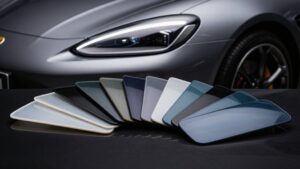
Why Are Some Off-Road Lights Yellow? The Glare and Vision Behind It
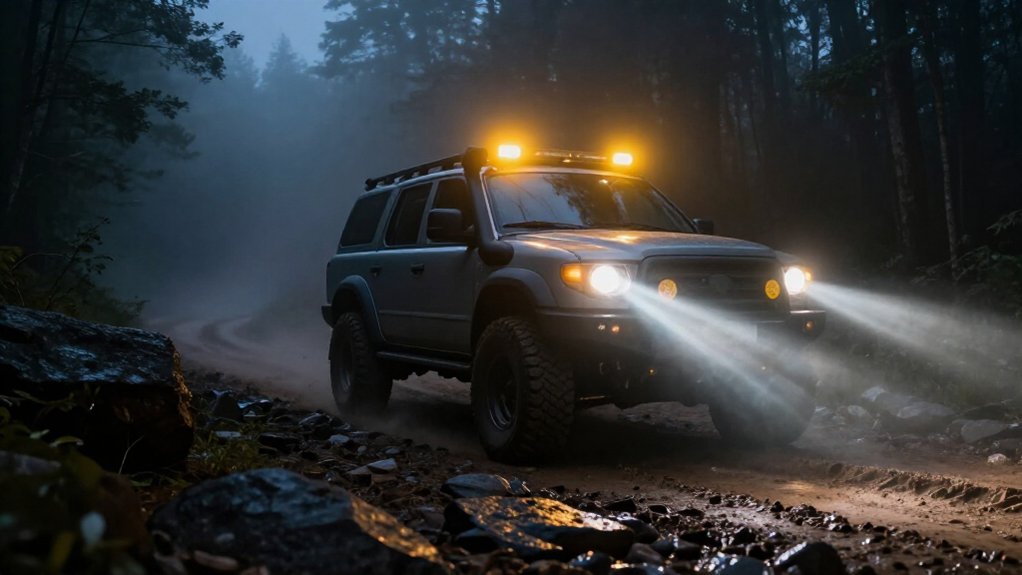
Yellow off-road lights use warmer, blue-reduced output that can make glare feel less harsh and ease eye strain in rain, mist, or dust.
They don’t remove airborne scattering or guarantee that you’ll see farther; fog and spray can still create a bright veil that hides hazards.
You’ll get the safest benefit by aiming lamps correctly, slowing down, and maintaining distance.
The sections below explain how color, optics, and conditions shape what you see on trails.
Blue-Light Reduction
When you drive through fog, rain, or snow at night, yellow off-road lights can reduce the amount of blue, short-wavelength light reaching your eyes. Many yellow lamps operate around 2,000–3,000K, compared with cooler, higher-temperature sources. This spectrum contains less blue energy, which may make glare feel less harsh in wet air and precipitation.
At night, your eyes rely more on rod vision, and rods respond strongly to blue-green wavelengths. Lowering blue output can thus reduce perceived discomfort, though it doesn’t remove airborne scattering. Fog, rain, and snow scatter visible light broadly at typical particle sizes; the comfort benefit comes largely from how your visual system responds, not from eliminating scattering.
As ambient light grows brighter, shorter-wavelength sensitivity matters less, so this advantage tends to diminish.
Honda Ridgeline Night Test
In a Honda Ridgeline night test through more than 10 inches of precipitation, swapping the roughly 5,000K stock fog bulbs for distinctly yellow 3,000K bulbs made the driver’s eyes feel noticeably more comfortable, though the improvement wasn’t dramatic alongside the truck’s powerful LED headlights. Stock bulbs looked nearly neutral white; replacements looked distinctly yellow.
In heavy precipitation, you may notice less eye strain and find it easier to stay focused. The change didn’t dramatically extend visible distance, likely because the Ridgeline’s strong LEDs already provide substantial lighting. Read the result as a comfort benefit, not evidence that yellow light changes precipitation’s scattering. If you drive in similar conditions, you can try warmer bulbs, but assess them safely and maintain a speed and following distance suited to visibility.
Fog and Dust Visibility
Although yellow off-road lights may seem to cut through fog or dust better, their main benefit is often reduced glare and eye strain—not a proven increase in visibility. Fog droplets and dust particles scatter light back toward you, creating a bright veil that can hide nearby hazards. Since fog droplets often exceed light wavelengths, scattering may not change much with color; yellow illumination can’t guarantee a clearer view.
Yet your eyes may perceive shorter-wavelength-heavy light as more intrusive in dim conditions, when rod cells matter more. A warmer beam may make haze feel less intense and reduce fatigue, but comfort doesn’t mean greater range or contrast. Keep speed low, increase following distance, use appropriate lamps, and stop if you can’t see far enough to react safely.
Amber Lens Versus Yellow Bulb
An amber lens filters a white source, changing the light that reaches the road without creating new beam optics. A yellow bulb shifts the emitted spectrum before it reaches the lens, so its Kelvin rating more directly determines beam color.
In mist, rain, or snow, either option may reduce perceived glare, but you shouldn’t assume it reduces physical scattering or guarantees better visibility.
Amber Lens Filtering
When rain, mist, or snow scatters light back toward you, an amber lens can reduce the blue component of a white source, producing a calmer beam than a yellow bulb alone. That filtering changes the spectrum, not merely brightness: the lens attenuates shorter wavelengths while transmitting more amber light. Because blue-rich light scatters more readily from tiny water or ice particles, less scattered haze returns to your eyes.
At night or in heavy precipitation, that calmer appearance can reduce distraction and eye discomfort, helping you monitor road edges and obstacles. Yet filtering doesn’t guarantee better visibility; maintain safe speed, following distance, and correctly aimed, clean lamps. Use these lights only where local rules allow, and switch to appropriate lighting as conditions change when driving.
Yellow Bulb Output
Yellow bulbs and amber lens filters can both shift off-road light toward longer wavelengths, but they do so differently: a yellow bulb emits warmer-colored light, while a filter attenuates some shorter-wavelength light from a broader-spectrum source. When you choose a 3,000K bulb instead of a stock 5,000K fog bulb, its warmer emission can feel less harsh in rain, mist, or snow. Some drivers report reduced eye strain on long runs through heavy precipitation.
That comfort may help you maintain focus, but it doesn’t prove yellow output dramatically reduces atmospheric scattering. Human visual sensitivity and pupil response vary with wavelength and ambient brightness, so your experience can differ. Don’t treat color as a substitute for correctly aimed, compliant lamps, reduced speed, and adequate stopping distance.
Beam Color Differences
Although both produce an amber-looking beam, a 2,700,3,000K bulb emits warmer-colored light, while an amber lens filters shorter wavelengths from a broader-spectrum lamp and reduces some of its output. That difference matters when you choose replacement lighting. A yellow bulb shifts the source spectrum toward longer wavelengths; an amber lens removes part of the shorter-wavelength output, so your beam may be dimmer unless the lamp compensates.
In fog, rain, or snow, neither color guarantees substantially less scattering: droplets and particles are generally much larger than visible-light wavelengths. The practical advantage is often comfort. Amber light can feel less harsh than blue-white light at similar brightness, reducing disruptive glare and helping you keep the scene usable.
Your rods favor shorter wavelengths in dim conditions, so tint doesn’t automatically improve detection. One driver found ~3,000K fog lamps more comfortable than ~5,000K lamps in heavy precipitation. Check beam aim and maintain visibility before driving.
Rainy-Road Glare Conditions
Rain intensifies headlight glare as wet pavement reflects light back toward your eyes. Yellow auxiliary lights may feel less distracting in these conditions, though they can’t eliminate glare.
Use them to improve contrast through road spray, and aim them to avoid dazzling oncoming drivers.
Rain Intensifies Headlight Glare
When rain covers the road, thousands of droplets scatter headlight beams back toward your eyes, intensifying glare.
Rain adds moving reflective surfaces across your sightline. Each droplet redirects part of an approaching beam, so you face stronger backscatter and reduced contrast. Shorter-wavelength blue-white light scatters more readily; wet pavement can thus appear brighter and more washed out than a dry surface.
In dim conditions, your eyes rely more on rod-based vision, which detects motion but provides limited detail. Scattered reflections can distract you and obscure hazards. Slow down, increase following distance, and keep your windshield and lenses clean.
| Condition | Visual effect |
|---|---|
| Dry road | Clear contrast |
| Rain | Droplets raise backscatter |
| Blue-white light | Scatters more |
| Low light | Glare distracts |
Treat glare as a visibility warning, not merely discomfort; avoid staring into oncoming lamps, and use controlled speed whenever rain limits your view ahead.
Yellow Light In Wet Conditions
On wet roads, yellow off-road lights can reduce the harsh glare you perceive from raindrops and reflective pavement.
Yellow light’s longer wavelengths may make wet-road reflections feel less intense, but don’t assume it eliminates rain scatter. For raindrop sizes, wavelength effects can be modest; your visual system shapes the experience.
In low light, rods become more influential and respond more strongly to shorter blue-green wavelengths. A whiter or bluer beam can thus make precipitation appear brighter and more distracting, increasing discomfort.
A yellow-tinted setup may help you manage glare and eye strain when raindrops and glossy pavement reflect light toward your eyes. Drivers report comfort after switching from cool-white bulbs to warmer yellow ones, though results vary. Choose aimed, compliant lights, and slow down when rain reduces contrast. Yellow light can improve comfort; it can’t guarantee clearer vision or replace cautious driving.
Visibility Through Road Spray
Beyond reflections from wet pavement, road spray can scatter headlamp light through countless droplets near the beam, creating glare and reducing contrast. In darkness, your rod-dominant vision detects motion well, but stronger blue- or green-heavy light bouncing through spray can overstimulate it. Amber light, with its longer wavelengths and lower color temperature, tends to create less disruptive glare, helping you retain contrast and comfort. Drivers report less eye discomfort after switching from roughly 5,000K stock fog bulbs to 3,000K bulbs in heavy precipitation. Treat that as a comfort benefit, not proof of longer seeing distance.
| Condition | Driver-relevant effect |
|---|---|
| Low light | Rods dominate; spray glare feels stronger |
| Amber beam | Often reduces disruptive droplet bounce |
| White beam | May increase discomfort and contrast loss |
| Brighter scene | Yellow advantage generally diminishes |
Keep your beam aimed, clean lenses, and use fog lamps only when conditions warrant; extra output can worsen backscatter and hide hazards. No color removes spray, restores lost contrast completely, or replaces safe speed and spacing. As ambient light rises, your eyes rely less on rods, so yellow’s practical edge usually shrinks. Choose a beam pattern that illuminates the road without sending light into airborne water or oncoming drivers’ eyes.
Spotting Wildlife on Trails
Yellow or amber off-road lights can make small animals easier to spot by reducing perceived glare and helping you sustain attention as you scan the trail. In dim conditions, your rod cells respond strongly to motion, but blue-rich light can feel dazzling and distract you. Amber illumination may provide a more comfortable visual stimulus, helping you maintain focus long enough to notice brief movement or an animal’s outline.
Slow, deliberate scanning lets you check trail edges and open ground for deer, rabbits, or birds. Keep your beam steady and control glare; harsh brightness alone won’t guarantee detection. At around 3,000 kelvin, amber beams may feel less fatiguing on long drives. Treat wildlife sightings as possible hazards: slow down, leave room to stop, and never assume the trail is clear.
Reduced Color Recognition
In low light, your eyes rely more on rods, which detect motion well but distinguish color poorly.
In these conditions, blue-green wavelengths stimulate rods strongly, so bright white or blue-heavy light can feel distracting without restoring reliable color detail. Glare and visual discomfort make your eyes work harder, potentially weakening attention to trail features.
Yellow or amber lighting doesn’t give you daylight color vision; instead, by reducing perceived glare, it can help you recognize contrasts such as edges and contours steadily. Wavelength also affects pupil size: your pupils tend to be smaller under blue light and larger under red or amber, allowing more light into the eye in the latter case.
In heavy precipitation, drivers report less strain with 3,000K yellow bulbs than with 5,000K white bulbs. Treat comfort as support, not proof of improved visibility; slow down and keep a margin.
Beam Pattern Misunderstandings
Comfort from amber light doesn’t necessarily mean your beam reaches farther or cuts through fog better.
You may find yellow-tinted lights less harsh than blue-white LEDs, but that feeling often reflects glare perception, not greater forward range. Short-wavelength-heavy light can scatter more and send reflections toward your eyes, even when the hotspot stays unchanged. Fog physics varies little across visible wavelengths at typical droplet scales; beam shape and aim usually dominate.
- A clear cutoff limits light above the intended line.
- Correct height and aiming keep glare out of your sight.
- A wide hotspot can feel useful without extending safe range.
- Poor alignment makes any tint produce stray reflections.
- In precipitation, glare control may explain why amber feels more comfortable.
Check your aim; comfort alone doesn’t prove better visibility.
Lens and Bulb Choices
For a useful amber setup, match the bulb’s color temperature to the lamp’s optics: around 3,000K produces a distinctly yellow output, while roughly 5,000K appears cooler and whiter.
Yellow shifts spectrum toward longer wavelengths, but color alone won’t control glare. Choose a fog lens designed to spread light low across the road and maintain a sharp upper cutoff; otherwise, even an amber bulb can scatter into your sightline or other drivers’ eyes.
In low-visibility conditions, warmer light may feel more comfortable because wavelength affects eye sensitivity and pupil response. Drivers often notice that difference most in heavy rain or snow, though results depend on the lamp, weather, and viewing conditions. Keep output modest: as overall illumination rises, yellow’s comfort advantage over white tends to shrink. Aim and test your lamps on a safe, level surface, and use them only where permitted; poor optics or misalignment can reduce visibility and create serious hazards.
Conclusion
Yellow off-road lights can reduce perceived glare in fog, dust, or rain, but they don’t guarantee better visibility. Your results depend on beam pattern, lens, bulb, and conditions; amber filters can also reduce color recognition and light output.
Choose equipment for the terrain, aim beams correctly, and keep low beams on when visibility is poor. Test your setup safely before driving trails, and never treat yellow light as a substitute for reduced speed, clear lenses, or sound judgment.