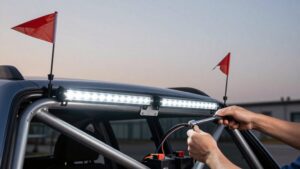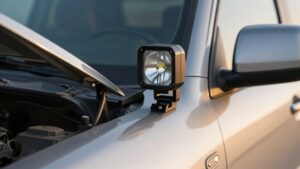
Are Whip Lights Street Legal? When You Must Turn Them Off
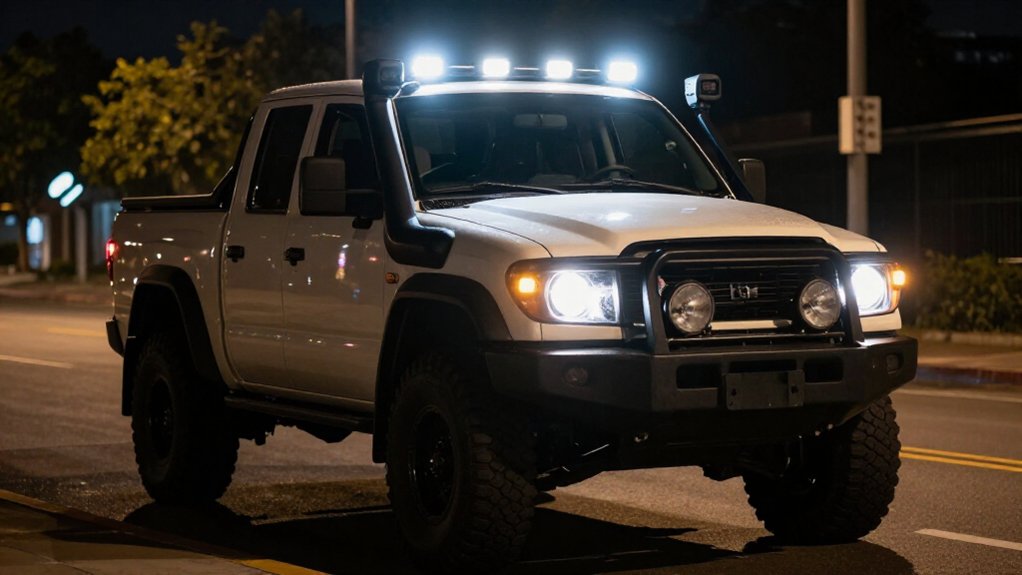
In New Zealand, you may use whip lights on public roads only as steady, non-dazzling cosmetic lights, with permitted colors: white or amber at the front, red or amber at the rear.
Aim them down and keep the source out of prohibited viewing angles.
Turn them off if they flash, pulse, change color, create glare, swing into other drivers’ sightlines, or could distract or confuse traffic.
Check mounting and inspection requirements before driving; more guidance follows.
New Zealand Whip-Light Rules
In New Zealand, you may use whip lights on public roads only as cosmetic lamps, and they must not dazzle, confuse, or distract other road users. Aim each lamp down so its light source isn’t directly visible from the front or rear. You must make sure no red light is visible from directly ahead.
If you mount a whip light at the front, use solid white or amber only; other colors aren’t permitted. At the rear, use red or amber only. Keep the light steady: cosmetic lamps mustn’t flash, pulse, fade, change color, or create moving or revolving effects.
Check the setup before driving, and adjust its angle or switch it off if it could impair a road user’s view. These requirements apply on public roads.
Emergency-Style Flashing Colors
Beyond the solid-color rules for cosmetic whip lights, you must not use emergency-style flashing, strobing, or moving patterns on public roads in a normal vehicle. Police and emergency vehicles may use such signals under separate authority; your ordinary vehicle doesn’t gain that privilege because a light bar or whip can display red and blue. A color-changing mode that’s acceptable while parked or off-road can still violate road-use rules once you drive.
Many jurisdictions restrict flashing, pulsing, fading, color-changing, or motion effects, and may cite you for prohibited flashing or distracting, dazzling lights. Set your controller to a permitted, steady color before entering a public road, or switch the whip lights off. Check local rules for permitted steady colors and required placement before driving.
On-Road Use at Night
At night, use only a steady, non-distracting color allowed for the whip light’s position, typically white or amber at the front and red or amber at the rear. Keep the light source out of prohibited viewing angles; a color that appears compliant from one direction may violate rules from another.
| Setting | Roadside impression | Action |
|---|---|---|
| Solid, diffuse light | Calm marker | Use if permitted |
| Flashing or chasing | Emergency-like motion | Turn off |
| Bright, direct beam | Glare in mirrors | Turn off |
Angle lights downward; use diffuse, not concentrated, output. If a fun mode changes brightness, direction, motion, or color, disable it before entering a public road at night. When uncertain, choose steady white at the front or the permitted rear color. You’re responsible for avoiding dazzling or confusing other drivers.
Whip Height and Mounting Rules
Check your local height limits before mounting a whip, since legal maximums vary by jurisdiction. Secure it firmly so it can’t sway, enter sightlines, or create a flashing or distracting effect while you drive.
Position and aim it to avoid obscuring required lights, exposing prohibited colors in the wrong direction, or dazzling other road users.
Maximum Height Limits
Although road rules may not set a single universal height limit for whip lights, your mounting position must keep the light from dazzling or confusing other road users. Don’t assume a tall whip is lawful simply because your jurisdiction publishes no numeric ceiling. Keep it low, angle it downward, and preserve a diffuse spread rather than an upward beam or concentrated flash. Check that its position doesn’t obscure headlights or indicators.
A source clearly visible from prohibited road-facing directions may still breach rules, even when its height seems reasonable. Measure the mount against your vehicle and verify local visibility and height requirements before driving; exact limits and permitted colors vary by jurisdiction.
| Check | Why | Action |
|---|---|---|
| Height | Local limits | Verify mount |
| Aim | Avoid glare | Point down |
Secure Mounting Requirements
Height limits matter only if your whip stays securely positioned on the road. Use a stable mounting point and hardware; cable ties alone may loosen under vibration or speed. A loose base can change the whip’s height and angle, letting it droop, tangle, drag, or swing into bumpers, taillights, and turn signals.
Set the whip high enough to remain controlled, but secure it so it cannot contact the road or interfere with required vehicle lighting. Keep its position consistent while driving, and check the mount for movement before each trip. Aim the light downward or diffuse it to avoid dazzling other drivers. If your whip has selectable colors, use only colors allowed for its position; a secure mount doesn’t make an unlawful color compliant.
Visibility and Obstruction Rules
To keep a whip light from obstructing visibility, mount it so it doesn’t cover headlights, taillights, turn signals, or reflectors, and angle it downward so drivers can’t see the light source directly. Choose a position that keeps the source out of direct view from both the front and rear; the light should spread diffusely, not form a concentrated beam.
In New Zealand, set front-mounted lights to solid white or amber, and keep them invisible from directly behind. At the rear, use red or amber only; other colors aren’t permitted on-road. Keep the display steady: spiraling, chasing, revolving, fading, and pulsing effects aren’t allowed on-road.
If the source is directly visible or blocks required lamps, reposition the light or switch it off before driving.
Vehicle Certification Requirements
Check that your whip lights and controller meet your jurisdiction’s vehicle-lighting standards and carry model-specific approval documentation. Your installation must preserve compliant colors, steady operation, safe beam direction, and unobstructed required lamps and reflectors.
If you can’t verify compliance, your vehicle may fail inspection or you may receive a citation.
Certification Standards
Although certification requirements vary by jurisdiction, street-legal whip lights generally must meet the same performance and color rules as other exterior lamps. Your jurisdiction’s adopted vehicle and lighting standards govern whether the lamp’s output, color, and pattern qualify. Road use generally requires fixed, controlled illumination that won’t dazzle others, with only locally permitted colors and patterns.
Look for documented DOT/SAE or equivalent certification; these markings indicate components were built and tested to accepted beam-control and intensity standards, not merely sold as decorative accessories. Certification may cover only approved solid-color settings on an RGB, chase, or flashing kit. Other modes may lack approval for driving.
Your inspector may classify a whip as supplemental or cosmetic, affecting approvals and inspection results; check local rules, including inspection requirements. Configure controls so only certified, locally permitted functions operate while driving.
Approved Light Modifications
Certification markings alone don’t guarantee approval: inspectors may assess whip lights as part of your vehicle’s complete lighting system. For road use, configure each lamp as a compliant cosmetic light: aim it downward, diffuse its output, and prevent a direct beam or exposed source from dazzling, confusing, or distracting traffic.
Keep colors fixed by position, generally white or amber at the front and red or amber at the rear; other colors can breach the certified configuration. If your whip supports RGB effects, chasing, spirals, fading, pulsing, or strobing, disable or lock those modes and use only the permitted steady color.
Use approved components and preserve safe aim and placement relative to headlights and indicators; certification considers brightness, visibility from different angles, and the overall effect.
Inspection and Compliance
Before fitting whip lights for road use, confirm your local vehicle-certification rules for cosmetic lamps or additional driving lights. Requirements vary by jurisdiction. In New Zealand, cosmetic lighting must not dazzle, confuse, or distract other road users. Set your lights to permitted on-road colors and modes: front-facing lamps should be white or amber, rear-facing lamps red or amber, and public-road use must exclude flashing, moving, or color-changing effects.
At your WOF or inspection, verify positioning and aim: lights mustn’t shine at traffic or obscure headlights or indicators. Ask the inspector to assess exterior lighting, including brightness, dazzle, and mounting. Document solid-color, non-strobing road settings. If you can’t prove compliance, keep the lights off on roads and use them only where law permits.
Whip-Light Off-Road Visibility
Whip lights can improve off-road visibility, but treat them as accessory lighting rather than road illumination. Aim their output downward and spread it across the ground; a diffuse wash helps you spot terrain without a tight beam that can dazzle others in reduced visibility. Control brightness at night and keep lights from pointing toward oncoming traffic.
Placement matters: street-use rules expect white or amber steady light at the front and red or amber at the rear. These expectations don’t permit intense output or changing effects. Set your whips to a solid, stable mode before public roads and confirm they won’t switch modes unexpectedly. Never use flashing, pulsing, moving colors, or animated spirals; authorities may deem them hazardous or distracting even when they help off-road.
Insurance and Warrant Implications
If police cite your whip lights for illegal color or flashing, pulsing, or animated effects, the violation may raise your insurance premiums and, depending on your state, add points to your driving record.
Your insurer may review the police report or violation history at renewal; collision coverage doesn’t prevent a conviction from affecting rates. An illegal-light citation after a crash may also support a finding of unsafe driving, especially if dazzling or confusing lights contributed.
| Situation | Possible consequence |
|---|---|
| Road ticket | Premium increase or points |
| Renewal review | Violation may affect rates |
| Crash claim | Fault or payout dispute |
| Parked off-road RGB | Lower public-road exposure |
Keep changing modes off-road; use solid white or amber lighting while driving. Check your policy for intentional- or reckless-modification exclusions carefully.
Treating Whip Lights as Antennas
Don’t treat whip lights as exempt antennas: their bright, moving LEDs are external lights that must meet road-color and visibility rules, and may be cited as distracting or dazzling even when mounted low.
Because a flexible whip can swing, it may aim light toward drivers; motion or changing direction can strengthen claims that your lighting is distracting or dangerous.
Road legality often depends on color and position. In New Zealand, for example, the front may show only white or amber, while the rear may show only red or amber. Treating them as antennas won’t excuse a noncompliant color.
- Disable RGB modes on public roads.
- Use the permitted solid color.
- Check front and rear visibility.
- Turn them off if motion puts LEDs in drivers’ sightlines.
Photograph Your Light Settings
Photograph your whip lights before driving: capture clear front, side, and rear views that show the exact color and mode, along with the switch position. Record each setting your kit offers, such as steady white, steady amber, and off, with a separate image for each. Include the pattern: a solid display differs from flashing, animated, or color-changing output, which road rules commonly restrict.
Repeat the photographs at night and while moving slowly; brightness and visibility to oncoming traffic can change with operating mode. Keep the images on your phone for quick reference when you leave private or off-road use and enter a public road. They document your choice, but don’t prove legality; check local rules and change settings accordingly before you drive on-road.
Conclusion
Before driving on public roads in New Zealand, switch off any whip-light mode that flashes, imitates emergency signals, or creates unlawful glare. Check that the light’s mounting, height, wiring and operation meet vehicle requirements; if a modification affects compliance, confirm whether certification is needed.
Off-road visibility doesn’t make every setting road-legal. Keep a photo of your permitted settings, and ask a certifier or insurer if you’re unsure. You’re responsible for using compliant equipment and maintaining valid cover.