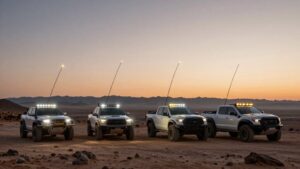
Dune Whip Flag Requirements by Park: Height, Color and Light Rules
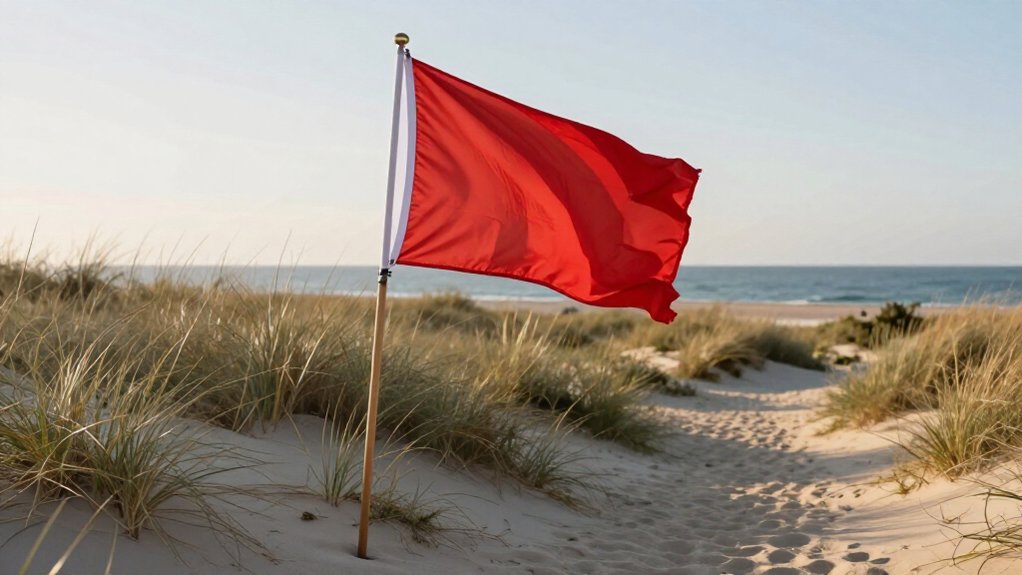
Check your park’s whip rules before unloading; requirements vary by location and vehicle class.
Glamis calls for a red or orange flag at least 6×12 inches, an 8-foot height, and placement within 10 inches of the mast tip.
Oceano, Dumont, Sand Hollow, and Little Sahara commonly require red or orange flags and 8 feet; Little Sahara applies its rule to all OHVs.
Silver Lake requires solid safety-orange flags and different stopped and moving heights.
Measure from the ground, and confirm local lighting rules before riding.
The park-by-park details below can help you prepare.
Park-Specific Flag Rules
Flag rules vary by riding area, so check the local requirement before you ride. Your whip must meet the site’s rules for color, size, position, and height; don’t assume one setup works everywhere. Many dune areas call for a red or orange flag measuring at least 6×12, mounted upright when stopped.
Height usually reaches eight feet, but confirm what the rule measures and where it starts. Measure from the ground to the specified flag or mast tip, not by the whip’s purchased length. Keep the flag near the mast tip; a flag halfway down won’t satisfy a tip-placement requirement.
Silver Lake differs: it calls for solid safety orange material, a rectangular flag, and greater height at standstill. Check the official notice before setting out.
Park-by-Park Rules Table
Because whip requirements vary by park, use this table to check your setup before you ride.
| Park | Flag | Key rule |
|---|---|---|
| Glamis | Red/orange, ≥6×12 | 8 ft; flag/tip within 10 in of mast tip |
| Oceano/Pismo; Dumont | Red/orange, ≥6×12 | Upright when stopped; 8 ft from ground |
| Sand Hollow; Little Sahara | Red/orange | 8 ft; Little Sahara applies to all OHVs |
| St. Anthony; Silver Lake | Brightly colored ≥6×12; Silver Lake: solid safety orange, rectangular, ≥5×10 | 8 ft; Silver Lake: 10 ft stopped, 8 ft moving |
Check the specific park’s wording before departure: Oceano requires an 8-foot flag extension, while Dumont specifies mast-tip height.
Silver Lake also sets mounting locations: front for sit-in vehicles, rear for straddle-seat vehicles.
Don’t assume one park’s allowance applies elsewhere; confirm current rules and secure your flag before riding. At Silver Lake, mesh and triangular flags aren’t allowed.
Flag Height Measurement Basics
After checking your park’s rule, measure the setup with the vehicle settled on its tires under normal weight. Measure from the ground directly beneath the vehicle, not from your seat, rack, or bumper. If you’re checking a bike, lower it; the raised position can make the whip seem taller than it will be on sand.
Use a tape to measure from the ground to the whip’s mounting point, then add the whip length to the mast or flag tip. That total is the required height, not pole length alone.
Compare it with your park’s stated minimum, often 8 feet or sometimes 10 feet. Confirm the flag itself reaches that height and can fly or stand as intended. Droop or slack may leave it below minimum.
Flag Color and Lighting Rules
Choose the required red or orange flag—and use safety orange where your park specifies it—so it stands out against the sand. Don’t assume your whip needs lights: some parks require vehicle headlights and taillights after sunset, while whip-light rules and any placement or brightness standards vary. Check your park’s rules for flag color, size, visibility, and lighting before you ride.
Required Flag Colors
Flag-color rules vary by dune park, but many areas—including Glamis, Oceano, Dumont, Sand Hollow, and Little Sahara—require a red or orange flag, often at least 6×12 inches.
Check the rules before you launch; a color accepted elsewhere may not qualify. At Silver Lake, Michigan, you must use solid safety-orange material, and mesh flags aren’t permitted. That stricter standard replaces red-or-orange guidance, so don’t assume orange mesh will pass inspection.
At St. Anthony Sand Dunes, Idaho, choose a brightly colored red or orange flag and meet the 6×12-inch minimum. Where a park sets a size requirement, treat color and dimensions as an equipment rule: carry a compliant flag, not a shade you simply prefer. Confirm park guidance, since local requirements control and can differ from recommendations.
Visibility Against Sand
Because sand can hide tracks and riders’ silhouettes, most desert areas require a bright red or orange whip flag to help others spot you near ridges and blind bowls. Silver Lake requires solid safety-orange material and doesn’t allow mesh; many other dunes accept red or orange. Check the park’s posted rule so you use the specified color and material.
Color alone won’t keep you visible: mount the flag high and exposed, often at least eight feet above ground, so it clears vehicle shadows and dune crests. Keep the whip upright when stopped if your riding area requires it, and make sure it hasn’t drooped, fallen, or become obscured. A clear view gives approaching riders more time to react where slopes block sightlines. Inspect the mount and flag regularly.
When Lights Are Required
Many dune areas require a red or orange whip flag, but some also require a lighted whip after sunset. At Dumont Dunes, assume you need a whip and working headlights and tail lights for after-sunset operation. Night conditions reduce visibility, so don’t rely on a flag alone.
Some parks may require only a flag or specify its height, while others state that your whip must be lighted at night. Even where lighting isn’t expressly required, comply with the park’s color, size, and height rules.
For example, Svengoolie’s guidance calls for a red or orange flag measuring at least 6×12 and positioned to meet its 8-foot above-ground requirement. Lighting doesn’t replace those standards.
Check your specific park’s night rules before riding; requirements vary by location.
Light Placement And Brightness
After sunset, a bright red or orange flag improves visibility but doesn’t replace required vehicle lights. Position the flag near the whip’s tip so it stays visible at the required height; a tall pole won’t help if the flag hangs too low. Some rules limit the flag to roughly ten inches from the whip or tip.
Choose a solid red or orange flag where required; don’t use mesh if your applicable rule prohibits it.
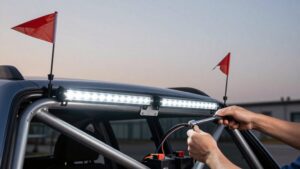
If night travel requires a whip with lights, treat that as a separate placement requirement, not as a substitute for daytime color or size rules. Aim the required lighting toward or around the whip so drivers can see its movement and position in darkness. Keep required lights clear and visible.
Check Park-Specific Rules
Before you ride, check the park’s current rules for flag color, material, size, and shape; requirements can vary even between nearby dunes.
Many CA/BLM dunes require red or orange, while Silver Lake requires solid safety-orange material, never mesh. Check shape and dimensions: Silver Lake allows rectangular flags only, minimum 5 × 10 inches; many dunes accept red/orange flags at least 6 × 12.
Don’t assume night riding requires a lighted whip. Head and tail lamps may be separate roadway requirements; follow your park’s whip rule.
Confirm the height reference, usually ground, plus position rules. Glamis and Dumont specify 8-foot ground-to-tip; Silver Lake requires 10 feet at standstill, 8 while moving. Oceano and Dumont require upright when stopped; Glamis keeps the flag within 10 inches of the mast tip. Check posted rules each visit.
Avoiding Gate Turnarounds
To avoid a gate turnaround, measure the flag’s required height from the ground to the mast tip or other point the park specifies, not by the pole’s advertised length. You must include the mount’s height above ground plus the whip’s length to confirm compliance. A bed rail, roll bar, or bumper can elevate the mount, so pole length alone may mislead you.
On level ground, use a tape measure from the ground beneath the mount to the required height point. If you’re short, adjust the whip length or move the mount. Check that your whip and flag stay upright while stopped; a setup that leans or flops may fail inspection. Re-measure after changing tires, suspension, mounts, or vehicle load, since those changes can alter overall height.
Vehicle-Class Exemptions
Vehicle-class exemptions vary by park, so don’t assume your OHV is exempt because it’s road-legal or has a particular seat style. Little Sahara, for example, requires flags on all OHVs. At Dumont, ATVs generally need a whip and flag, while road-legal vehicles must carry one when driving in the dune area. These rules don’t establish a nationwide standard; check the destination’s current requirements before you unload.
At Silver Lake, seat position determines the mounting location: sit-in vehicles mount the flag at the front-most portion, while straddle-seat machines mount it at the rear. Any exemption applies only to specified vehicle classes at that park. It doesn’t automatically waive height, color, or size requirements, such as an 8–10-foot minimum. If you’re unsure, follow the park’s strictest whip requirement.
Two-Seat UTV Flag Placement
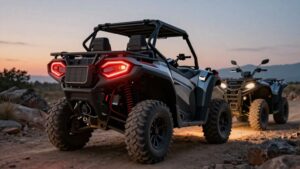
Two-seat UTV flag placement depends on the park’s rules and the machine’s layout: some require the mount at the front-most portion of a sit-in vehicle, while others specify the rear for a straddle-seat machine.
Before you install a flag, confirm which classification your park applies to your UTV; don’t assume one layout’s placement rule covers both.
At Silver Lake, sit-in vehicles use the front and straddle-seat machines the rear. Flag must be solid safety orange, not mesh, and the whip must reach 10 feet when stopped and 8 feet moving. Measure from ground to mast tip or flag top, including elevated mounts: mount height plus pole length must meet the total.
An eight-foot whip may fail; sand and mount position affect height. Keep it upright at stops when required.
Check for a Bent Whip
Sight down the whip after installation to check for bends or kinks, which can lower the flag and affect its alignment. Measure compliance from the ground, not your seat: a drooping mast may put the flag below the park’s eight-foot minimum or Silver Lake’s ten-foot standstill requirement.
After a tip-over, branch snag, or hard compression, check again; a whip that looks nearly straight may still fail to stand upright when stopped.
- Sight from the side during stops; a steady lean or tip wobble signals a bend.
- Inspect light wiring, lens, and mounts for cracks or strain; damage can cause failure.
- Replace or remount a bent whip; don’t rely on a flag that sits low or won’t remain upright.
Recheck height against the park rule.
Quick Pre-Trip Gear Check
Before loading up, check the park’s rules for flag height, color, size, shape, and placement. Measure the required height from the ground with your bike or truck on level ground; seat height and pole length alone won’t confirm compliance.
- Check the approved color before packing: rules commonly call for red or orange, but Silver Lake requires solid safety orange and prohibits mesh.
- Verify size, shape, position, and lighting: common minimums are 6 × 12, while Silver Lake requires a rectangular flag at least 5 × 10. Glamis keeps it within 10 inches of the mast tip; Oceano and Dumont require an upright whip when stopped.
- For night rides, pack park-approved lights and meet headlight rules after sunset; don’t assume another area’s exemption applies for your route.
Conclusion
Before you head out, confirm your park’s current flag-height, color, and lighting requirements; rules can differ by location and vehicle class. Measure from the ground as directed, secure the whip in the required position, and check that the flag is visible, undamaged, and properly illuminated when required.
If you’re riding a two-seat UTV, verify placement for your setup. A quick gear check can prevent a gate turnaround and help keep you visible to other drivers on the dunes.