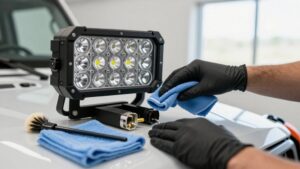
Single Row vs Double Row Light Bar: Output, Profile and Price
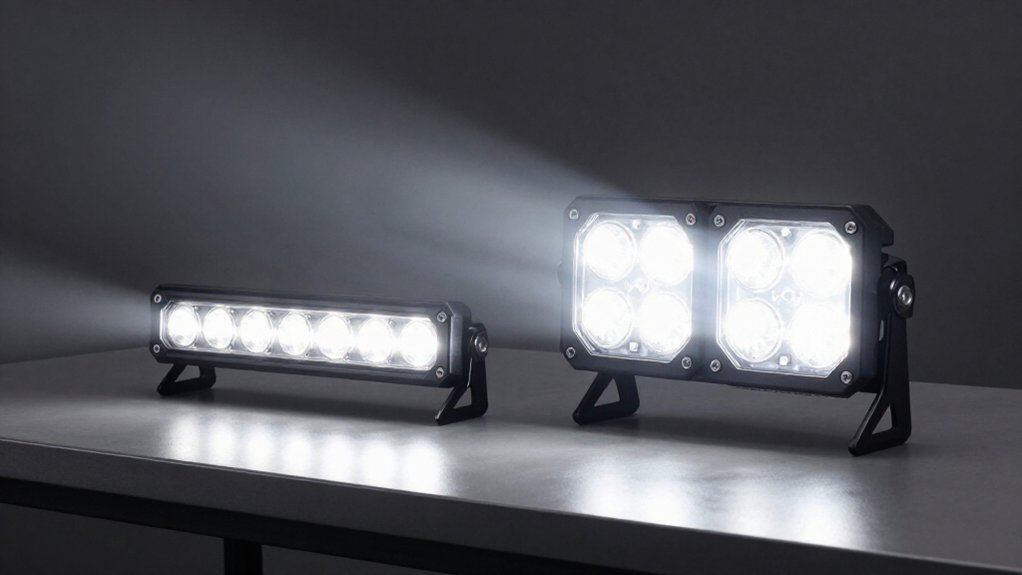
A single-row light bar gives you a slimmer 1.5 to 2-inch profile, easier grille or bumper mounting, and often a lower price.
A double-row bar typically delivers more light in a taller 3 to 4-inch housing, but needs extra clearance, stronger mounts, and wiring for higher current.
Yet row count alone won’t predict usable output; beam pattern, delivered lumens, and optical quality determine reach and spread.
Compare verified output and price; the next points help you choose.
Row Count and Light Bar Profile
Single-row light bars use one LED strip and stand about 1.5–2 inches tall, while dual-row bars stack two rows in a 3–4-inch housing. Choose by comparing fit, capacity, and cost:
| Design | Height | Trade-off |
|---|---|---|
| Single-row | 1.5–2 in | Slim fit; lower cost |
| Dual-row | 3–4 in | Bulkier; often pricier |
| Single-row | One LED strip | Tight mounting clearance |
| Dual-row | About twice LEDs | Higher potential output |
Use the profile to match your vehicle’s mounting envelope, not just the bar’s capacity. A single row fits restricted spaces behind grilles or low bumper openings. A dual row occupies more vertical room, but its roughly double LED count can deliver higher output when quality and optics are comparable. You’ll spend more for its larger housing and added LEDs; choose the slimmer, lower-cost format when clearance and budget lead.
Optics Behind Each Row Design
Although row count affects housing capacity, optics determine how efficiently each bar turns LED output into usable light. A single-row bar uses one horizontal LED and reflector line, so projector or reflector geometry must extract strong long-range performance from fewer diodes.
In a dual-row design, two vertically stacked optic lines let manufacturers shape output through separate row optics, often building greater intensity and a fuller wall of light at the same length.
Don’t judge spot, flood, or combo performance by row count alone. Each LED’s lens and reflector collimate light; a well-engineered single row can outperform a cheaper dual row in range or cutoff. Two optic heights can balance flood-edge width with center intensity. For road use, check ECE approval and beam-pattern features: lens and reflector designs affect cutoff sharpness and light distribution.
Beam Distance and Spread
Beam distance and spread depend on beam pattern, optical design, and total light output, not row count alone. A high-quality single-row bar with advanced projector optics can throw light farther despite fewer LEDs, because reflector geometry and focus control how efficiently you concentrate output.
A dual-row bar typically produces greater overall illumination: its added LEDs raise total output, often improving visibility at longer distances. Spot beams suit maximum reach, concentrating intensity downrange. Flood beams spread wider but offer shorter-range coverage.
Combo patterns pair a spot center with flood edges, giving you distance and lateral visibility. Bar height and aim also shape reach and spread; road-focused alignment differs from trail-focused reach. Compare performance at your intended distance and coverage width, not by row count alone.
Mounting and Wiring Requirements
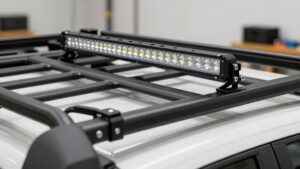
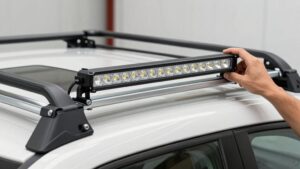
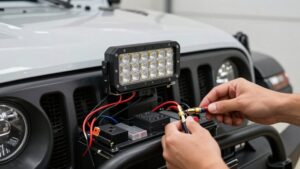
After comparing beam reach and spread, check the space and electrical capacity your installation can support. A single-row bar is 1.5–2 inches tall, so you can fit it behind grille mesh or within bumper gaps. A dual-row unit stands 3–4 inches tall; plan for taller brackets and a strong mounting point, on the hood or roof.
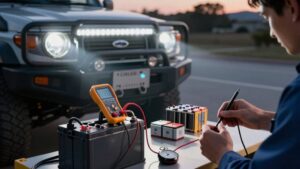
Electrical demand changes your installation. Dual-row bars draw more current, so use a heavier-duty harness, a rated relay, and wiring matched to your 12–24 V system. More LEDs produce more heat: mount the bar securely, provide good grounding, and size conductors to limit voltage drop under load. For ECE R112-style road use, wire the bar to activate with high beam in E-mode, not through a manual switch.
Vehicle Roofline Clearance
At the roofline, a dual-row bar’s 3–4-inch height can crowd roof racks, caps, or wiring runs, while a 1.5–2-inch single-row bar typically fits tighter spaces.
Before you choose a mounting point, measure from the roof surface to the highest obstacle; don’t rely on bar height alone. Your bracket may need extra clearance. On SUVs and crossovers, a low-profile single-row bar can clear wind deflectors and keep the beam low enough for safe aiming.
With a rack or camper shell, choose a single row when the available gap is only a couple of inches. A dual-row bar’s greater vertical footprint can restrict its length and placement despite matching width. First, check the installed profile against every obstruction, then confirm you can aim the beam legally.
Warranty Coverage and Replacement Parts
When comparing single-row and dual-row light bars, check that the warranty covers both the LEDs and housing, not just manufacturing defects.
A stated term, such as a three-year warranty, helps you compare coverage and plan service life. Confirm that it applies to the electronics and housing, then review exclusions for improper installation, physical damage, or incorrect voltage.
These conditions can void a claim even when a unit fails during normal use.
Ask whether the seller stocks lens covers, end caps, mounting brackets, and wiring or terminator harnesses for your model. Compatible parts can avoid a full-unit replacement.
Check the return and exchange procedure for a hassle-free claim and fast replacement. Choose a reputable distributor with warranty contacts and technical support to identify compatible parts before purchase. A reliable support channel can limit downtime after failure.
Highway-Speed Wind Noise
Single-row light bars typically stand 1.5–2 inches tall, so they often create less highway wind noise than 3–4-inch dual-row bars. Their slimmer profile disturbs less airflow around the mount, often keeping your cabin quieter at speed.
Dual-row bars present more frontal area and use bulkier housings, which can increase turbulence and make wind noise more noticeable on roof or bull-bar mounts.
Yet row count alone won’t determine noise: gaps, loose brackets, or a rattling wiring harness can amplify whistling on either design. When you fit a bar, check panel alignment, secure every fastener, and route wiring tightly against the vehicle. For quieter highway travel, choose a low-profile single-row model and rigid, flush mounting hardware. Then verify the installation on a short highway-speed road test.
Heat Management and LED Lifespan
A double-row bar’s higher power draw produces more heat, so you’ll need stronger heat sinking to protect LED lifespan. Single-row bars typically run cooler, reducing thermal stress.
You’ll also need secure mounting and clear airflow to prevent overheating.
Heat Dissipation
Because dual-row light bars typically run roughly twice as many LEDs, they draw more power and generate more heat, making effective heat sinking essential to protect LED lifespan.
Single-row bars usually dissipate heat more easily: less LED mass and lower watt draw help them run cooler under comparable conditions.
Poor thermal management still matters. An undersized aluminum heatsink, inadequate thermal paste, or weak enclosure ventilation can trap heat and impair performance in either design.
Look for IP68-rated sealed housing and a large machined aluminum heatsink to resist moisture while transferring heat efficiently. For long, high-output off-road or highway sessions, prioritize bars with strong thermal pathways, especially dual-row models, to reduce overheating risk. Check that design supports your expected duty cycle, mounting location, and ambient temperatures.
LED Lifespan
LED lifespan depends heavily on junction temperature, so compare thermal design—not just rated LED life—when choosing a light bar. A single-row bar usually draws less current and generates less heat, making cooling simpler and supporting long-term reliability. By contrast, a dual-row bar’s roughly doubled LED count raises power demand and puts greater load on its heat sink and thermal path.
If you choose dual row, check for a robust aluminum housing, effective heat dissipation, and sealing such as IP68; water and vibration can compound thermal stress.
An undersized sink or trapped airflow can raise junction temperature, accelerate lumen depreciation, and cause early failure, even when both bars use LEDs with identical rated life. Mount your bar for airflow; assess cooling in use.
Cost per Lumen
When you compare cost per lumen, don’t assume a double-row bar offers better value just because it produces more light. Check certified usable output and thermal performance, since efficient optics and stable rated brightness can outweigh row count.
Factor in those performance measures, not just purchase price, to identify the stronger long-term value.
Comparing Cost Per Lumen
Single-row light bars usually deliver a lower purchase cost, and they can offer better cost per lumen for modest output needs that don’t require premium optics.
That lower entry price comes from fewer LEDs and simpler optics, which reduce hardware costs. A dual-row bar typically carries a higher price because its second LED row adds components, a larger housing, and more driver electronics.
Yet sticker price alone won’t show which bar gives you more light for each dollar. Divide the purchase price by verified output, using ECE/R112-certified figures or measured lumens. Don’t use row count as a value shortcut: a dual-row model may justify its added cost when its LEDs and reflectors produce proportionally more usable light.
Match the comparison to your beam pattern and output target, then assess cost per lumen across models at the same standard. This keeps you focused on delivered performance, not row count.
Efficiency Across Row Designs
Although dual-row bars usually produce more lumens, their higher price doesn’t guarantee a lower cost per lumen.
Compare models with similar build quality by dividing purchase price by measured lumen output. A single-row bar often costs less upfront, but its lower LED count can raise this ratio against a well-designed dual-row unit. Don’t assume row count predicts efficiency: reflector and optic design can change usable output substantially across manufacturers.
Dual-row bars generally draw more power and need stronger heat-sinking, which can affect sustained output and system efficiency as temperatures rise.
For long-range or combo-beam use, an advanced-optics single-row model may deliver a lower purchase cost per lumen than a budget dual-row bar. Check test data, beam pattern, and thermal performance before choosing.
Value Beyond Initial Price
To compare value beyond the purchase price, divide each bar’s price by its listed or measured lumen output. This gives you a cost-per-lumen figure for comparing models with different outputs.
A double-row bar often carries roughly twice the LED count and, with similar wattage and optics, can deliver more total lumens. That higher output may reduce its cost per lumen, even if its sticker price is higher.
A single-row bar may cost less upfront, but lower lumen output can push its cost per lumen higher, particularly with premium optics. Housing, heat-sink design, and certification also affect price, so build quality matters to long-term value.
Compare actual or listed lumens with the full purchase price; don’t judge by row count alone. This metric helps you assess output relative to cost, not beam quality or durability.
Trail Versus Highway Use
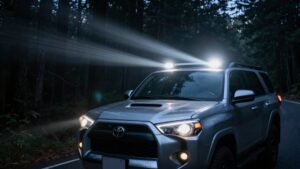
For highway use, a single-row bar’s slim profile simplifies grille or bumper mounting and aiming, while a dual-row bar typically delivers more light across the shoulders and down unlit roads. Choose based on your beam needs and available mounting space: a single row suits a tight bumper or passenger car, while a dual row can improve near-field and long-range visibility on dark routes.
On trails, a dual-row bar’s greater output and wider coverage help you read uneven terrain and spot obstacles sooner. Its larger profile may demand more mounting clearance, so check fit before installation. If you need one light for both settings, a single-row design offers a practical low-profile compromise, though it won’t match the dual row’s broader, stronger beam.
For legal road use, select an E-approved forward-driving lamp meeting ECE R112. You’ll need to activate it with your white high beams; row count doesn’t establish compliance.
Conclusion
Choose a single-row bar when you need a slimmer profile, easier roofline clearance, and lower cost per lumen. Select a double-row design when its LEDs and optics deliver the beam distance and spread your routes demand.
Before you buy, compare output, mounting space, wiring capacity, thermal control, and highway-speed noise, not row count alone. Match the bar to your trail or highway use, and you’ll get dependable light without paying for performance you can’t use.