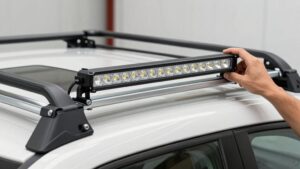
Light Bar Laws by State: Covers, Placement and Color Limits
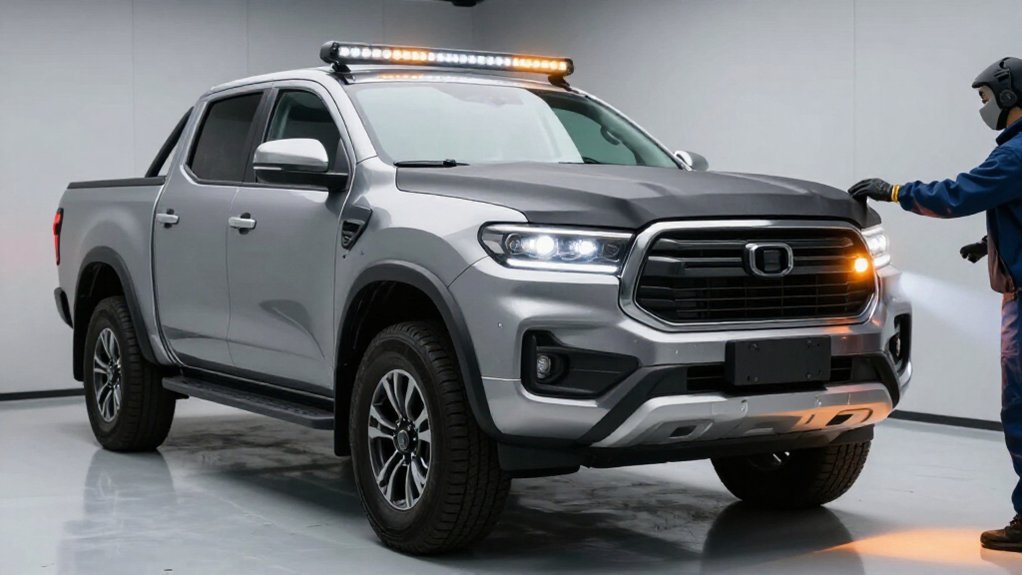
Before using a light bar on public roads, check state rules for placement, color, aim, and covers. California, Oregon, and Virginia may require opaque covers for certain mounted lights; New York requires bars off, while Kentucky restricts use while driving.
Use permitted white or amber light, avoid red or blue, and prevent glare. Height and intensity limits vary, so verify inspection rules and exemptions before wiring or driving.
Details below can help you confirm compliance.
Cover Requirements & Compliance
When you drive on public roads, a light bar’s off-road status doesn’t exempt you from state equipment rules.
California requires you to cover an off-road or auxiliary light bar with an opaque cover and keep it off when you use it on public roads; the beam must not project. Kentucky prohibits you from operating LED light bars while driving, so switch them off and typically cover them. New York limits LED light bars to off-road use; keep them completely off, and preferably covered, on public roads.
Virginia requires you to disconnect or cover roof-mounted lights or lights positioned above headlights with opaque material on public highways. In Oregon, keep roof- or roll-bar light bars covered and switched off on public highways; uncovered operation isn’t compliant. These rules help prevent glare and unintended illumination that can distract other drivers or obscure hazards for nearby vehicles.
State-by-State Color Restrictions
Beyond mounting and cover rules, color determines whether a light bar is road-legal.
You’ll generally need white or amber forward-facing auxiliary lighting; states usually bar blue and red for non-emergency vehicles. Check local code before driving, because emergency color reservations vary.
| State group | Color rule |
|---|---|
| Most states | Front: white or amber |
| Alabama, Florida, Alaska | No changing colors; white/amber |
| California | Front: white/yellow; rear: red |
No rule allows RGB/RGBW lights while you drive on public roads; reserve color-changing modes for private-property parking. In Florida, blue is reserved for law enforcement, while red serves fire and ambulance roles. California also bars red, blue, or flashing underglow and applies a brightness limit. Keep prohibited hues out of front view to avoid impersonating responders or confusing drivers.
Lens-Cover Compliance Rules
Cover rules vary by state, but switching a light bar off may not be enough to make it legal on public roads.
In California, you must keep auxiliary or off-road lights off and fit them with opaque covers whenever you drive on public roads; the cover prevents projected light. Oregon requires roof- or roll-bar-mounted LED bars to be covered and switched off on public highways. In Virginia, cover lights mounted above factory headlights on public highways; uncovered roof bars may fail inspection or prompt enforcement.
New York permits bars only off-road; on public roads, keep yours completely off and preferably covered. Texas generally lets you cover auxiliary lights or switch them off. Secure covers so they stay in place and don’t obstruct required lamps.
Height and Candela Limits
Check your state’s maximum and minimum mounting heights, measured from the road surface, before installing a light bar. Candela limits vary by jurisdiction, and you may need to compare a lamp’s candlepower rating with its lumen output; lumens ÷ 12.57 gives an approximate candela value.
Even when your lights meet height and intensity limits, aim them as required and observe any cap on how many high-intensity lamps you can use at once.
Maximum Mounting Height
Mounting height is measured from the road, not the vehicle body, so a lift or leveling kit can push a previously legal light bar over the limit. Check your state’s measurement rule with the vehicle on level ground; don’t assume a bar stayed compliant after suspension changes. California caps the top of an auxiliary light at 54 inches above ground when you use it on public roads.
Oregon generally limits auxiliary-light mounting height to 42 inches, and roof- or roll-bar-mounted LED bars must remain covered and switched off on public highways. Height isn’t the only control: some states regulate candlepower and beam aim. Arizona, for example, requires lights exceeding 300 candlepower (3,771 lumens) to aim so no beam strikes the road within 75 feet. Verify local rules before driving.
Minimum Mounting Height
Because states can set both minimum and maximum mounting heights, measure auxiliary lamps from level ground—not the bumper or grille.
On a lifted vehicle, suspension changes can raise a light beyond its permitted band. Check the statute before installation and recheck after modifications. Texas allows up to two auxiliary driving lamps positioned 16–42 inches above a level surface. Maryland also permits no more than two, within the same 16–42 inch range above ground level.
Indiana allows one auxiliary driving lamp at 24–42 inches from the road surface.
Measure lamps at their installed positions, using level ground as the reference. Don’t assume a bumper or grille location satisfies the minimum; verify the measurement to avoid unlawful placement and preserve a clear, directed beam.
Candela Limits by State
Candela limits vary by state, so verify both a light’s intensity and where its beam lands before using it on public roads.
In North Carolina, each auxiliary light may not exceed 300 candlepower on public roads. You may operate no more than four lights above 300 candlepower at once, and you must keep their beams from shining too far ahead. Ohio applies the same four-light limit for lights over 300 candlepower; your auxiliary LED bar must emit white light only and be aimed properly.
South Dakota requires you to aim any auxiliary light above 25 candlepower so its beam doesn’t touch a level surface 50 feet ahead. In Arizona, direct lights above 300 candlepower so their beams don’t strike the road 75 feet away. Kansas and North Dakota also restrict high-intensity beams at 75 feet, so check your state’s rule before driving on every trip.
Measuring Light Intensity
To check an auxiliary light bar against state limits, don’t rely on advertised lumens alone: many laws use candlepower, and a rough conversion is lumens ÷ 12.57, so 12,000 lumens is about 954 candlepower.
Compare the converted figure with the specific statute governing your vehicle and lamp type; thresholds vary by state, and some restrict lights exceeding 300 candlepower. A 20,000-lumen bar works out to roughly 1,590 candlepower, well above that common threshold.
Treat manufacturer ratings as a starting point, not proof of legality: verify the model’s actual output and how the law defines intensity. Keep documentation and check whether the limit applies per lamp or cumulatively; don’t assume an advertised lumen number establishes compliance. Confirm the rule before installation.
Height and Aim Compliance
Mounting height and beam aim can determine whether an auxiliary light bar is legal on the road. Many states measure mounting height from the road surface, so account for lift height and suspension geometry before deciding a roof-mounted bar complies.
On-road compliance also depends on aim: direct the beam to illuminate the roadway without dazzling oncoming drivers. Some states regulate brightness in candlepower rather than lumens. If a light exceeds 300 candlepower (3,771 lumens), extra limits may govern how far away its beam can strike the ground.
Arizona requires lights over 300 candlepower to be aimed so no beam reaches the road within 75 feet. South Dakota and North Dakota tie distance limits to candlepower. Check state rules; verify the bar’s rating and aim.
Check Local Inspection Rules
Even if state law permits off-road use of an auxiliary LED light bar, local inspectors may require you to switch it off or cover it on public roads during inspection.
Before your appointment, check local road-test and commercial inspection practices; roof- or roll-bar-mounted lights may need an opaque cover and disconnection. Verify placement rules measured from the road surface, since inspectors may reject bars outside permitted height ranges, 16–42 inches.
Confirm aim requirements so the beam won’t dazzle oncoming drivers. Ask whether channeling limits cap beam projection at 75 or 100 feet; inspectors may test distance and aim. Check permitted colors and modes: front bars must emit white or amber light, not blue or red, and can’t flicker, strobe, or mimic emergency signals.
Agricultural Vehicle Exemptions
For farm work, an agricultural-vehicle exemption may let you use an auxiliary LED light bar that ordinary passenger vehicles can’t, but it usually applies only while you’re doing agricultural tasks, such as hauling crops or materials.
Check your state’s conditions: some exemptions apply only in rural areas or during daylight or working hours. The exemption may not remove requirements to cover or aim the bar to prevent glare on public roads. Front-facing lights commonly must remain white or amber; don’t assume the exemption permits red or blue lighting. Placement and beam limits can apply, including rules that restrict illumination to a specified distance ahead.
Carry proof or registration showing the vehicle’s agricultural purpose, and use the bar only for exempt work, not street driving.
Rural-Road Traffic Stops
An agricultural exemption may not protect you once you’re driving on a public road: during a rural traffic stop, an officer may check whether your light bar was on, covered, and aimed to avoid glare.
Even if your bar is lawfully mounted, California may require you to switch it off or cover it with an opaque shield on public roads. Other states limit beam reach; in North Carolina, an operating bar may not project light onto the road beyond 75 feet ahead. An officer may also check color and flashing behavior: forward auxiliary lamps often must be white or amber, while blue, red, and strobing lights are prohibited.
Before entering a public highway, turn your bar off or cover it. If state law permits its use, aim it so it illuminates only the permitted area without dazzling oncoming drivers. Rules vary, so check your state’s requirements rather than relying on an agricultural exemption when you travel on rural roads.
Electrical Wiring Checks
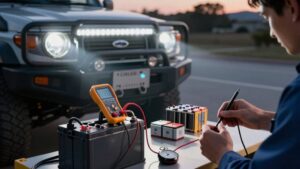
Before wiring your light bar, check for DOT/SAE labeling related to vibration resistance, water intrusion, and optical performance, then build in a switch or relay control that lets you shut it off completely or cover it when required on public roads.
Because state rules vary, prevent accidental activation and verify the circuit before road use:
- Route wires through grommets; seal connectors against water and vibration.
- Fuse the positive lead, confirm polarity, and test the relay trigger.
- Test an independent cutoff; the bar mustn’t remain on inadvertently.
- Check dimming and beam aim to avoid glare; keep prohibited red or blue light from the front.
Many jurisdictions require auxiliary bars off or covered on streets; output mustn’t dazzle or exceed legal limits in your state.
Photo-Ready Compliance Records
Keep a photo-ready compliance record of your light bar as installed: take wide shots of its position, close-ups showing mounting height measured from the road, and images of its street mode to document that it’s covered, disabled, or set to permitted operation.
Then document these details:
- Photograph beam aim from a fixed distance ahead; note whether it strikes the road within your state’s limit, often 50–75 feet, and doesn’t glare into traffic.
- Label a color-output image: front-facing lamps should show white or amber, not prohibited blue or red.
- Include an on/off checklist photo counting auxiliary lights activated together; local caps may be four or five, and some laws count lights above 300 candlepower.
- Keep dated originals and verify rules before relying on images; requirements differ by state and vehicle.
Conclusion
Keep your light bar compliant by checking your state’s rules for colors, covers, placement, height, and output before you drive. Confirm local inspection requirements and any agricultural-vehicle exemptions rather than assuming they apply. Secure and inspect wiring, and use permitted lighting on public roads to avoid unsafe visibility and traffic stops.
Keep current photos and compliance records available. When rules are unclear, ask your state’s motor-vehicle agency or a qualified inspector; don’t rely on another state’s standards.