Can Fog Lights Be Used as Headlights? Safety and Legal Answers
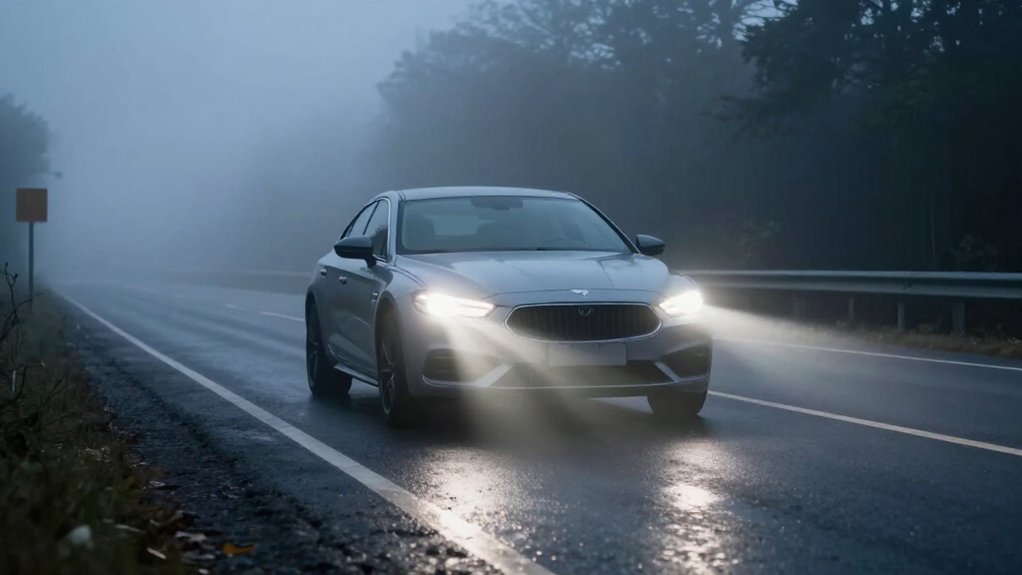
No, you can’t use fog lights as a substitute for headlights. They’re supplemental lamps designed to light the nearby road with a wide, low beam, not illuminate traffic far ahead.
In fog, heavy rain, or snow, use them with low-beam headlights; switch them off when visibility improves.
Driving with fog lights alone may be unsafe and can violate laws, which vary by state.
If headlights fail, pull over safely; rules and steps vary. Learn what applies.
Fog Lights Versus Headlights
Fog lights and headlights serve different purposes: mounted low on the bumper, fog lights cast a wide, low beam that helps illuminate the road in fog, heavy rain, or snow while limiting glare from moisture, whereas headlights light the roadway farther ahead. That low placement directs light toward the road surface, helping you see lane edges without sending as much light back from water droplets. Standard headlights can scatter through moisture and produce more glare.
But fog lamps are supplemental, typically dimmer and limited in coverage; they don’t illuminate enough roadway for ordinary nighttime driving. Use your low-beam headlights for normal night travel, and add fog lights when weather reduces visibility. Use fog lamps when weather substantially limits forward visibility ahead.
Legal Requirements by State
Because fog lights supplement rather than replace low beams, check your state’s rules before using them.
Florida requires lights during fog, rain, or smoke and when you use windshield wipers; keep your headlamps on, while fog lamps serve only as an aid in impaired visibility. California permits fog lamps only in limited circumstances and requires you to use them with low beams. The lamps must sit about 12–30 inches above the road, and their beams can’t rise more than four inches at 25 feet.
Minnesota applies similar mounting and aiming limits to reduce glare. Across states, you may find fog lamps restricted to inclement weather or limited visibility, rather than permitted as your primary headlights. Check state statutes and equipment rules before driving; requirements can differ and change. Using compliant lighting helps others see you without creating glare.
Low-Beam Backup Conditions
When visibility drops in fog, heavy rain, snow, or dust, fog lights can supplement your low beams with a low, wide beam that limits glare off moisture. Keep your headlamps on; fog lamps alone are dimmer and don’t provide the roadway coverage your required headlight system must deliver.
In Florida, if precipitation turns on your windshield wipers, the law requires headlamps, so fog lights aren’t a substitute. Auto-lights may not activate in bright sunshine despite reduced visibility, so switch on your low beams and tail lamps yourself.
Use fog lights only in inclement or reduced-visibility conditions, and turn them off when conditions clear to avoid glare and inadequate coverage. Maintain speed and distance, and pull over if conditions prevent you from seeing safely.
Fog Light Beam Patterns
Your fog lights cast a wide, low beam with a sharp cutoff to illuminate the road edges without shining upward into oncoming drivers’ eyes. They provide limited forward distance, so they can’t replace headlights.
Use them only as permitted and when poor weather makes their controlled beam useful.
Wide, Low Beam Spread
Fog lights cast a wide, low beam designed to illuminate the road close to your vehicle without reflecting as much glare back from fog or mist. Their beam pattern targets the area just beyond your bumper, helping you see nearby pavement when moisture makes standard, higher-angled headlight beams reflect glare toward you.
Unlike headlights, which illuminate the roadway farther ahead, fog lamps supplement close-range visibility; they aren’t designed to light distant lanes for ordinary driving. If you rely on them as headlights, you’ll have less time to spot hazards and respond. If you aim them too high, their beam can reflect from wet pavement and dazzle other drivers.
Many jurisdictions regulate fog-lamp height and aim; check local rules to keep the beam properly positioned safely.
Sharp Cutoff Line
A sharp cutoff keeps a fog light’s low, wide beam aimed near the road instead of scattering upward into fog, rain, or snow and creating glare. Unlike headlights, fog-light optics keep most light below drivers’ and oncoming drivers’ lines of sight. The cutoff should look distinct, with little spill above its target zone.
If you see a blurred edge or bright patches high on signs and surfaces, moisture can reflect that stray light and distract you or other road users. Don’t rely on those lamps for visibility until you’ve had their alignment checked. Aim and mounting rules vary by jurisdiction; some laws set installation-height bands and require the beam to stay within about four inches of its target at 25 feet.
Check your local requirements, and have a qualified shop adjust the lamps to the specified height and aim. Correct aim helps protect you and everyone sharing the road nearby.
Limited Forward Distance
Even when properly aimed, fog lights can’t replace headlights because their low, wide beams illuminate the road only a short distance ahead.
Fog lamps spread light across the near field, helping you see lane markings and obstacles in fog or rain. Their low cutoff can limit reflections from airborne moisture that may scatter headlight beams. But this design doesn’t provide the long-range coverage you need to spot hazards farther ahead.
If you rely on fog lights alone, you may drive beyond the distance you can see, especially when conditions are clear. Mis-aimed or unnecessary fog lamps can add glare on wet or hazy surfaces, reducing clarity for you and oncoming drivers. Use them only as supplementary lighting, and follow your vehicle manual and local rules; requirements vary by jurisdiction.
Weather and Visibility Conditions
In dense fog, heavy rain, or snow, your fog lights can improve near-road visibility, but they’re meant to supplement, not replace, your headlights. In Florida, turn on your headlamps when visibility drops; if your wipers are running, don’t rely on fog lights alone, even if daylight keeps auto-lights off.
On clear roads, leave fog lights off because their beam can glare for others and won’t light the roadway as far ahead as headlamps.
Dense Fog Conditions
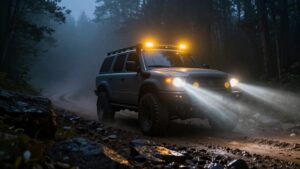
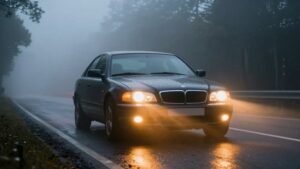
When dense fog cuts visibility to hundreds of feet or less, use your fog lights with your low-beam headlights—not instead of them. Fog lights cast a low, wide beam close to the road, helping you cut through moisture and limit glare from droplets. They’re designed for low visibility, but they don’t provide the longer-distance illumination your headlights supply.
You should keep your low beams on and use fog lamps as supplemental lighting, so you can see the road while others can see your vehicle. Many jurisdictions require lights when fog, smoke, or mist reduces visibility; Florida requires lights in reduced visibility. Check that your fog lamps aim low; an incorrect beam can dazzle oncoming drivers and worsen reflected glare. Slow down and leave space.
Rain and Snow Visibility
Rain and snow can scatter headlight beams and reduce visibility, so use fog lights only as a supplement: their low, wide beam may reduce glare from moisture, but your headlights remain essential for seeing farther ahead. In rain or snowfall, keep headlights on to illuminate the roadway and help others see you. Fog lights can reveal nearby lane edges, but their short reach won’t expose hazards far ahead.
Slow down and increase following distance when spray or falling snow limits sightlines. In Florida, if precipitation requires you to use your windshield wipers, you must also turn on your headlamps; fog lights alone don’t meet that requirement. Rain, snow, fog, and smoke can reduce visibility, so use your lights to remain visible to other drivers.
Clear Weather Restrictions
Although fog lights can be useful when visibility drops, keep them off in clear weather: their low, wide beams won’t help you see farther and may create glare for you or oncoming drivers. Fog lights are designed to cut through moisture such as fog, heavy rain, or snow; on dry roads, their beam can scatter light without adding useful distance.
Some jurisdictions restrict supplemental lamps to darkness or substantially reduced visibility, sometimes using thresholds near 1,000 feet or requiring continuous wiper use. When wipers run, turn on your headlamps; fog lights don’t replace them.
Even in sunshine, switch fog lights off and confirm your regular headlights operate, since automatic sensors may not activate them in bright conditions. Check local rules before using supplemental lamps.
When Headlights Fail Mid-Drive
If your headlights fail mid-drive, switch on any remaining working lamp, activate your hazard lights, and pull fully out of traffic as soon as it’s safe. Don’t continue in darkness using fog lights alone: their low, wide beams supplement visibility in adverse conditions but aren’t designed for normal roadway illumination. Check quickly whether you’ve selected the correct headlight setting, a fuse or relay has failed, or wipers are on.
In Florida, you must use lights when wipers operate and in fog, rain, or smoke. Daytime running lights and halo LEDs may not illuminate the roadway or rear of your vehicle adequately. If you can’t restore proper headlights promptly, move to the nearest safe, lit area and arrange assistance before driving again, especially after dark.
Fog-Light Glare Risks
Why can fog lights make it harder to see on a clear road? Fog lights cast a low, wide beam designed to help you see through fog, rain, or snow. On dry, clear pavement, that broad pattern can scatter and add glare, reducing contrast and visibility for you and other drivers.
If you’ve mis-aimed the lamps, even slightly, their light may reflect from wet pavement, signs, or guardrails, creating distracting bright patterns instead of a clear sight line.
Oncoming drivers can also be dazzled more than by properly aimed low beams. Fog lights are typically dimmer than headlights, so relying on them alone may leave the road underlit while still creating glare. Use them as supplemental lighting when visibility falls, not for clear-weather headlighting.
States With Different Rules
Fog-light laws vary by state, so whether you may use them can depend on both visibility and how the lamps are mounted and aimed. In California, rules restrict fog lamps to darkness or inclement weather; they generally require low beams too, with visibility below 1,000 feet or continuous wiper use often relevant. Minnesota likewise treats them as supplemental lighting, not a headlight replacement.
In either state, mounting and aim matter: lamps typically sit 12–30 inches high and must avoid glare, staying no more than four inches high at 25 feet.
- Across many states, use fog lamps only when fog, rain, snow, or dust reduces visibility.
- You’ll often need low beams; don’t use fog lamps alone.
- Aim them carefully.
- Check state statutes.
- Poor visibility may alter legality.
Check Your Vehicle Manual
State laws set the baseline, but your owner’s manual explains how your vehicle’s fog lamps are designed to operate.
Check whether your fog lamps switch on with headlights and may serve in your main lighting system. Many manuals limit them to supplementing low beams in fog, rain, or snow; they aren’t headlight substitutes.
Your manual may restrict use to poor visibility and warn against clear-weather use to prevent glare.
Use its stated switch setting, often with low beams, to illuminate front headlamps and rear tail lights. If you have LED halos or daytime running lights, your manual clarifies they aren’t fog lamps or headlamps; don’t rely on them in darkness.
Follow state rules, too, to meet equipment and visibility requirements on public roads.
Conclusion
Fog lights can help you see the road’s edges in dense fog, but they aren’t a safe or legal substitute for headlights in ordinary driving. Use your low beams when visibility drops, and switch on required lights whenever conditions or state law demand them.
If your headlights fail, slow down, pull over somewhere safe, and get help rather than relying on fog lights alone. Check your vehicle manual and local rules so you know when and how to use them.